6
Participants
& Counting
6
Formats
Draw/Paint/Collage/Sculpt/Sew/Meditate
7,500
Campuses
Melbourne - Berkeley
Art Class with Nila
An Interdisciplinary Participatory Art Practice
Inquiry:
What becomes possible when people from different disciplines are given time, materials and space to make art together?
Origins: From Studio Practice to Participatory Inquiry
The origins of Art Class with Nila can be traced to my practice-led research during the Master of Contemporary Art at the Victorian College of the Arts. My research began from within my own studio practice, investigating drawing, painting and material processes as ways of thinking through making. The studio was both a site of artistic production and inquiry: a place where questions could be encountered materially rather than known in advance.
During the COVID-19 pandemic, access to the studio and the community surrounding it was suddenly interrupted. The absence made visible something I had previously taken for granted: artistic practice was never sustained by the studio alone. It was sustained through proximity, exchange and the quiet presence of others making alongside me.
This recognition began to shift the direction of my inquiry. If my practice-led research had initially asked what I could come to know through my own acts of drawing and painting, I became increasingly interested in what might be known through the artistic practices of others, and through making in relation to one another.
Art is not produced in isolation. It emerges within culture and is itself a form of cultural production, shaped by the people, places, histories and relations through which it comes into being.
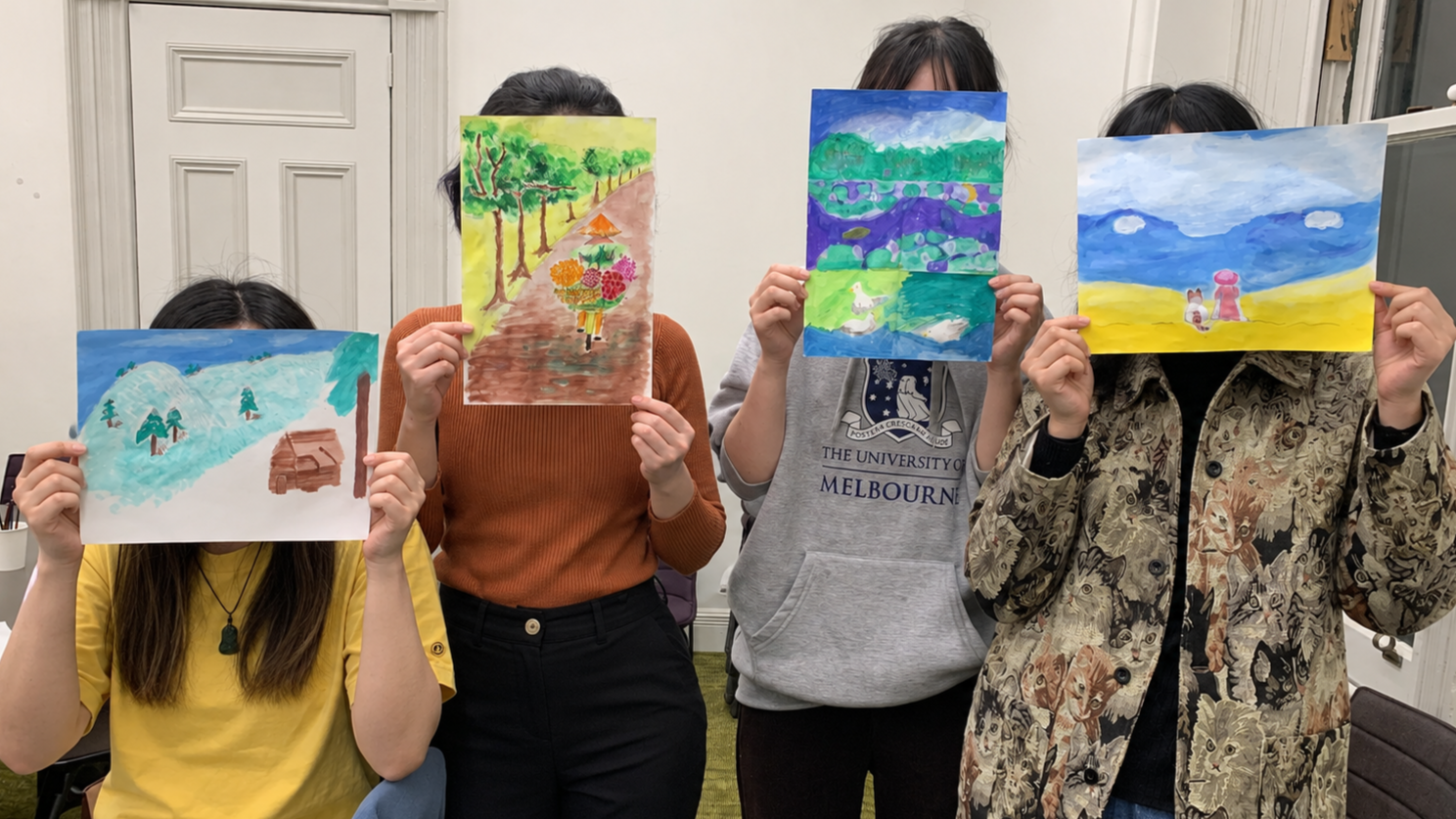
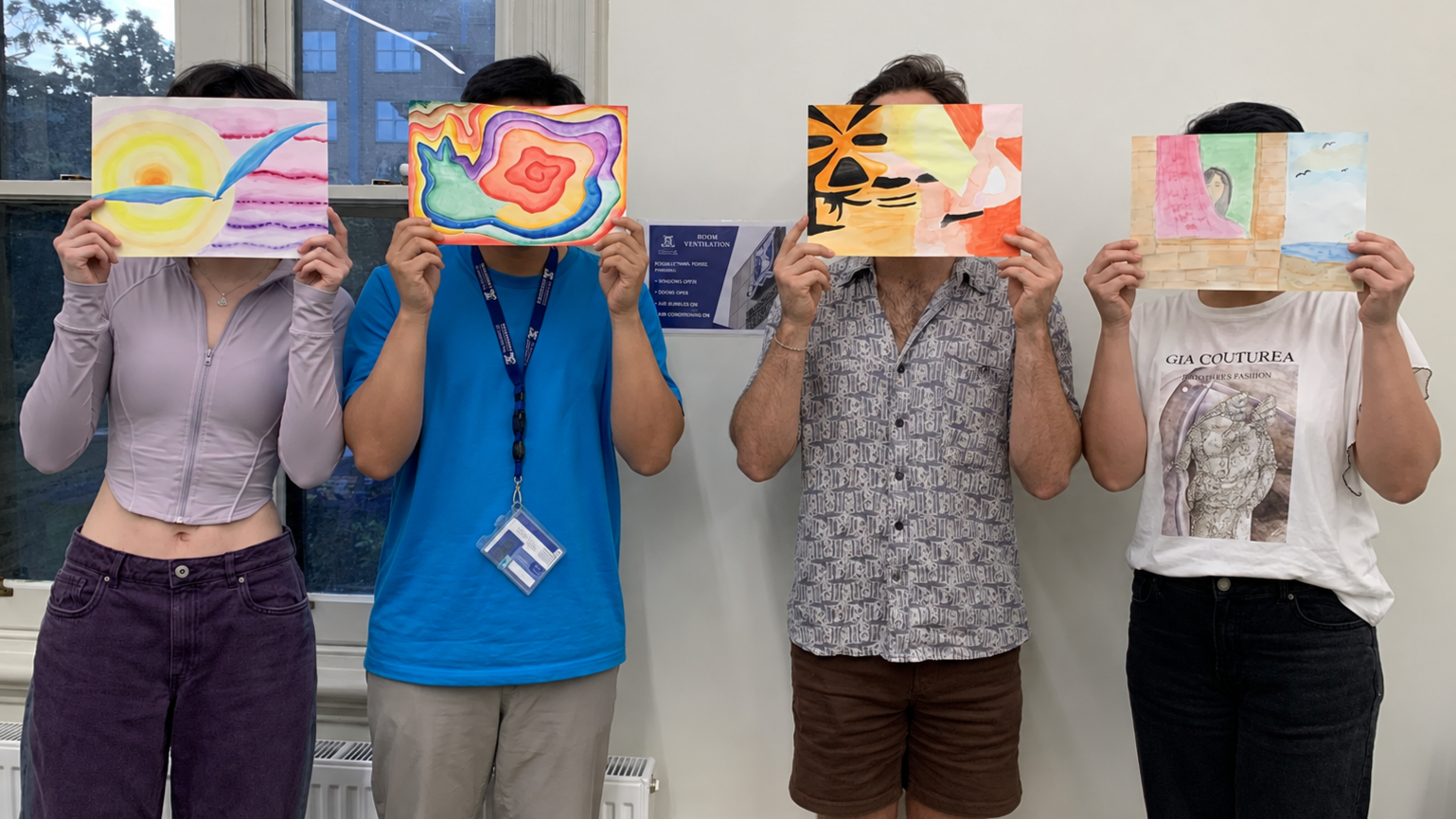
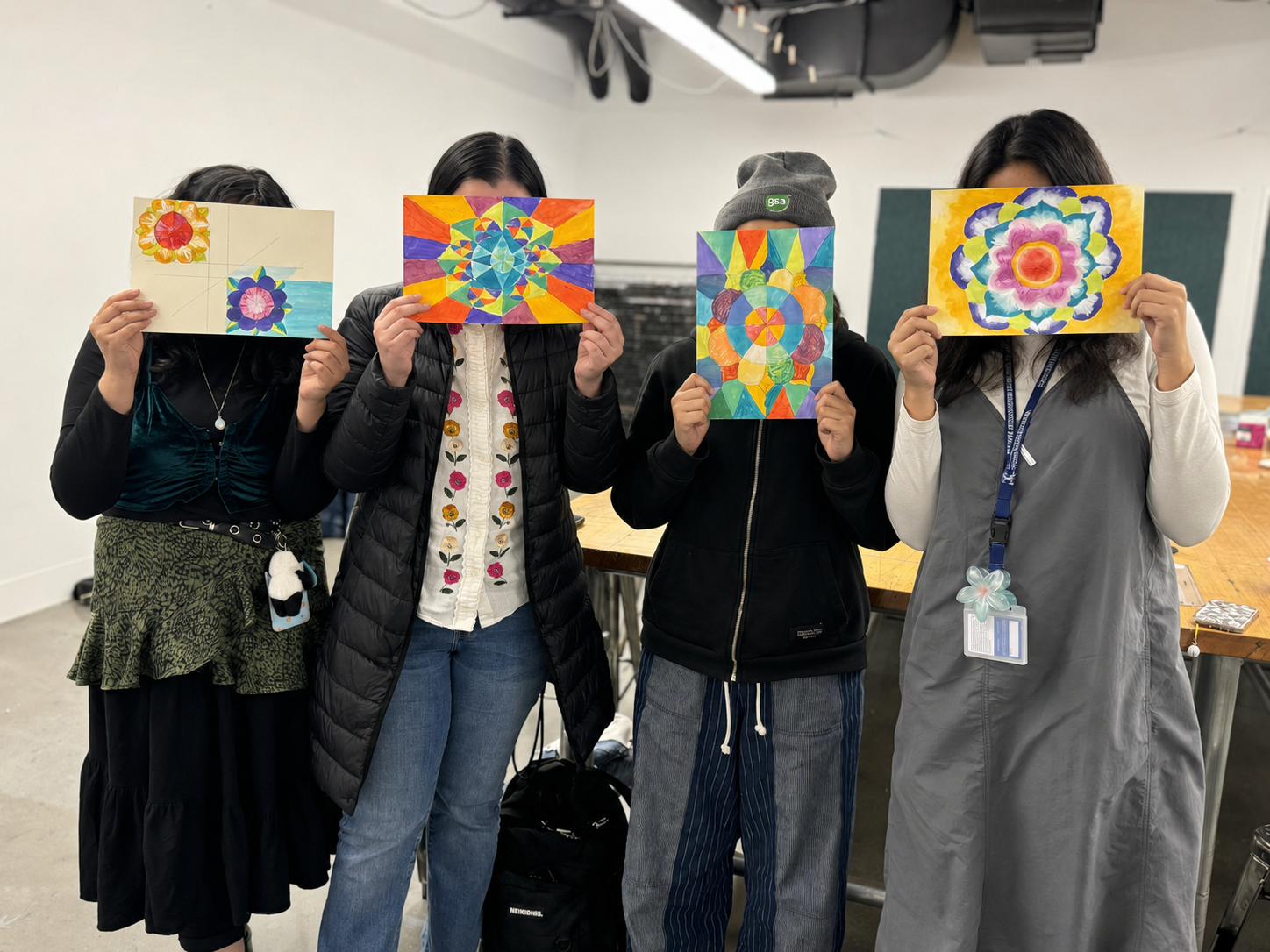
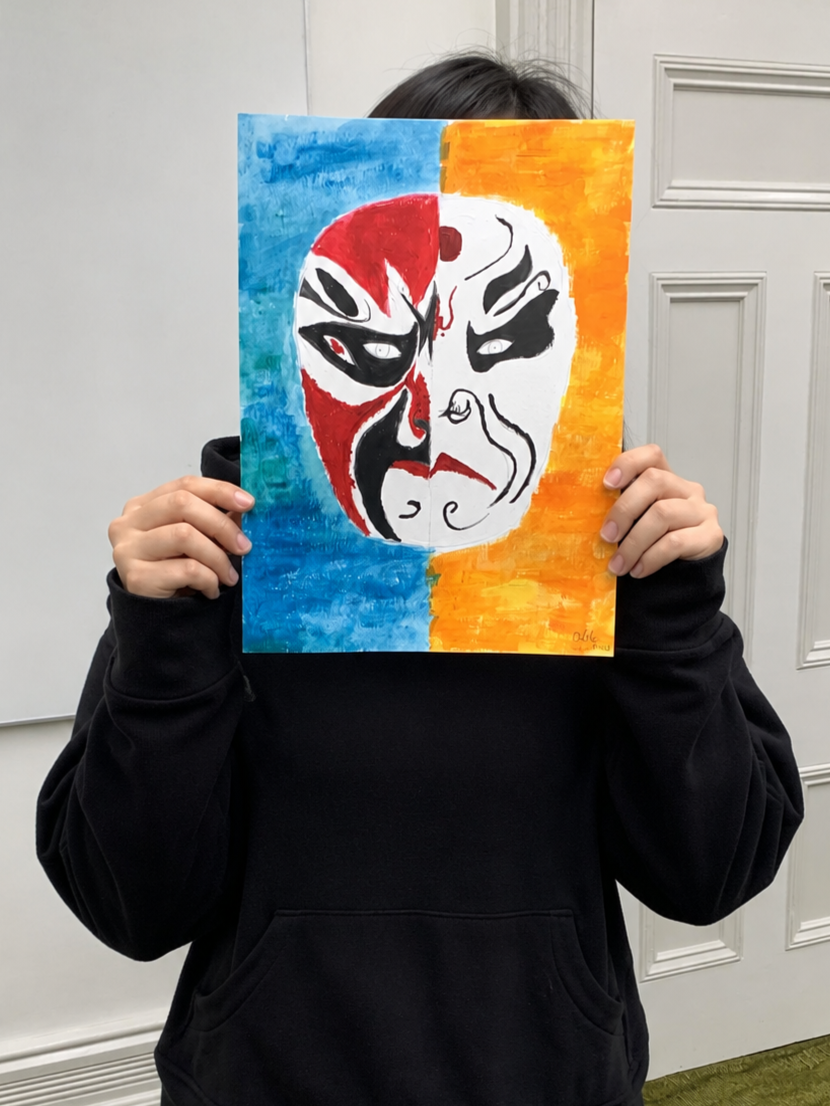
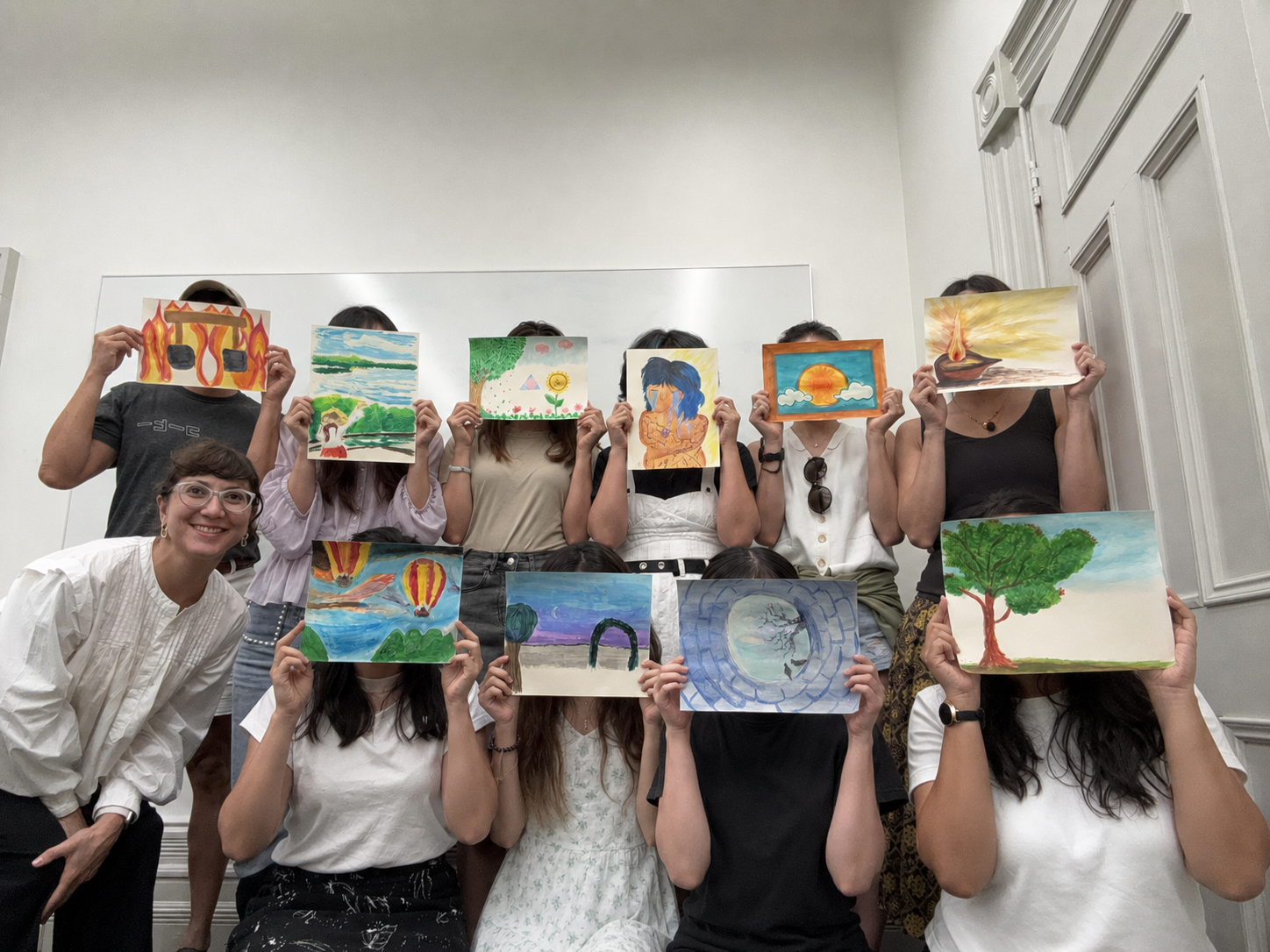
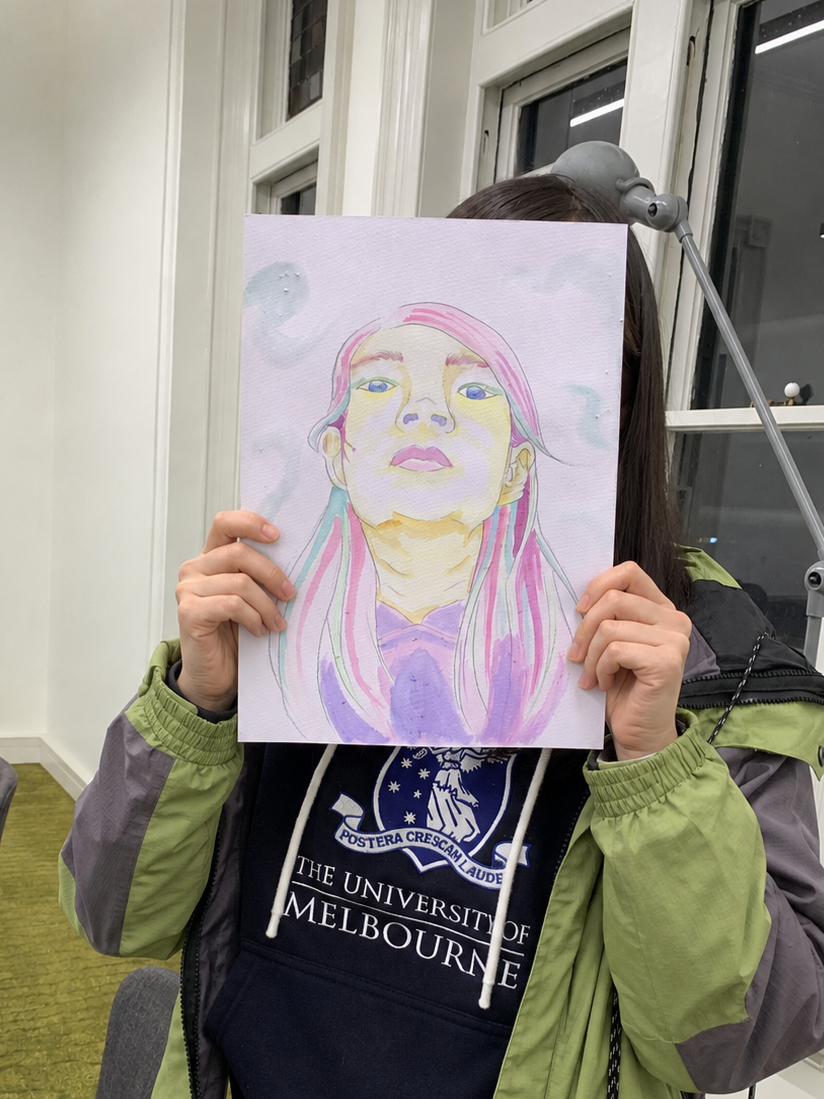
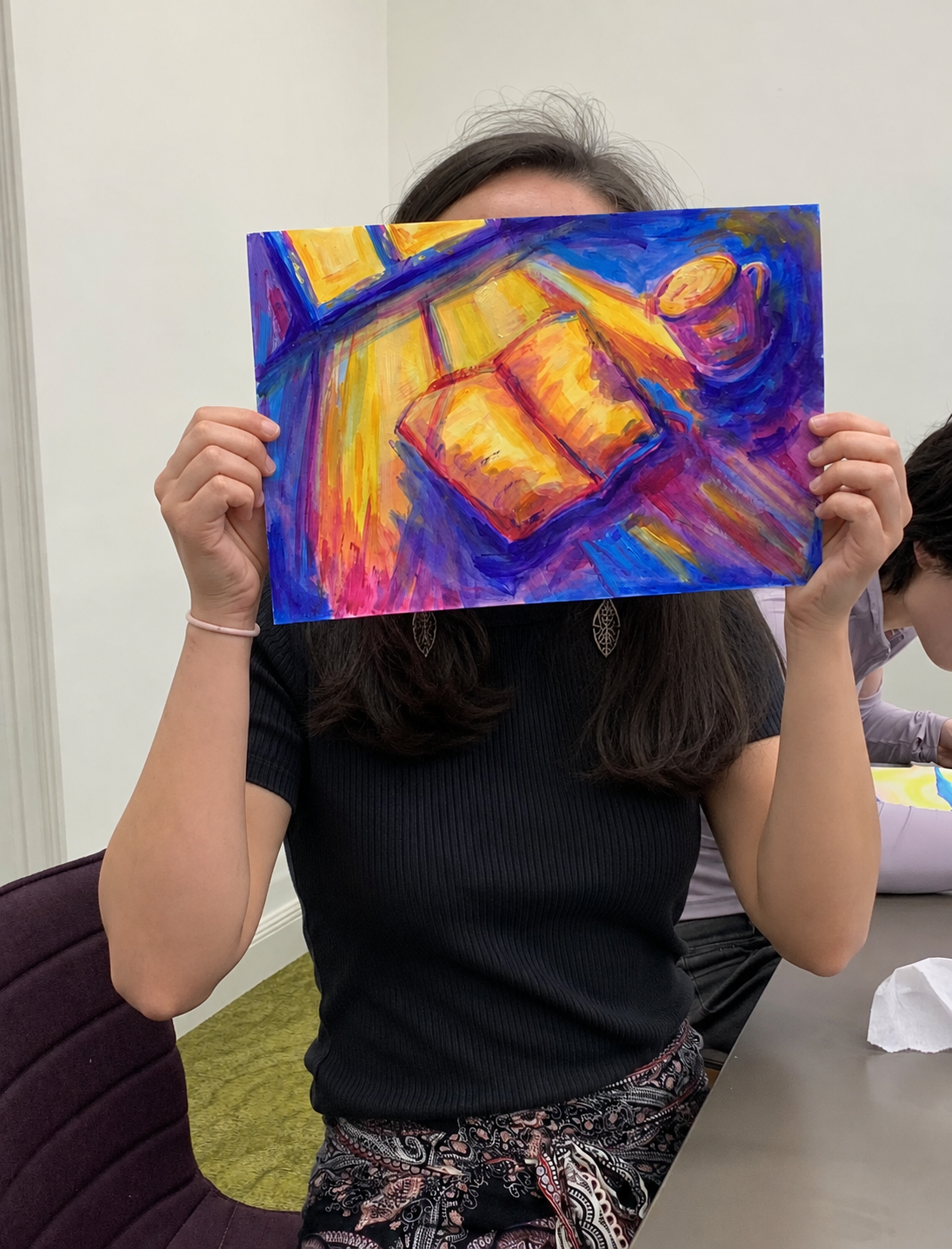
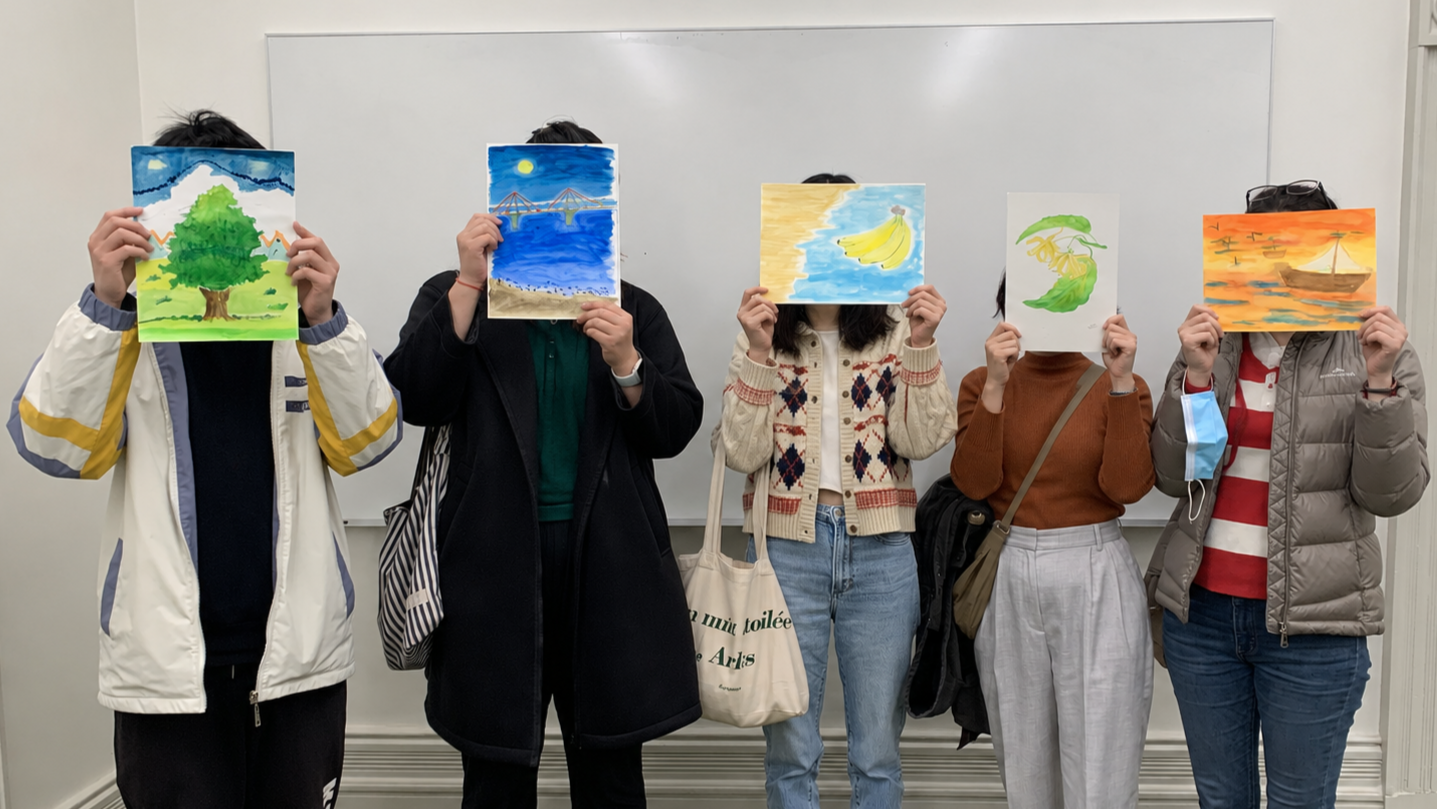
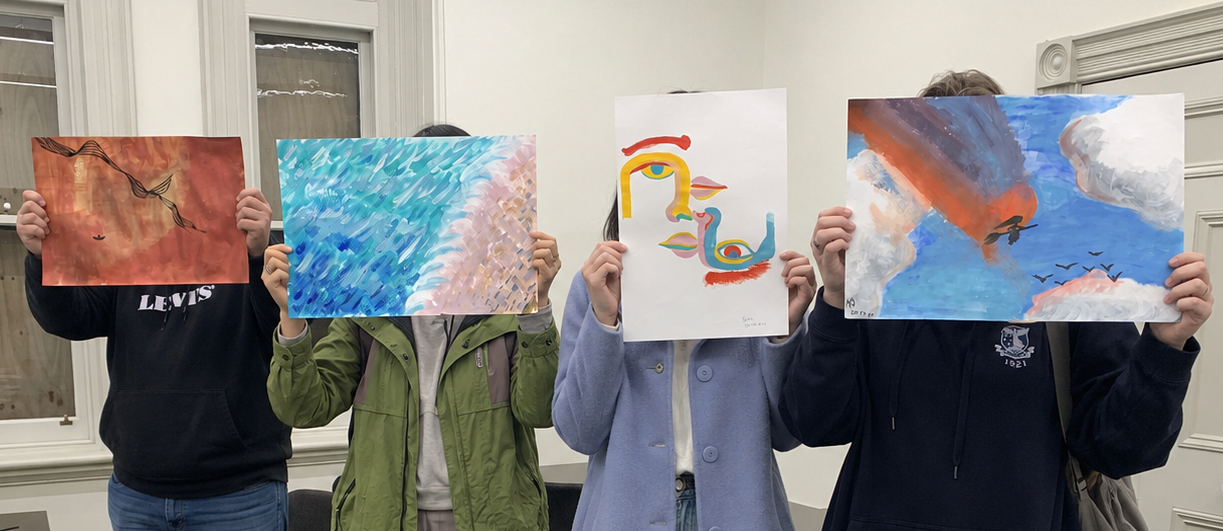
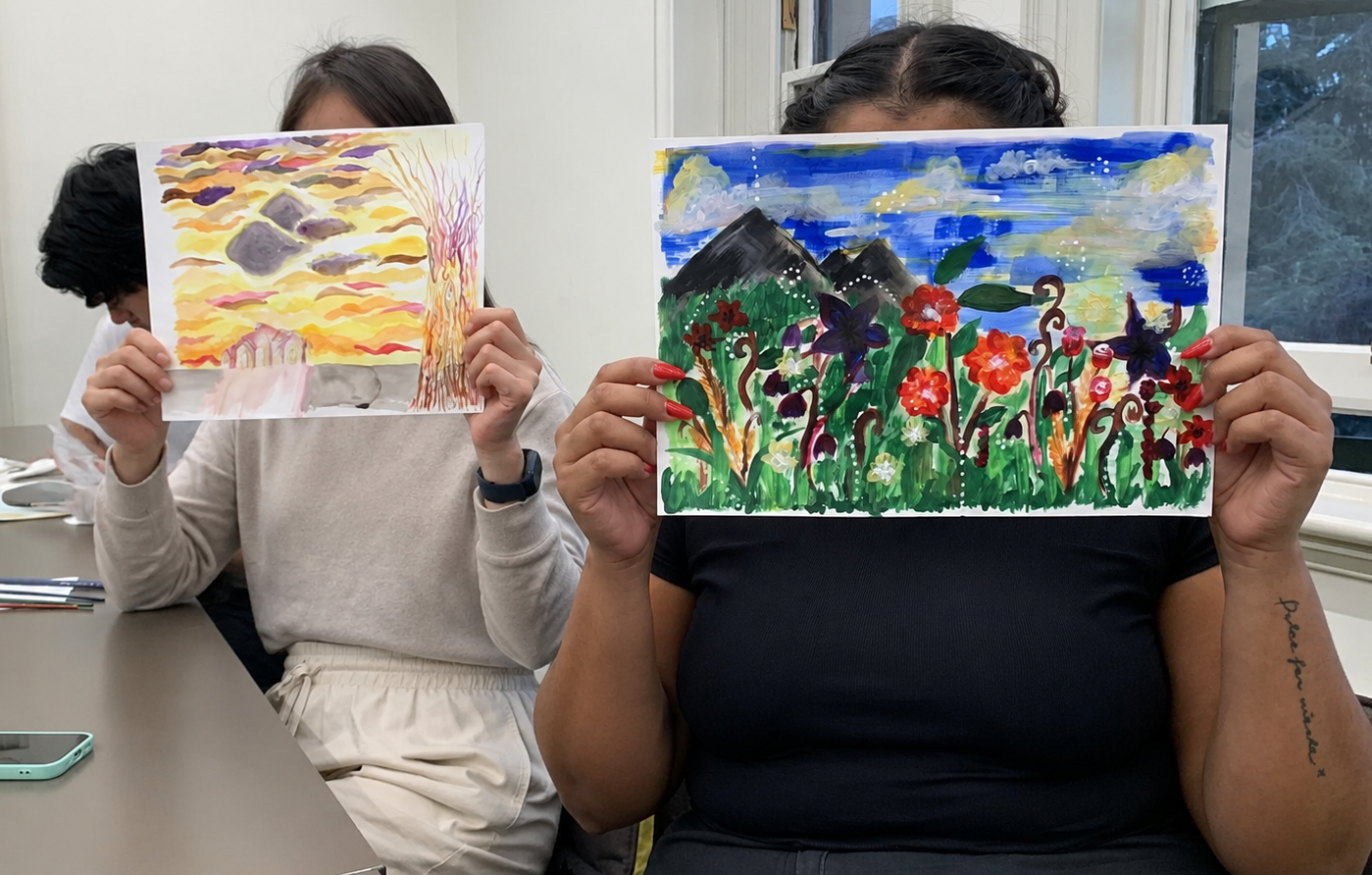
During lockdown, I began facilitating participatory artmaking online. Participants worked from separate spaces, connected through screens, before bringing their artworks towards their cameras to share what had emerged. These encounters were materially limited, yet they revealed something significant. Even without a shared physical studio, making could create a temporary space of relation.
What began as practice-led research into my own artistic processes was beginning to move outward.
Practice-led inquiry became absence.
Absence produced recognition.
Recognition initiated a search.
Searching for Art, Searching for Practice
When I returned to the University in 2021, I carried this recognition with me.
Moving between the art-school environment of Southbank and the Parkville mother campus made me increasingly attentive to where artistic practice was, and was not, visible within university life. I began looking for places where people outside the arts might make simply because they wanted to make.
Where might a scientist go be creative? Where could a medical student draw without the drawing being assessed? Where might a graduate researcher encounter clay, textiles or colour through curiosity? And where might someone who had left art behind years earlier find their way back to it?
In searching for these spaces, I was also searching for where my own artistic practice might belong beyond the individual studio.
That search opened another set of questions. Who is given permission to make? Where is creativity located within the university? What happens to artistic practice when it moves beyond the art school? And what might I learn as an artist by making alongside people who do not necessarily identify themselves as artists? These questions began personally. I missed making with other people.
Rather than finding the space I was searching for, I began creating one.
Art Class with Nila
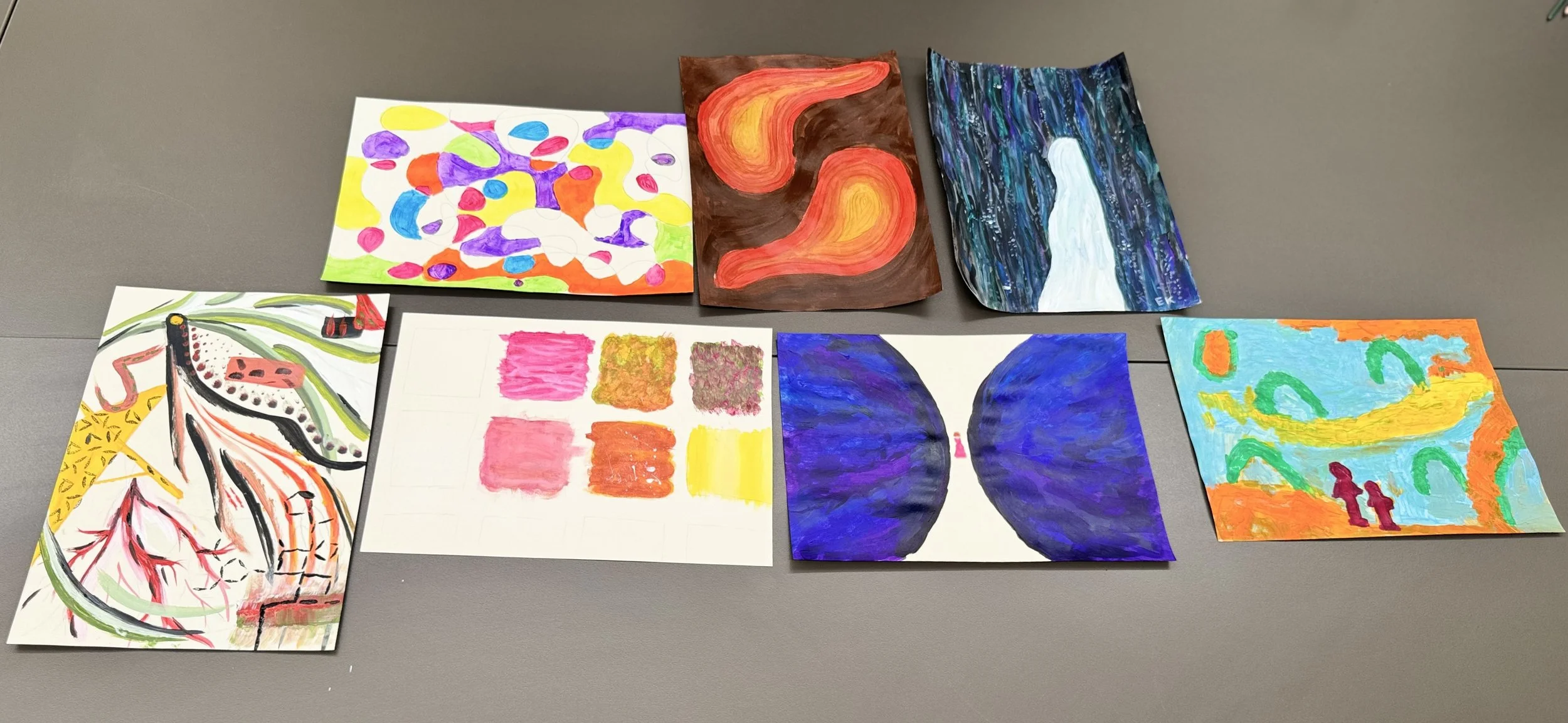
In 2021, I began calling these gatherings Art Class with Nila. What started as an informal offering developed into an ongoing interdisciplinary participatory art practice at the University.
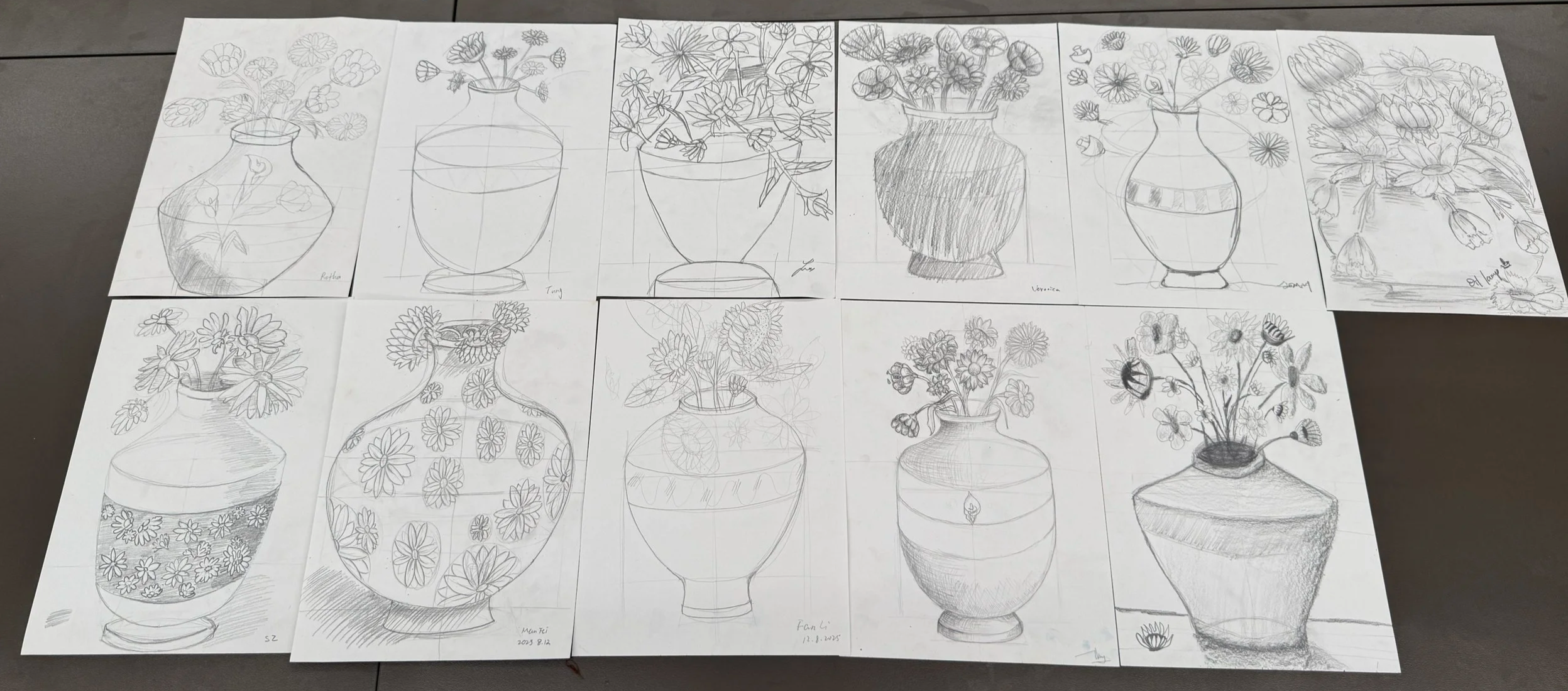
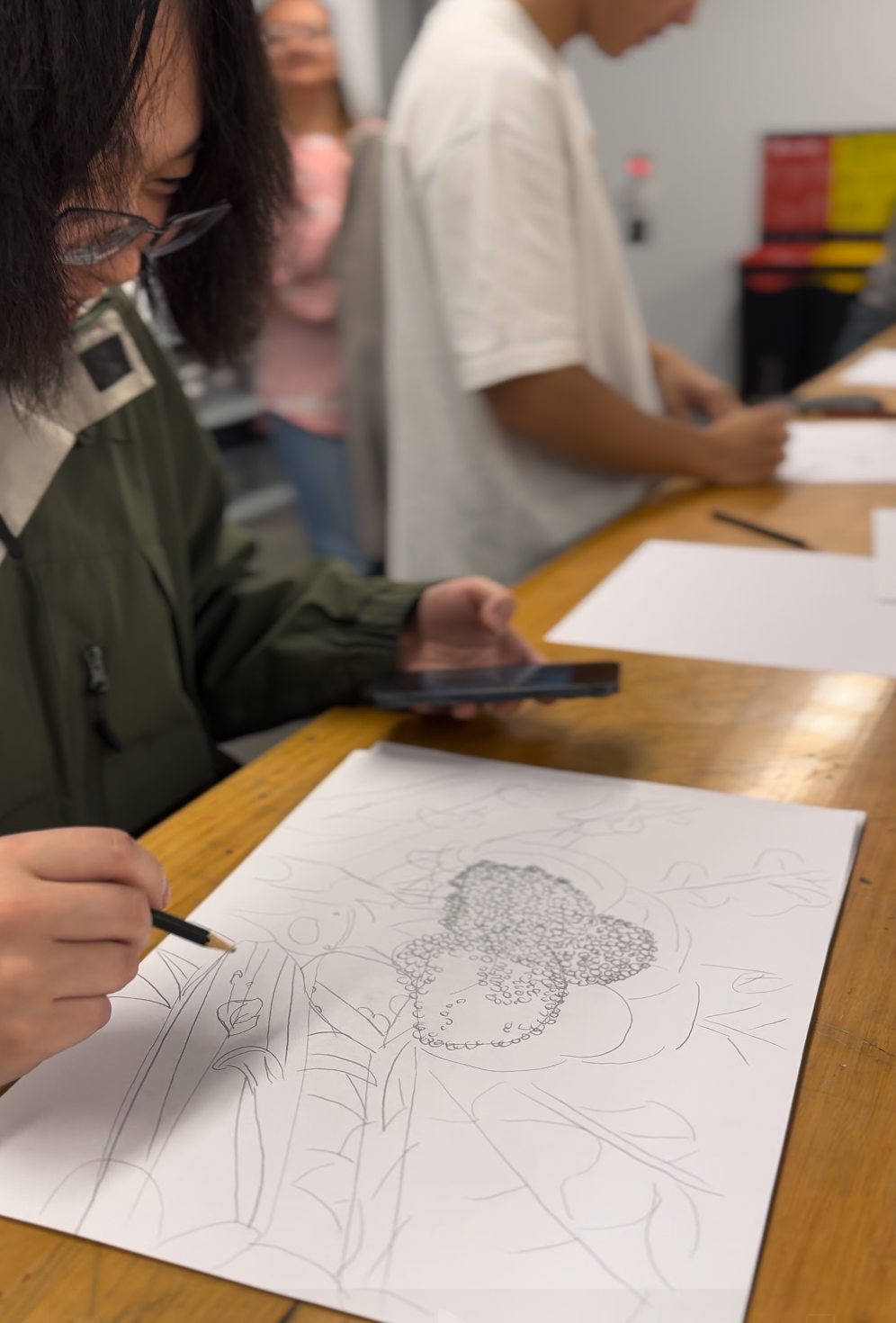
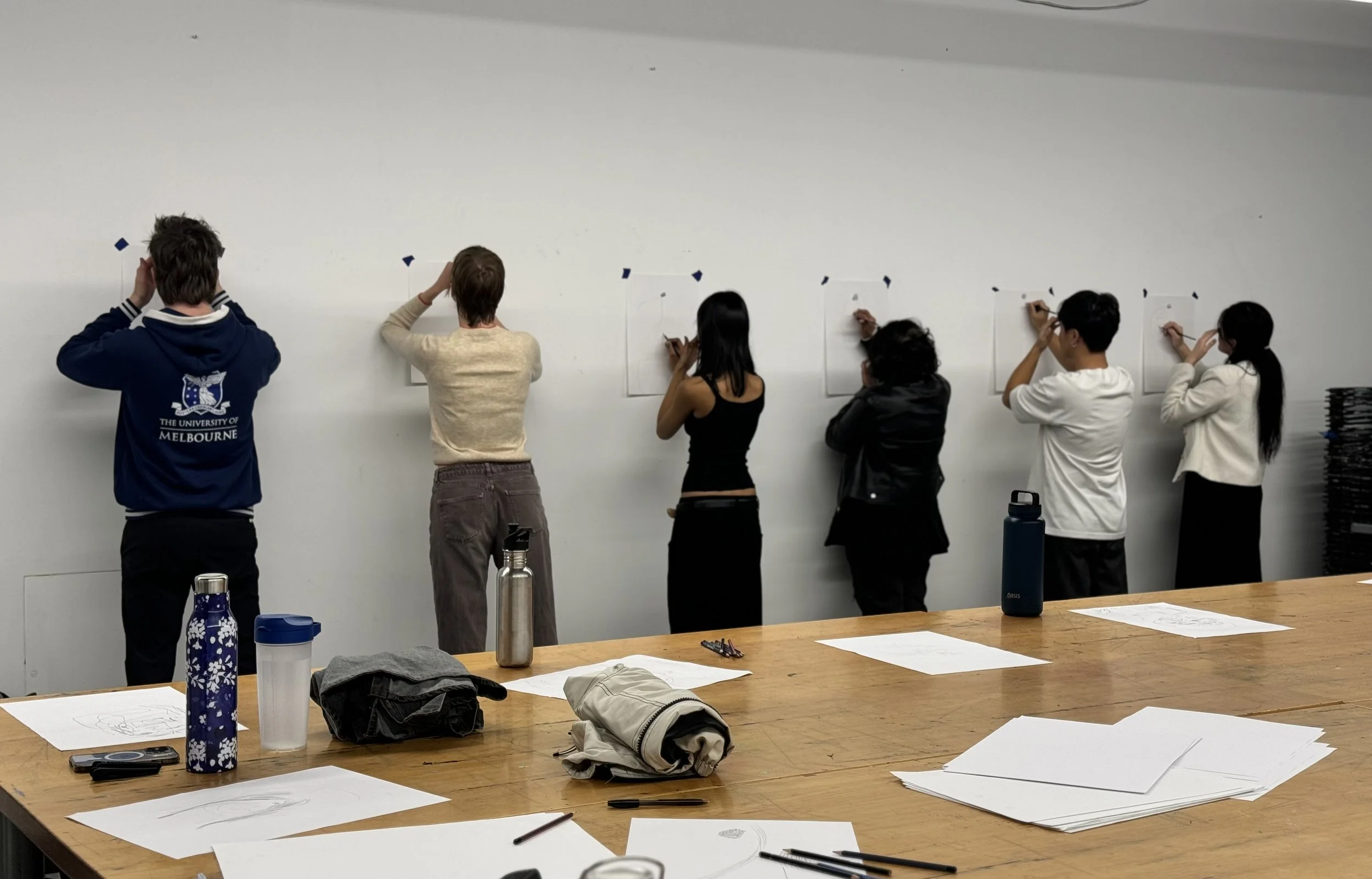
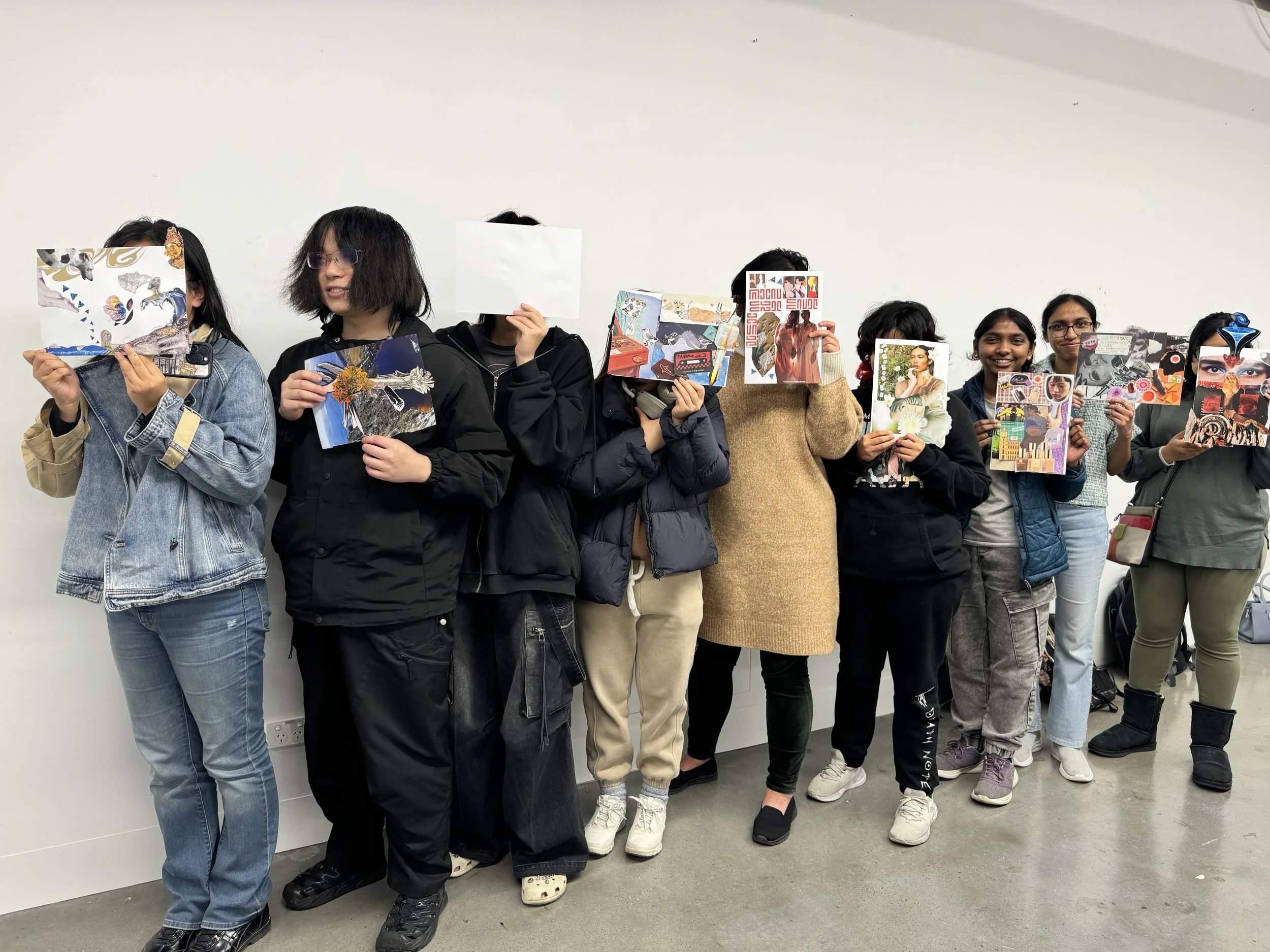
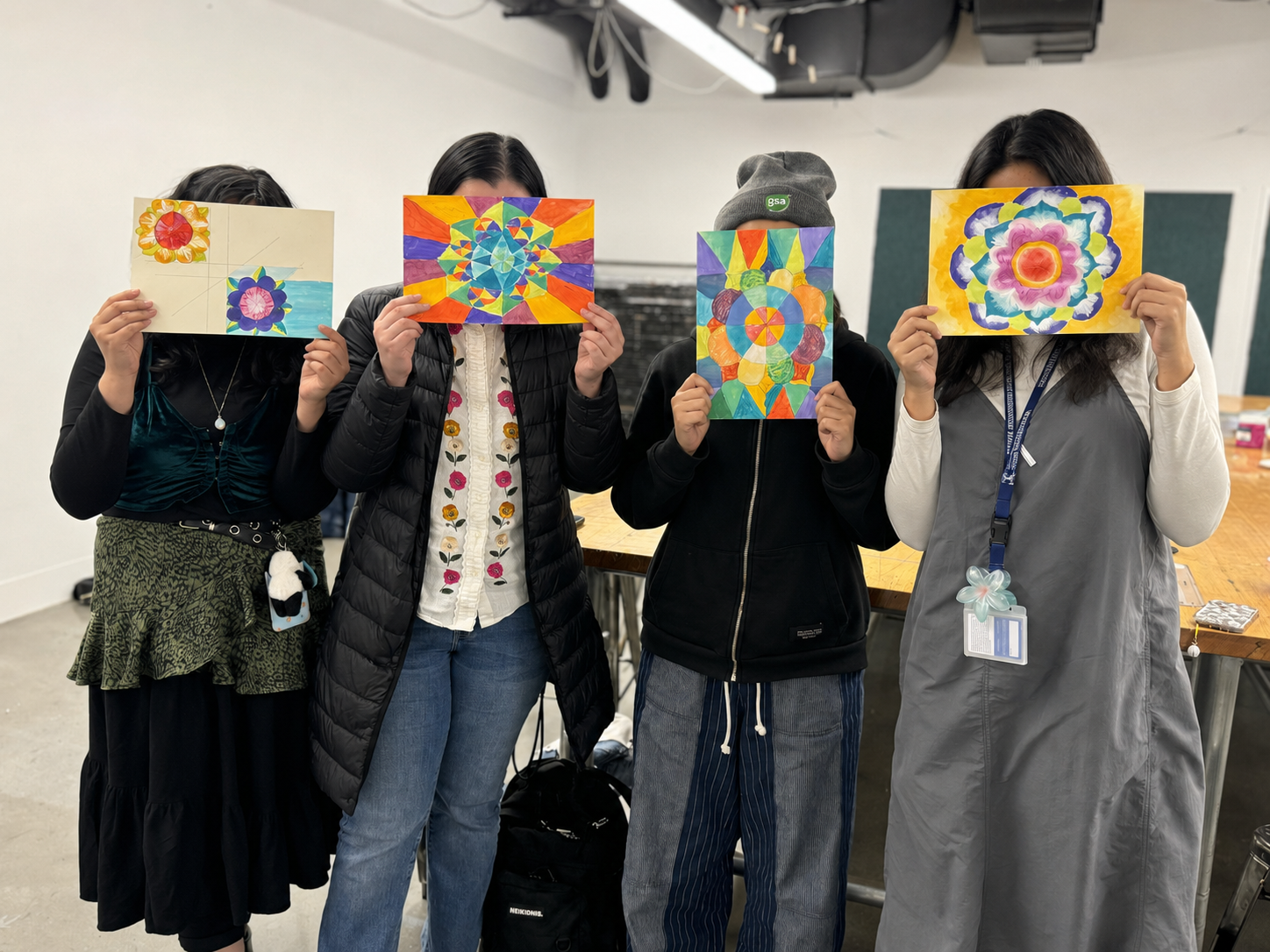
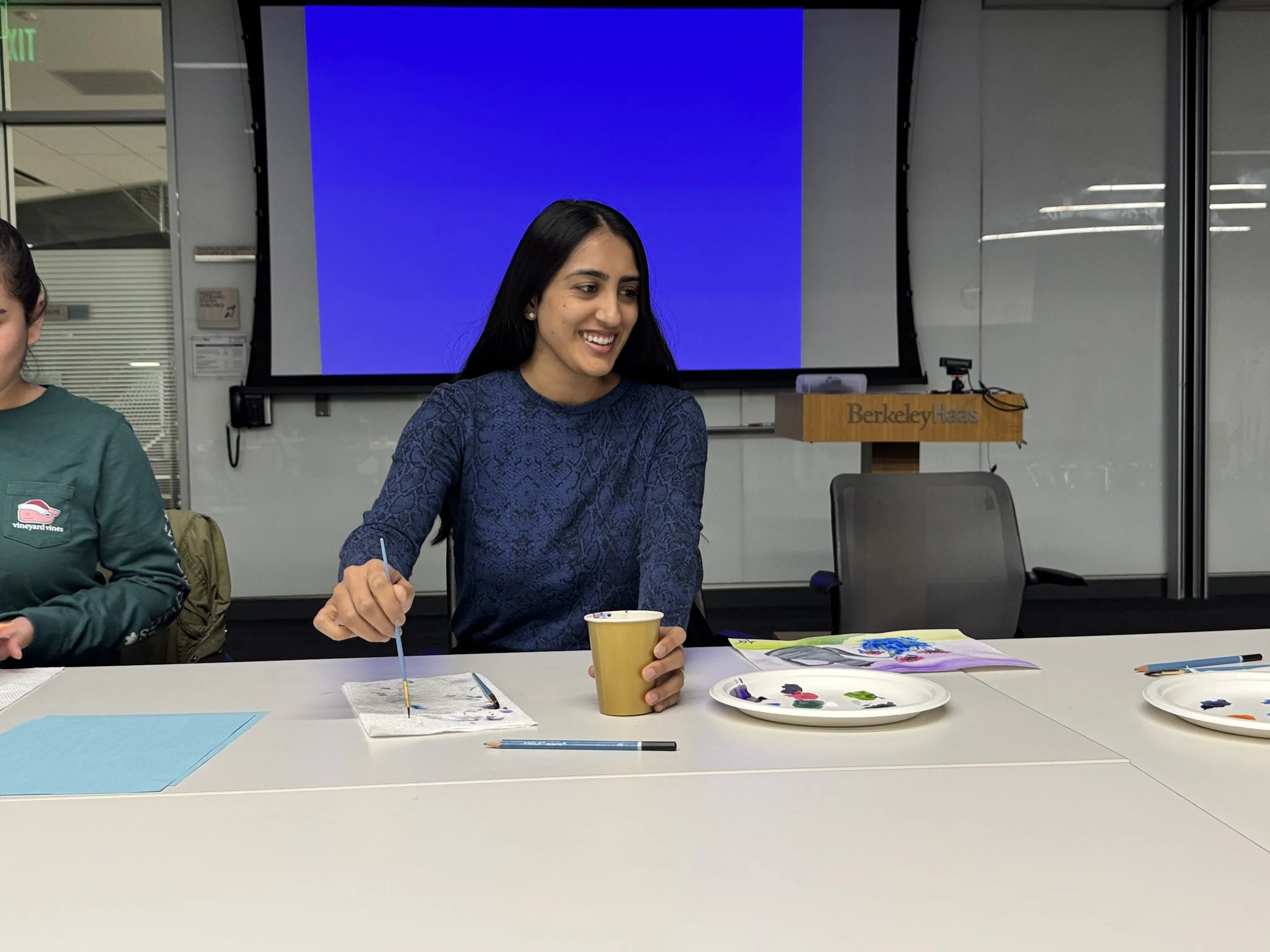
The program invites participants from across the University into a shared space for visual artmaking. Many come from disciplines outside the visual arts, including science, law, education, medicine, veterinary science, engineering and the humanities. Some arrive with established creative practices. Others have not made art since childhood. Some encounter particular materials for the first time.
No previous visual arts experience is required.
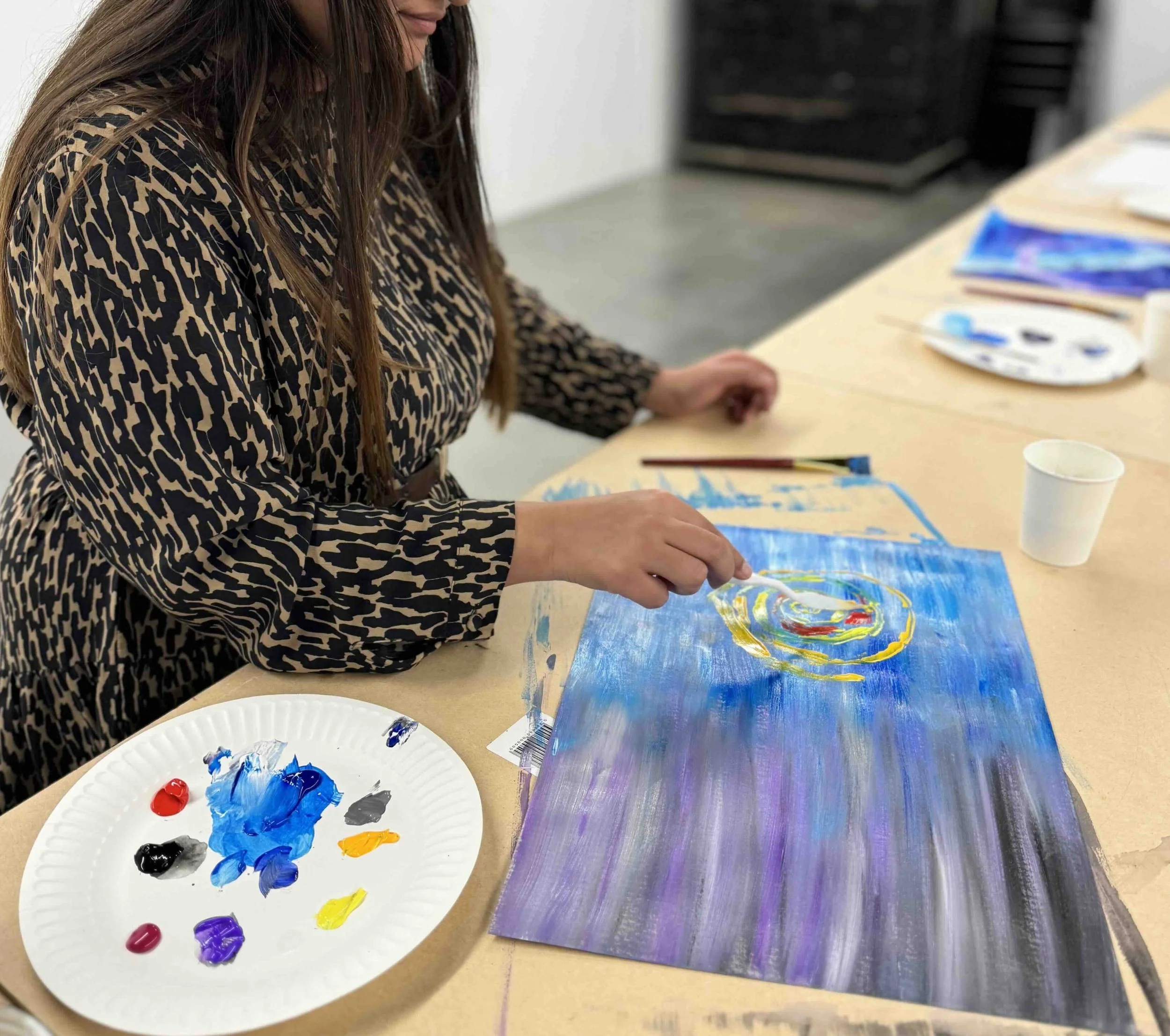
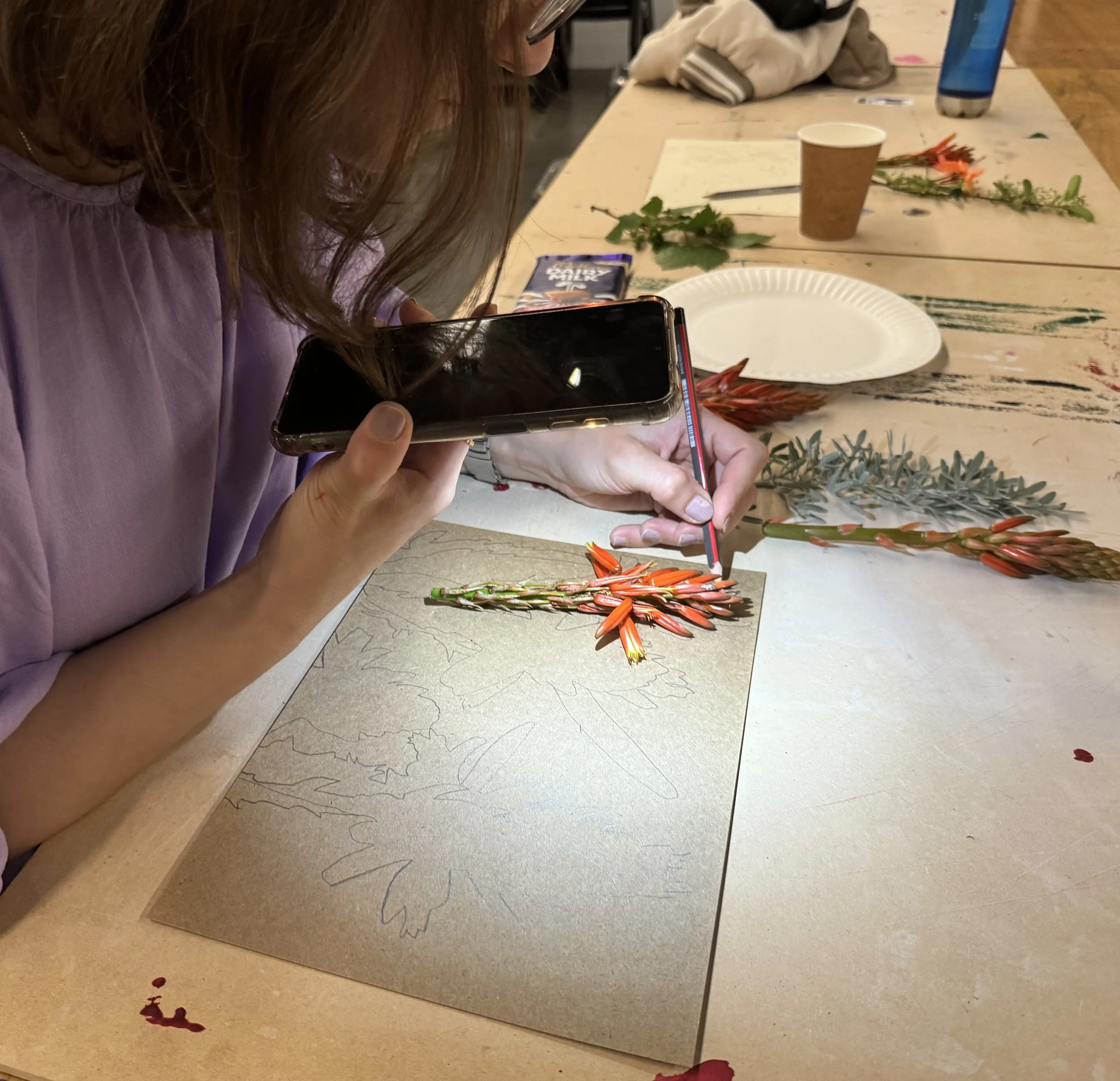
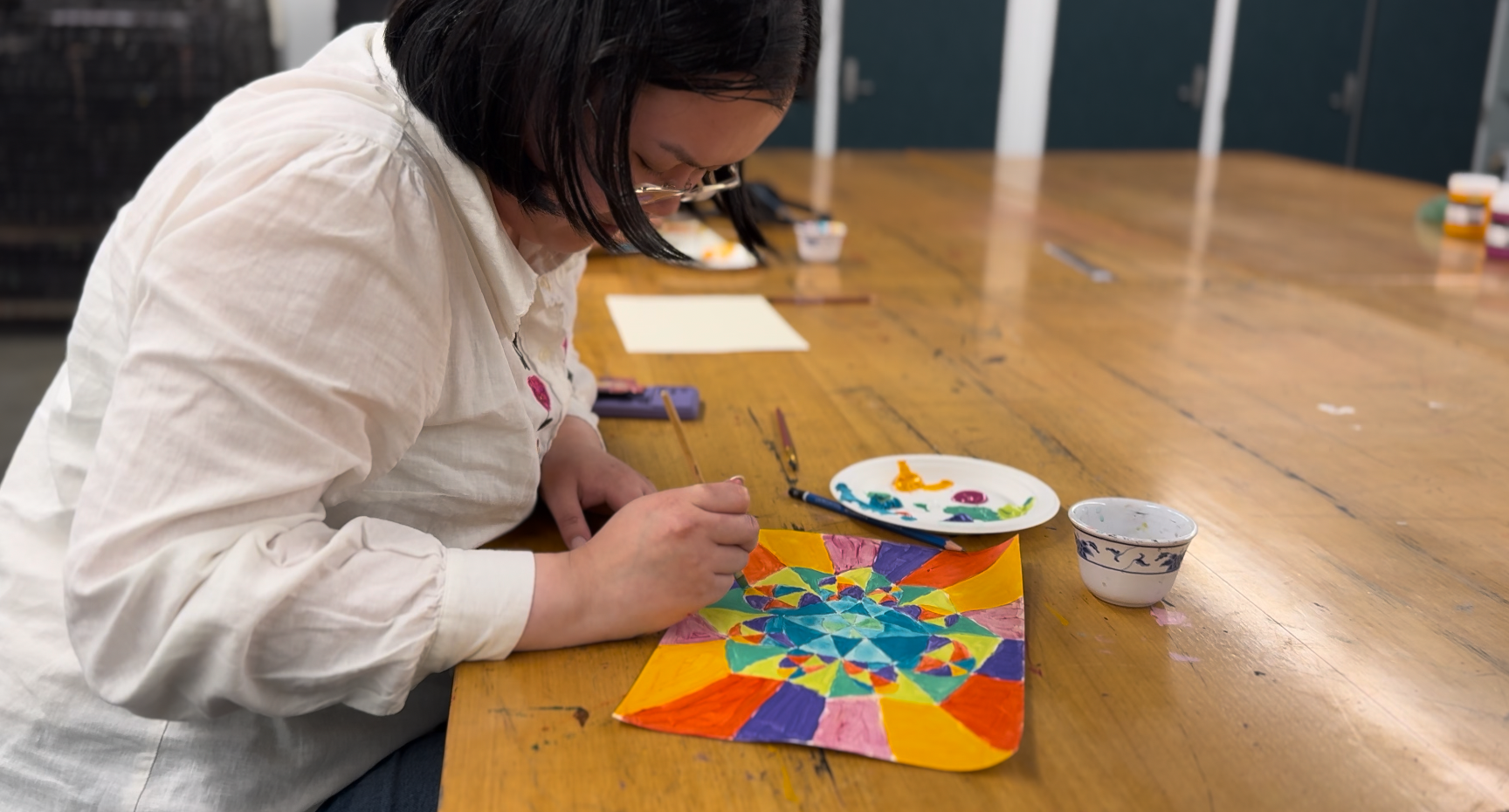
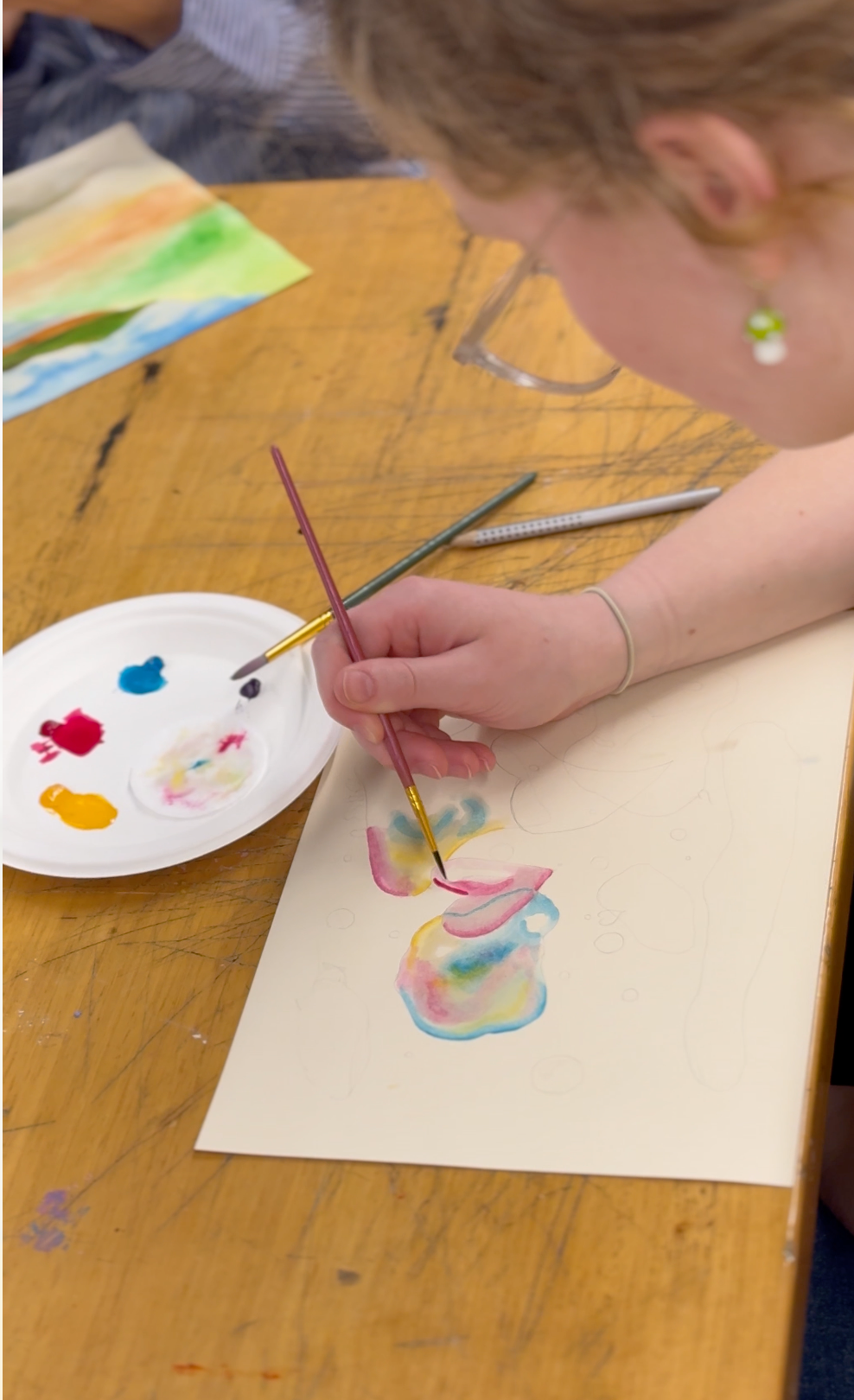
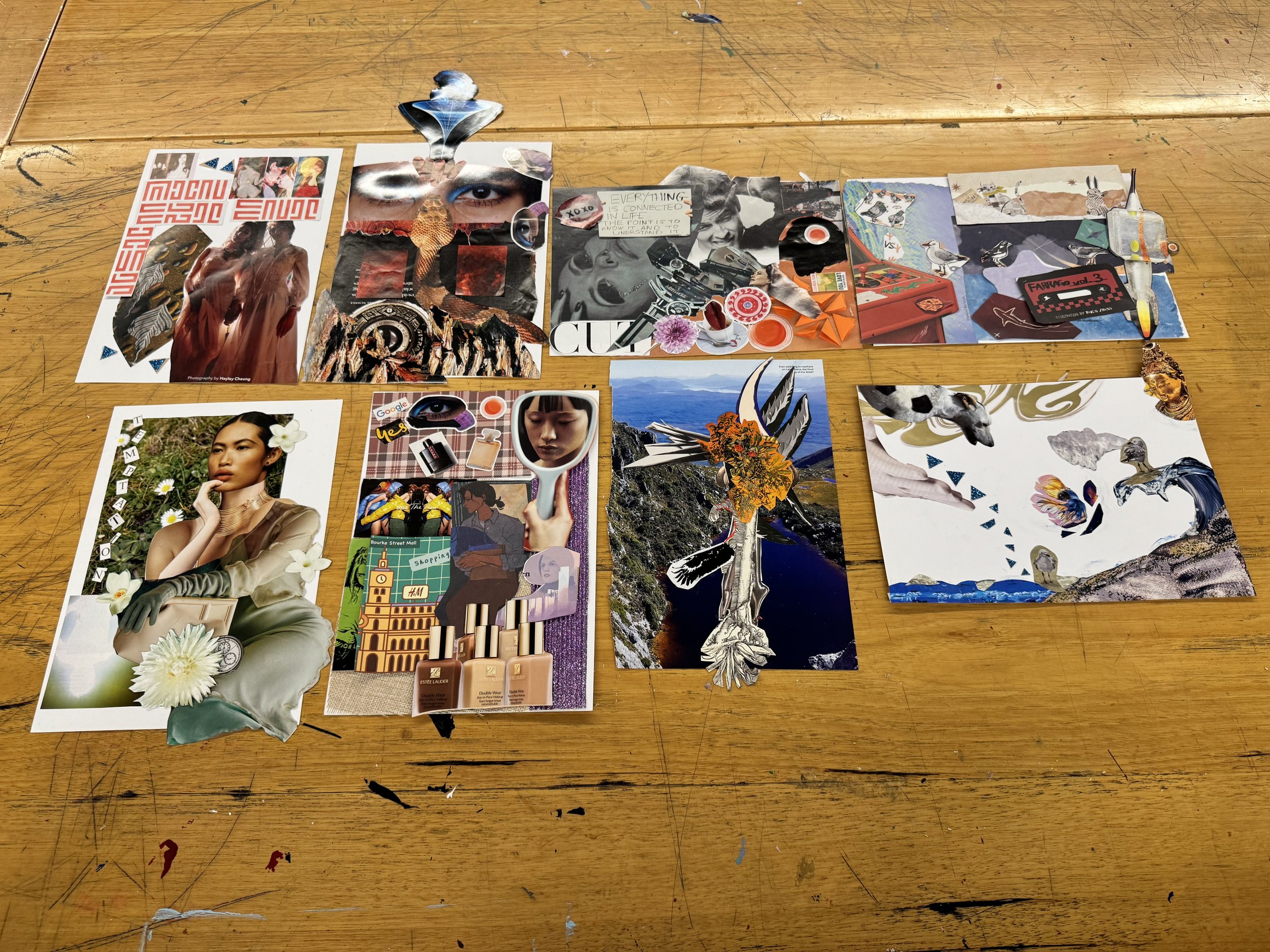
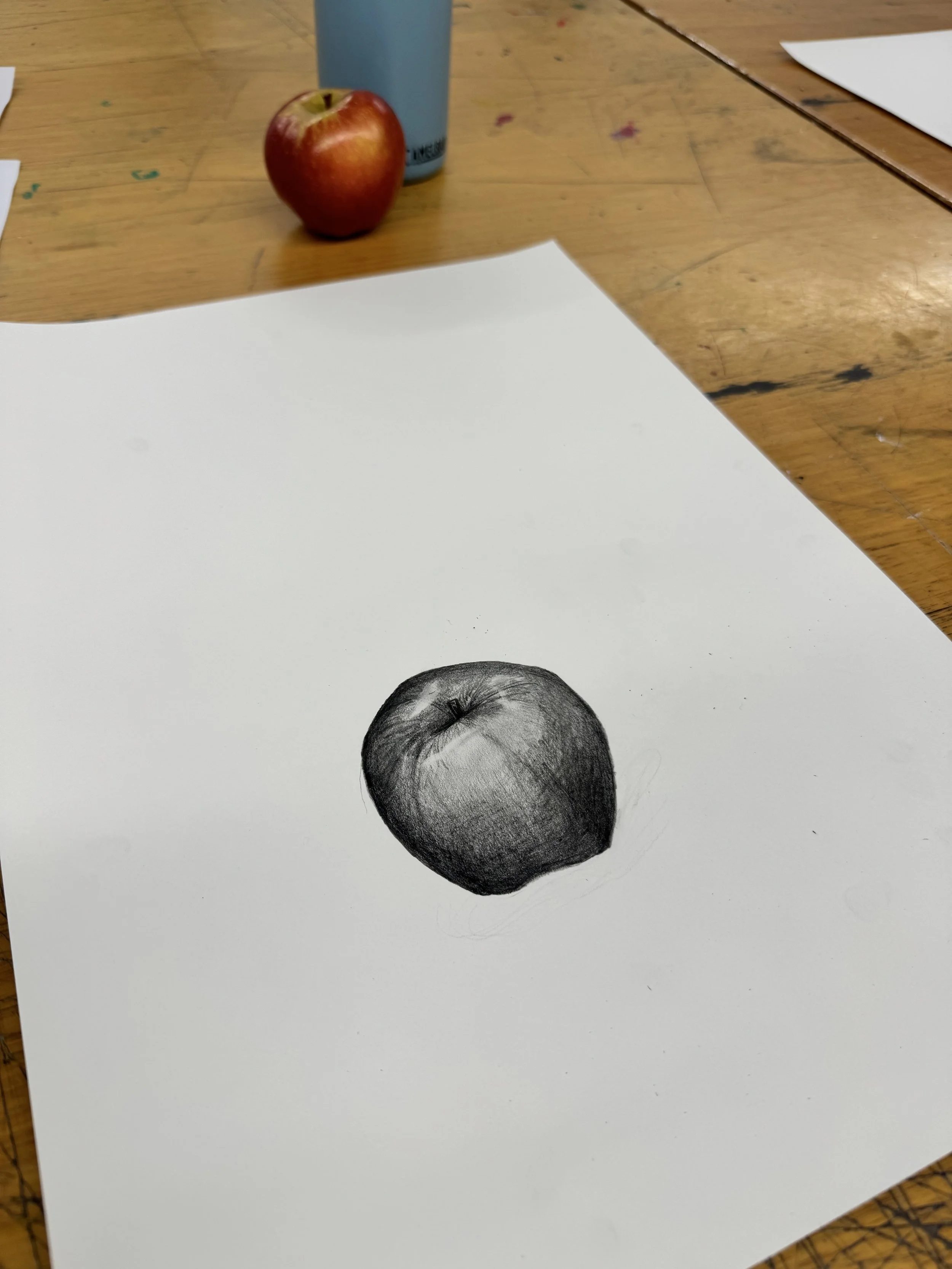
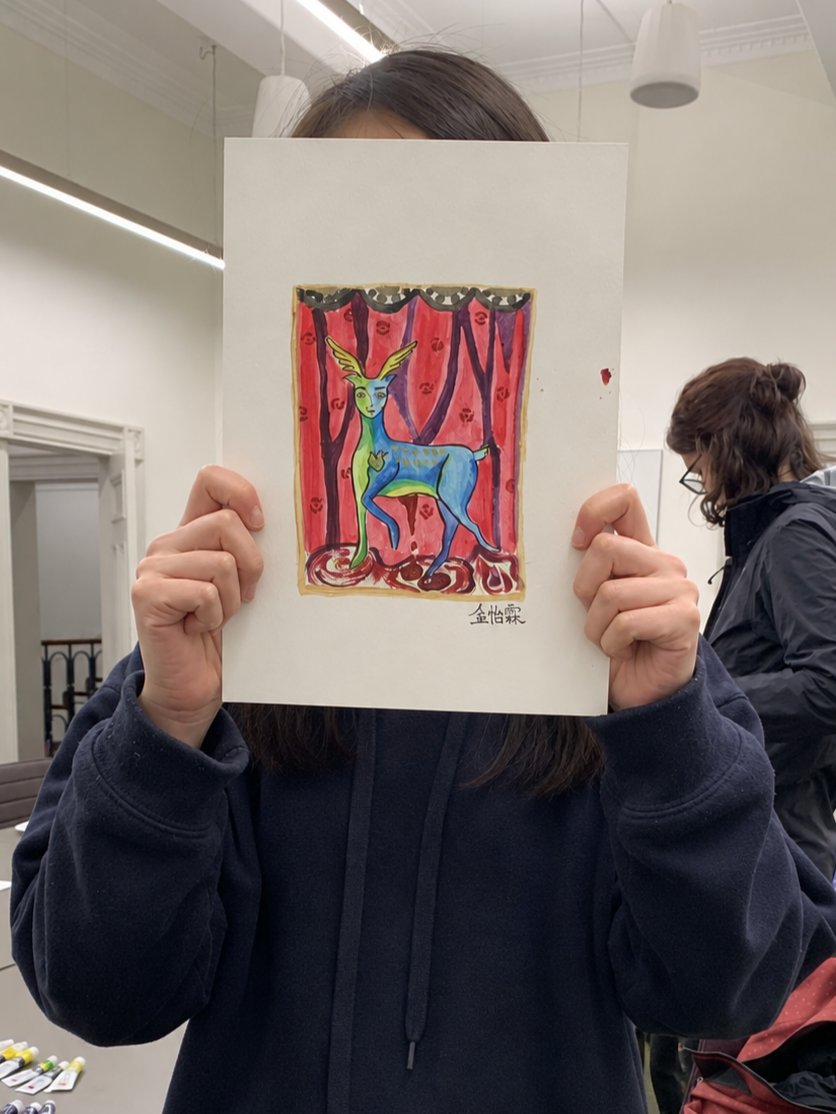
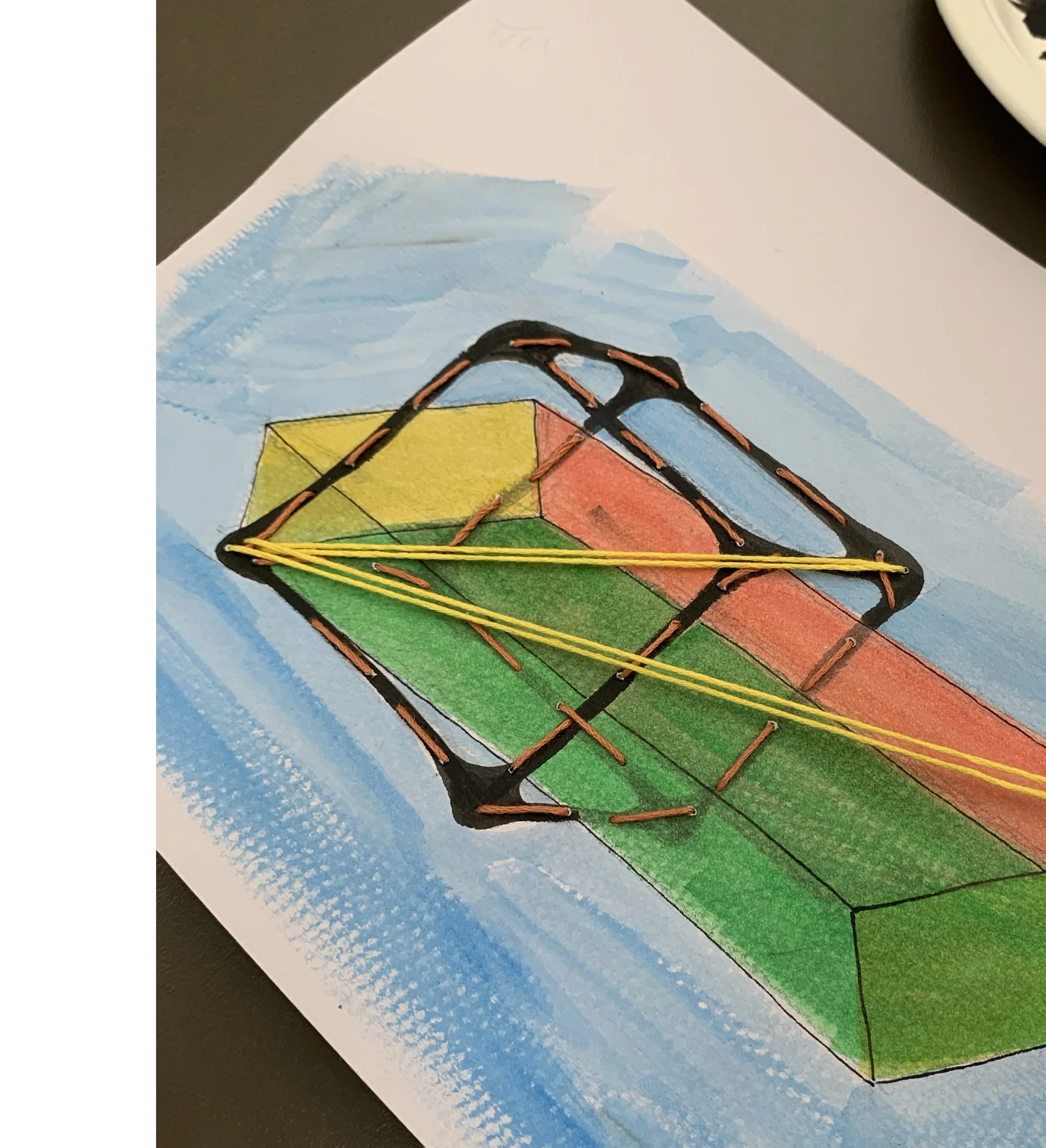
The classes are informal but intentionally structured. Artistic participation is not graded, ranked or assessed, yet each semester is carefully designed through an overarching program. Weekly two-hour sessions introduce different material practices, including drawing, painting, collage, sculpture and textiles. Participants who return regularly can develop greater familiarity with materials, techniques and artistic processes over time.
This relationship between structure and openness has become central to the practice.
I establish the conditions for making, but I do not prescribe the artwork, its outcome or the style it should take. What emerges remains open.
Artist / Researcher / Educator
My position within the studio continually moves between artist, researcher and educator.
As artist, I bring materials, visual knowledge and my own practice into the room. I make alongside participants and remain attentive to colour, line, gesture, materiality and the unexpected directions through which making unfolds.
As educator, I design the conditions of the encounter. I develop the program, introduce materials, demonstrate techniques and work individually with participants as they negotiate unfamiliar processes.
As researcher, I observe and wonder.
I notice moments of hesitation and absorption. I listen to conversations that emerge around the tables. I observe how materials travel between people, how participants learn by watching one another, how disciplinary and cultural knowledge enters artistic decisions, and how the atmosphere of the room changes through collective making. I reflect on the process entirely during and after.
These positions are not separate.
Teaching changes what I notice as an artist. Making changes what I understand as an educator. Observation generates questions that return to my artistic practice.
Through this movement between artist, researcher and educator, Art Class with Nila has become am a/r/tographic living learning inquiry.
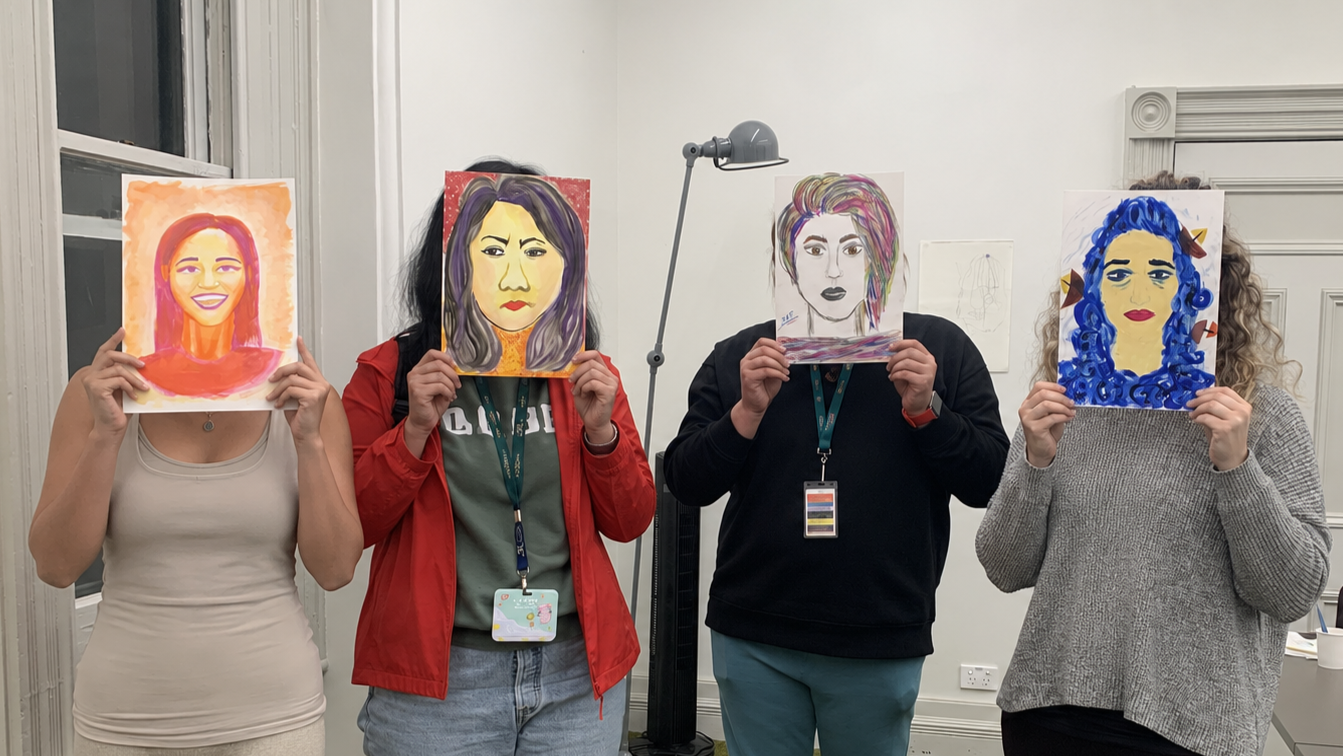
The Participatory Studio
A session usually begins by slowing down.
Participants arrive carrying the rhythms and demands of their day. We may begin with a short grounding practice before I introduce the materials and artistic focus of the session. Techniques are demonstrated where necessary, particularly when participants encounter an unfamiliar medium.
Then the room begins to change.
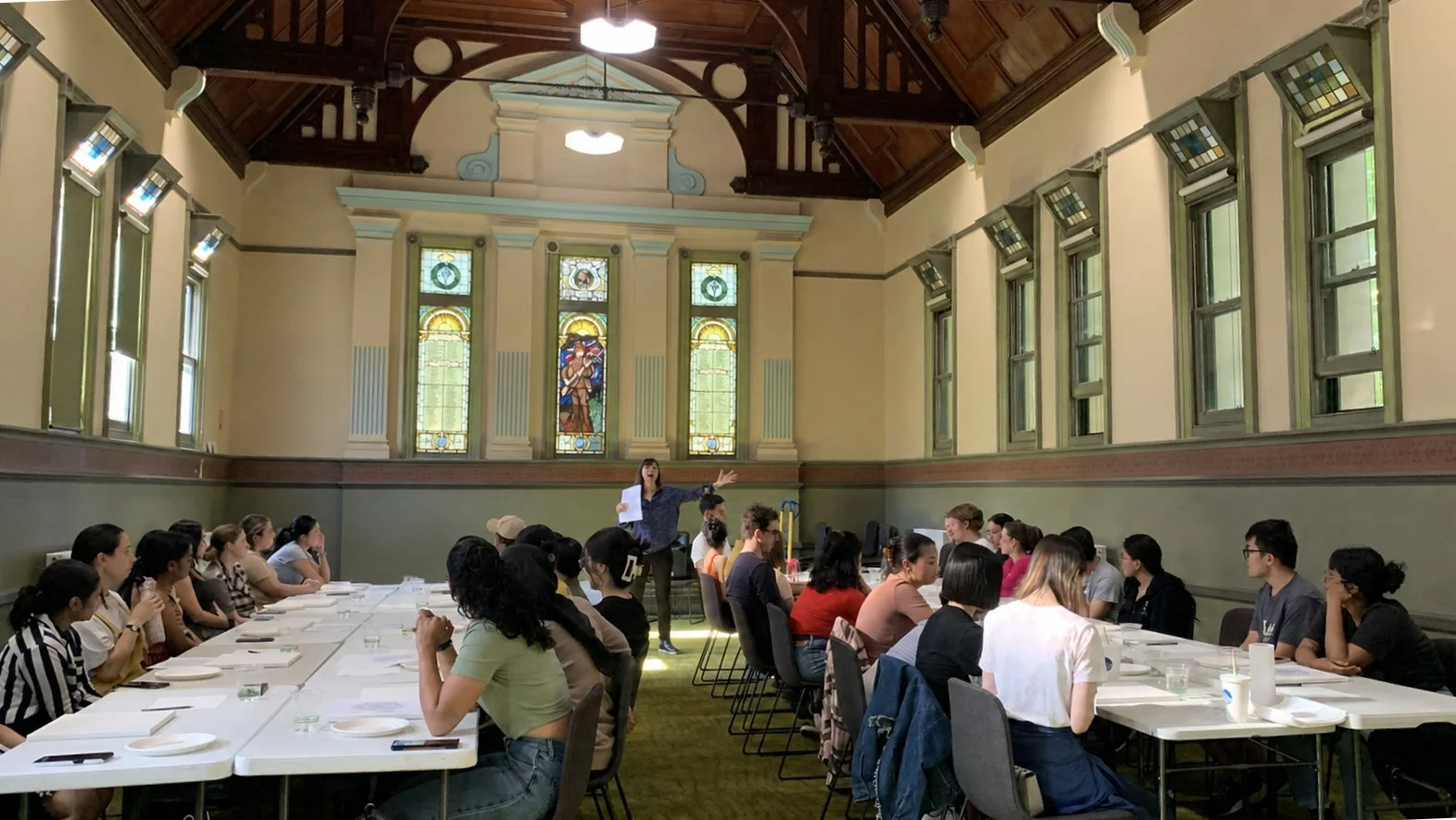
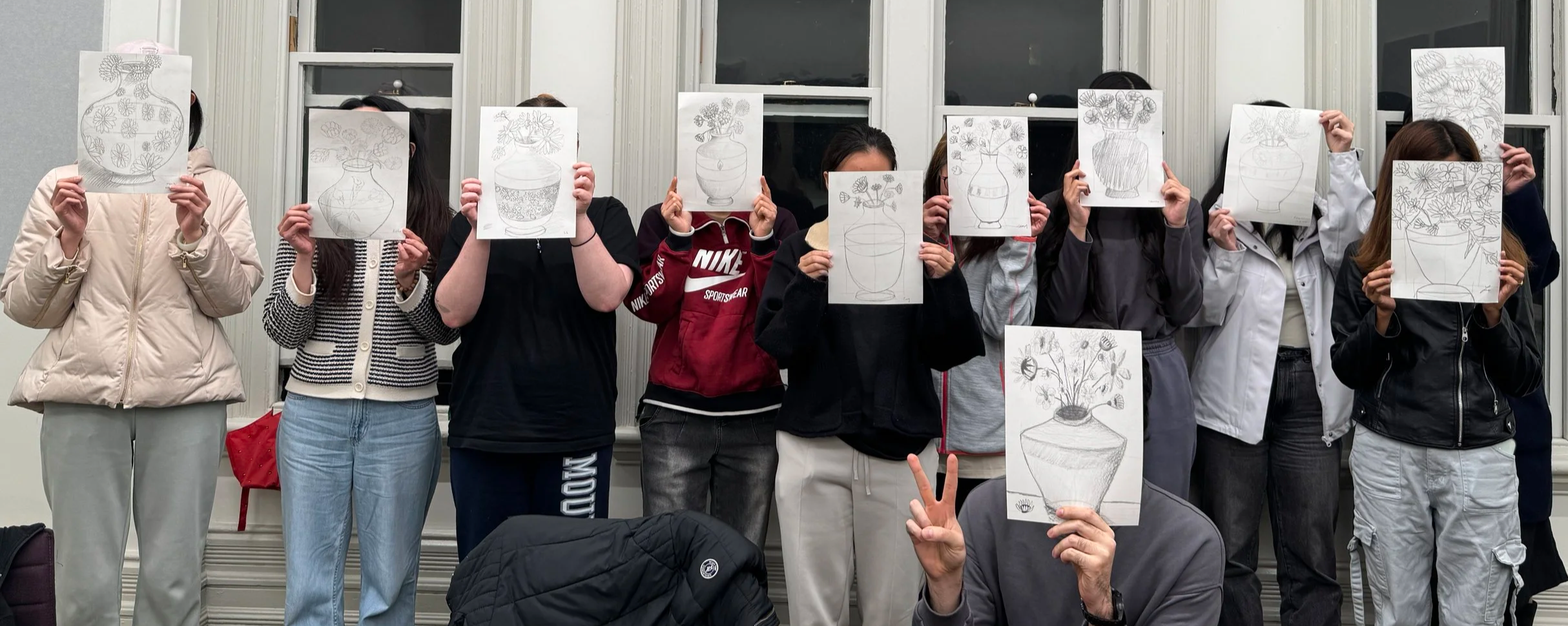
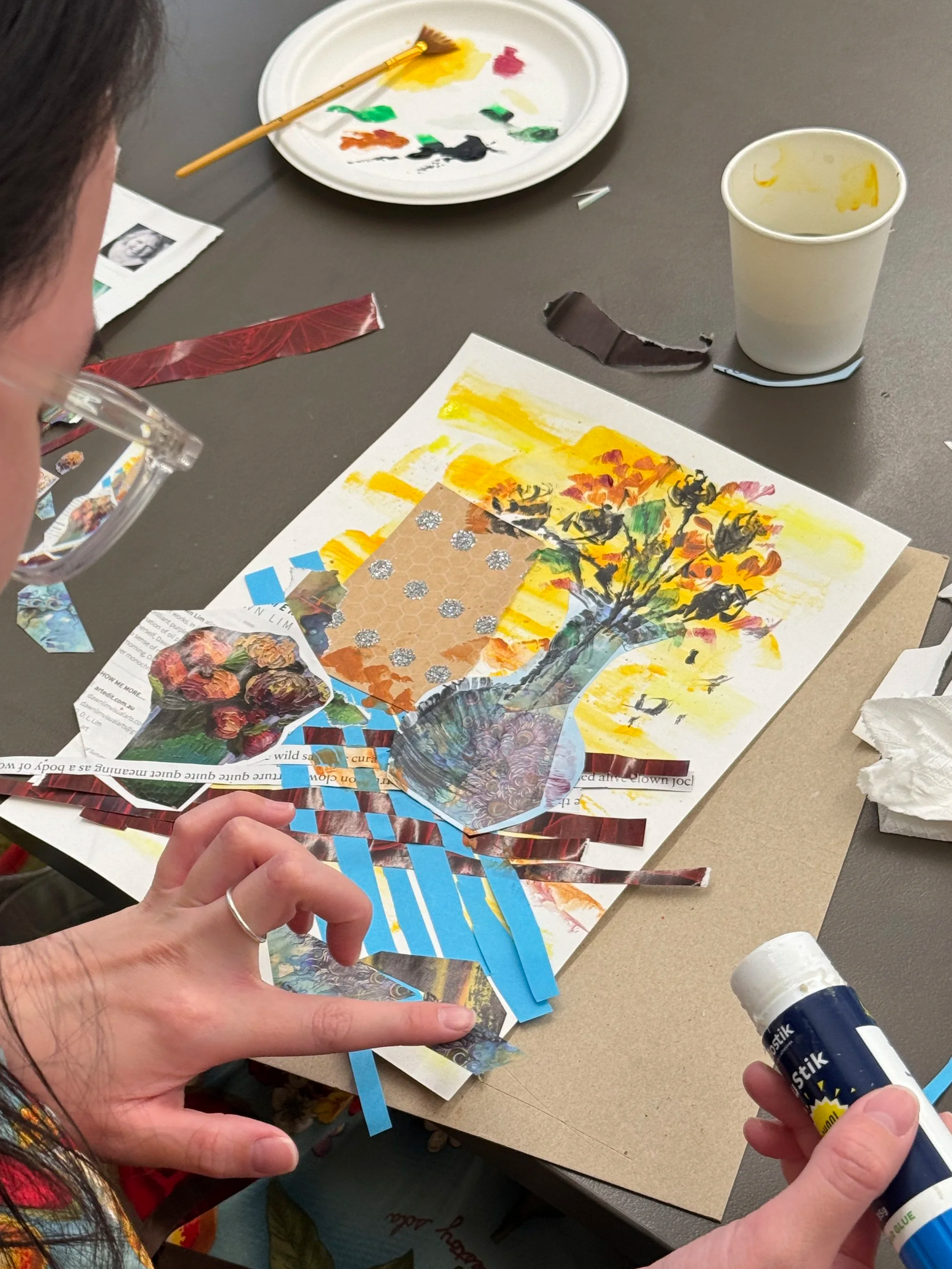
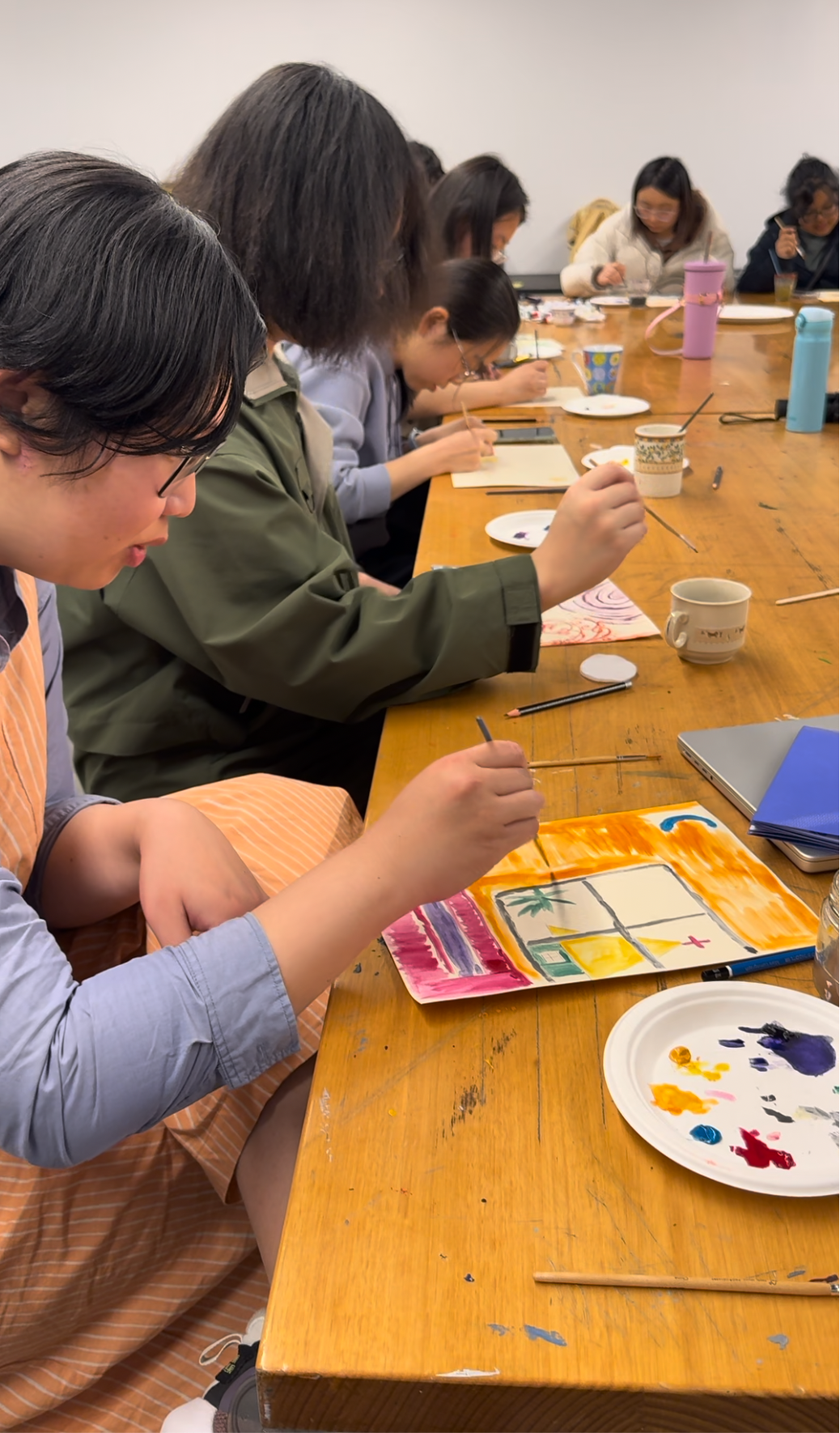
Materials spread across tables. Paint is mixed. Music plays. Hands begin moving. Conversations appear and disappear. People who may have arrived as strangers exchange ideas and techniques. Others become quiet and absorbed in making.
I work within this environment rather than outside it.
The studio becomes a temporary ecology of people, materials, gestures, conversations, memories, disciplinary knowledge and artistic decisions.
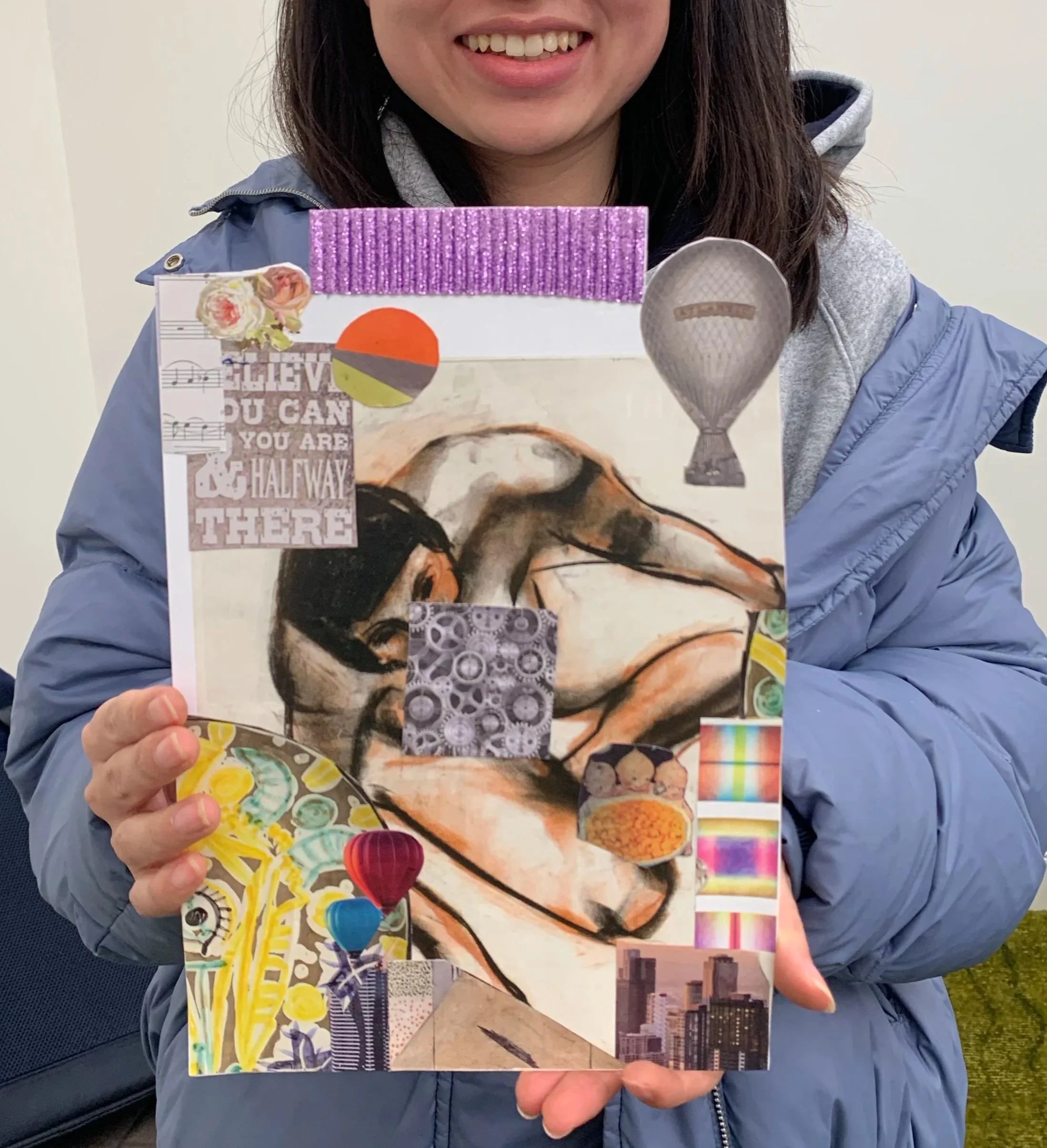
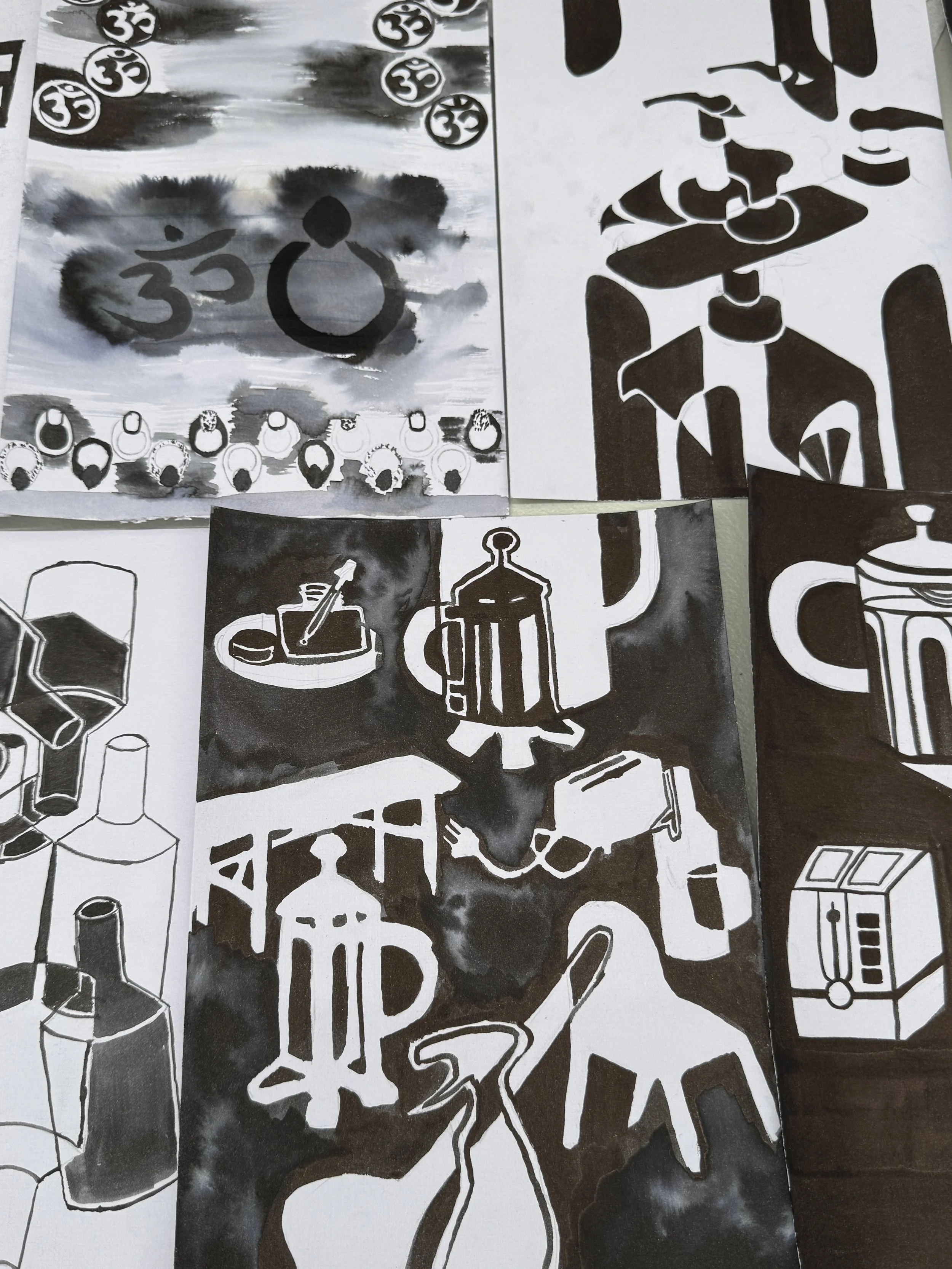
What is produced cannot therefore be understood entirely through the finished artworks. Part of the work exists in what happens around and between them: an exchanged idea, a hesitation, a material discovery, a story told while painting, a moment of concentration, or one person's mark influencing what another person makes.
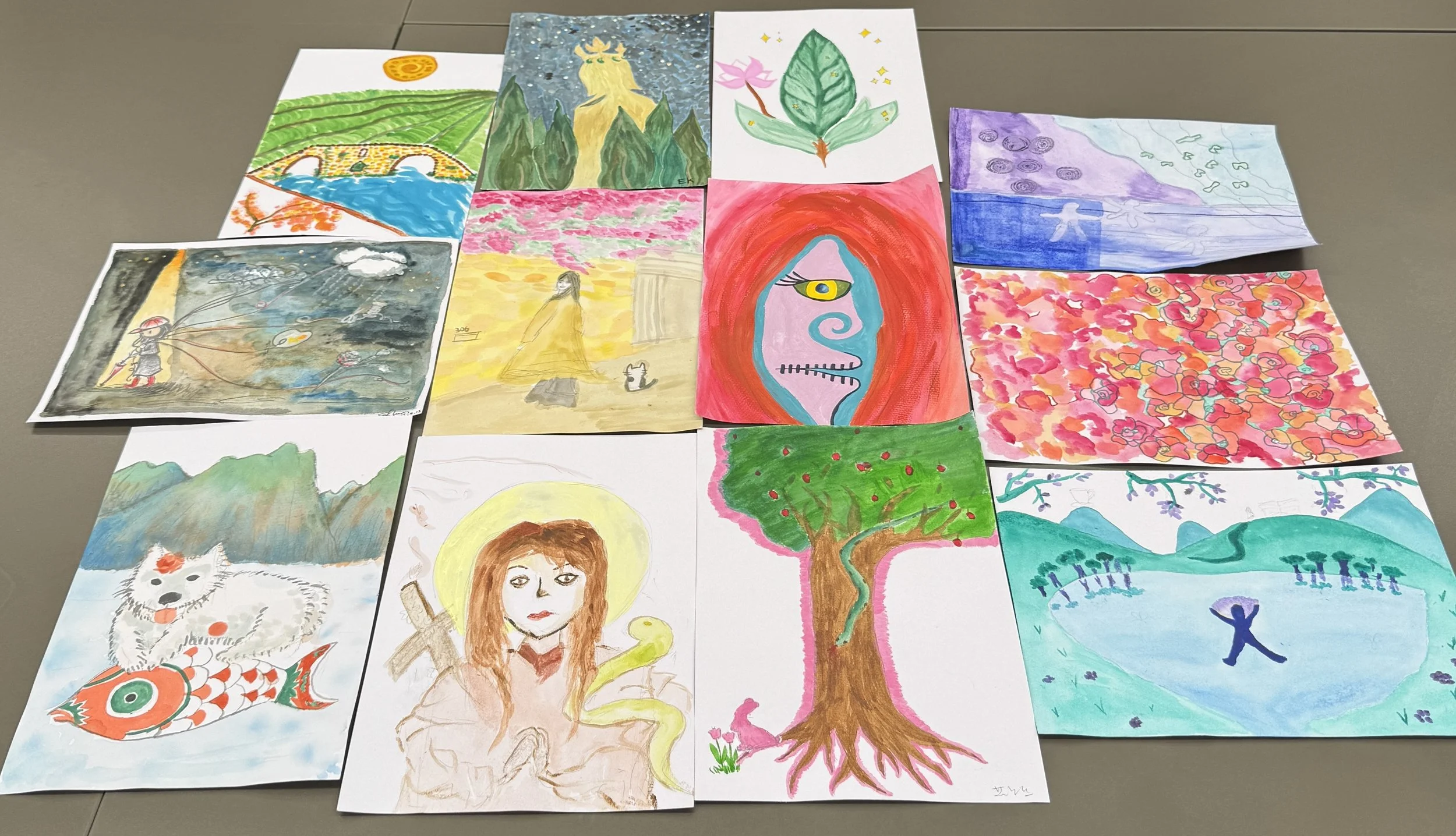
The artwork becomes both object and trace, carrying something of the encounter through which it came into being.
Between Formal and Informal Art Education
Art Class with Nila occupies a threshold between formal and informal learning.
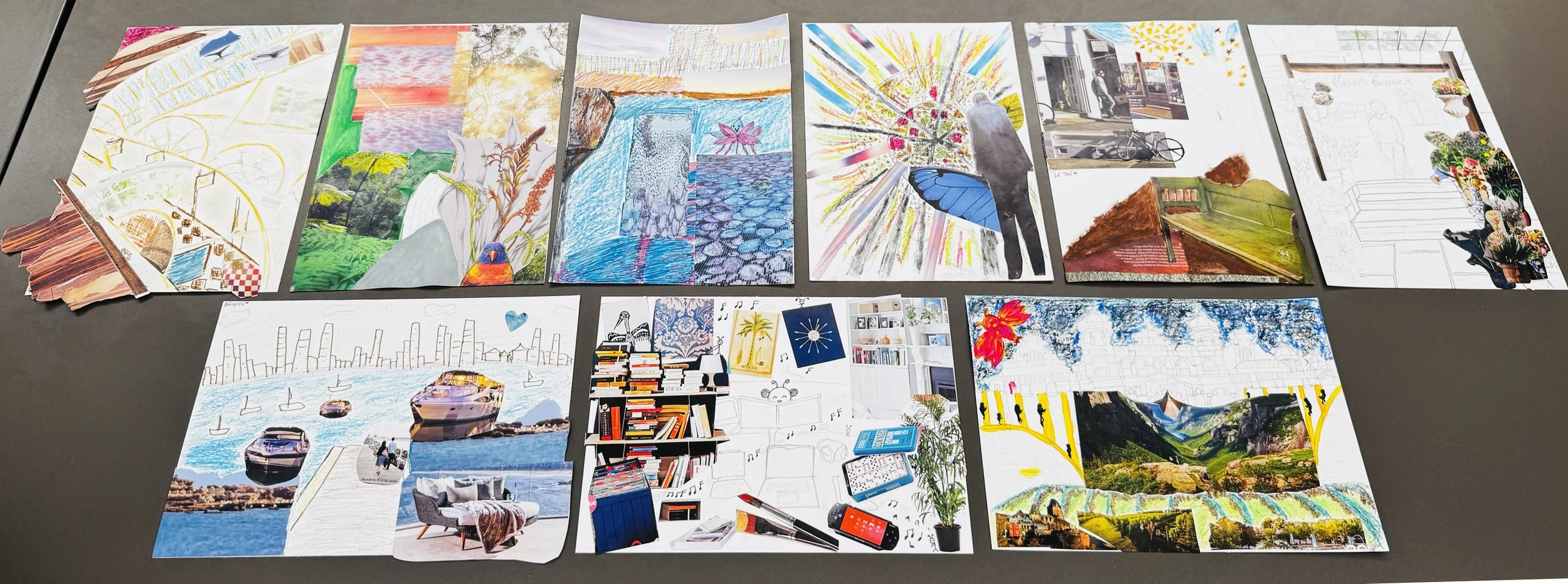
Within a university environment where learning is often organised around performance, assessment and measurable outcomes, I became interested in creating an opportunity to make without the expectation of being evaluated.
There is a curriculum, registration, a regular time and place, prepared materials and pedagogical structure. Yet there are no marks or assessment criteria against which an artwork must demonstrate achievement.
Within this structure, participants are given room to experiment, play, repeat, abandon, begin again and develop their own relationships with artistic materials.
Some return to practices they left behind years earlier. Others discover an unfamiliar artistic language. Some come to make alongside friends; others arrive alone. Participants bring different disciplinary knowledge, cultural histories and experiences into the same space.
This tension between performance and opportunity has become an important part of the practice.
What becomes possible when participants are given the opportunity to make, rather than being required to perform achievement through what they make?
The question has led me to think more closely about the relationship between formal and informal art education and about what different conditions of participation make possible within a university setting.
Making Relations
Over time, I began to recognise that the classes were producing more than individual artworks.
They were producing relations.
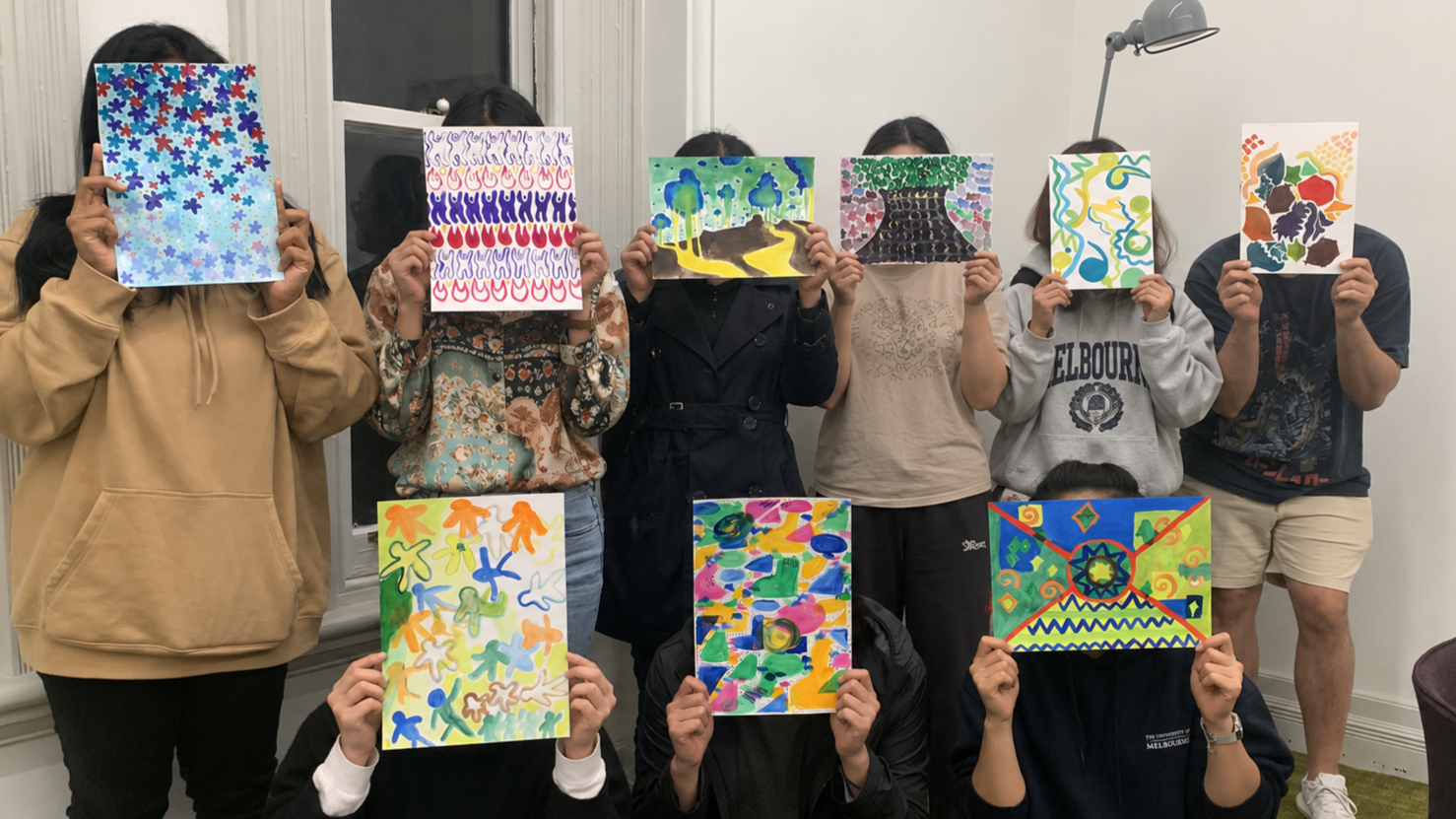
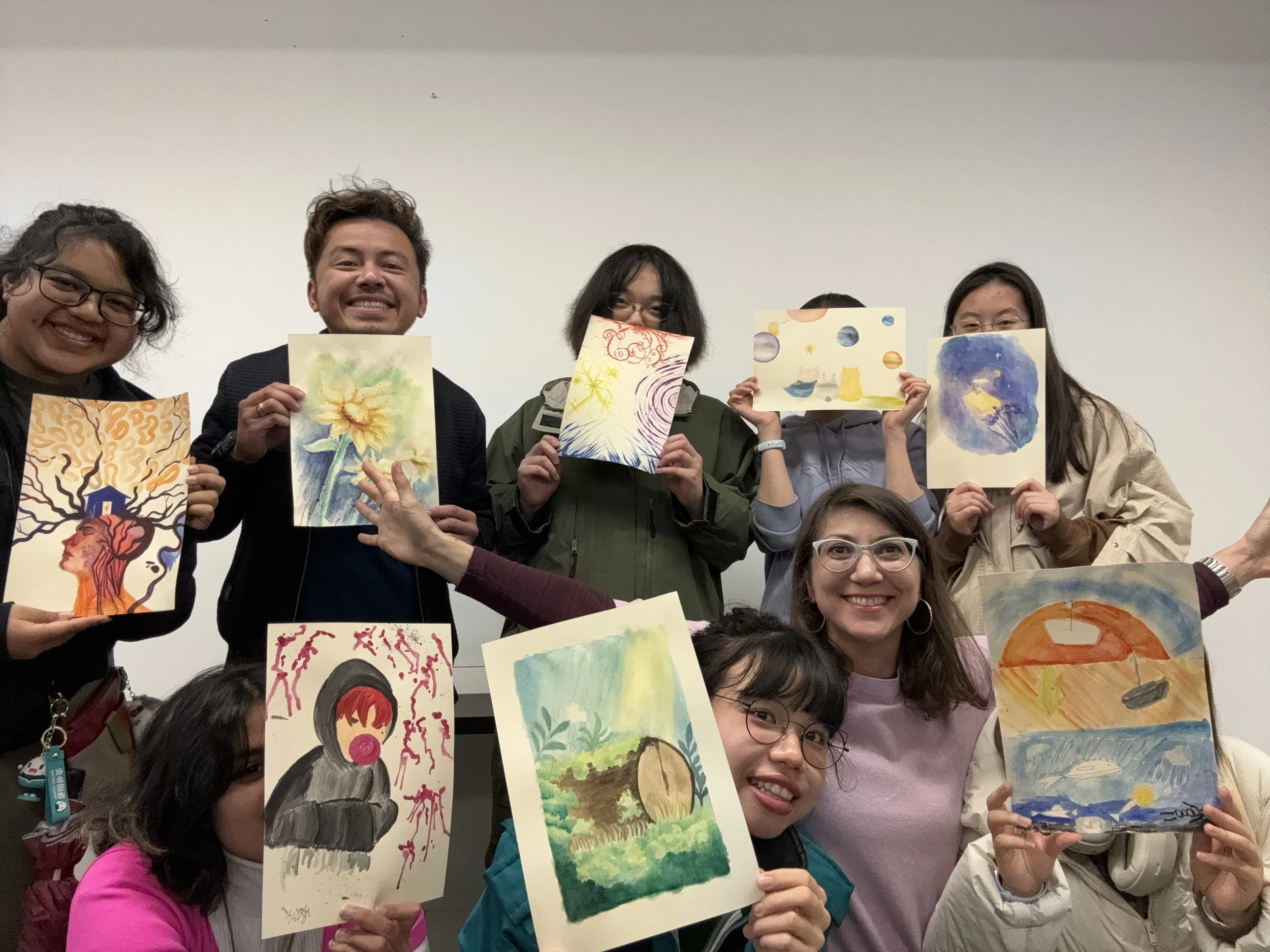
Week after week, participants arrived from different parts of the University carrying different disciplinary languages, cultural histories and relationships with art. Some had maintained creative practices alongside their studies; others had not made art since childhood. Around the same tables, these distinctions became less stable. Materials were passed between strangers, techniques were shared, conversations developed and artworks accumulated across the room.
The studio was being made not only through the program I had designed, but through the people who entered it.
Conversations moved between research and everyday life, studies and supervisors, families and cultural histories, institutional pressures and previous experiences of art education. Participants sometimes spoke about having left art behind because other forms of study were considered more practical. Others encountered materials, symbols or processes connected to personal and cultural memory.
These encounters changed how I understood the studio.
The drawings, paintings and objects produced there do not exist independently of the conditions of their making. They emerge through relationships between people, materials, histories, institutions and place.
Participation, in this sense, is not simply many people making art in the same room. It is the possibility that one person's presence, story, gesture or making changes the conditions of another person's making.
The studio consequently produces its own temporary visual culture, continually formed and reformed by those who enter it.
A Developing Participatory Practice
Documentation and reflection have gradually become part of how the practice develops.
I photograph aspects of the making process and resulting artworks, reflect upon what occurs within sessions, listen to participants' accounts and attend to recurring patterns, tensions and unexpected moments.
I consider what enabled participation, where hesitation occurred, how participants responded to particular materials and constraints, what forms of collaboration developed, and what remained unresolved.
These observations are not separate from the practice. They return to it.
One encounter begins to inform another.
Making informs reflection.
Reflection informs redesign.
Redesign generates another encounter.
Over time, questions emerging from the weekly studio have also developed into focused participatory art projects in which I alter particular conditions of making. These have included working collaboratively on shared surfaces, restricting materials, introducing unfamiliar tools, exchanging artworks, working through repetition, and exploring questions of attention, trust, authorship, cultural memory and collective making.
These smaller inquiries allow me to attend more closely to particular moments within participatory artmaking: what happens when control is relinquished, when a stranger contributes to another person's work, when materials resist intention, or when an unexpected interaction changes the direction of making.
Rather than functioning as isolated workshops, these projects form part of an evolving artistic, pedagogical and research practice.
The Studio Expands
Across six years of Art Class with Nila, I have come to understand that I was not simply creating a space in which other people could make art. The practice was also changing me.
My understanding of the studio expanded. My position as an artist became increasingly entangled with those of educator and researcher. I became attentive not only to what was made, but to what happened while making: a material passed from one hand to another, a decision negotiated, a story recalled, an unfamiliar process attempted, or a period of concentration shared in silence.
These moments were often small. Yet their recurrence made them increasingly difficult to overlook.
They began to generate questions.
Where I once located much of my practice within the individual artist's studio, I increasingly understand making as something that can happen with, between and through others.
This shift has changed the questions I ask of art. I have become less interested in the artwork as an isolated outcome and increasingly attentive to the conditions through which it comes into being: who participates, who makes decisions, what materials enable or resist, how authorship moves, what remains individual within collective making, and what becomes perceptible through artistic processes.
Certain patterns recur, yet no two gatherings are the same.
The participants change.
The materials change.
The conversations change.
I change.
The studio is continually made and remade through these encounters.
What began as practice-led inquiry within my own studio has expanded into a sustained a/r/tographic inquiry into participation, artistic learning and the social and material life of making.
Across this practice, I have increasingly questioned what happens when people make together, how knowledge is carried through bodies and materials, how it moves between participants, and what artistic practice enables us to encounter that may otherwise remain unseen, unspoken or unknown.
Art Class with Nila continues to evolve through these questions, not as a fixed model of what an art class should be, but as a living site of making, relation, reflection belonging and becoming.
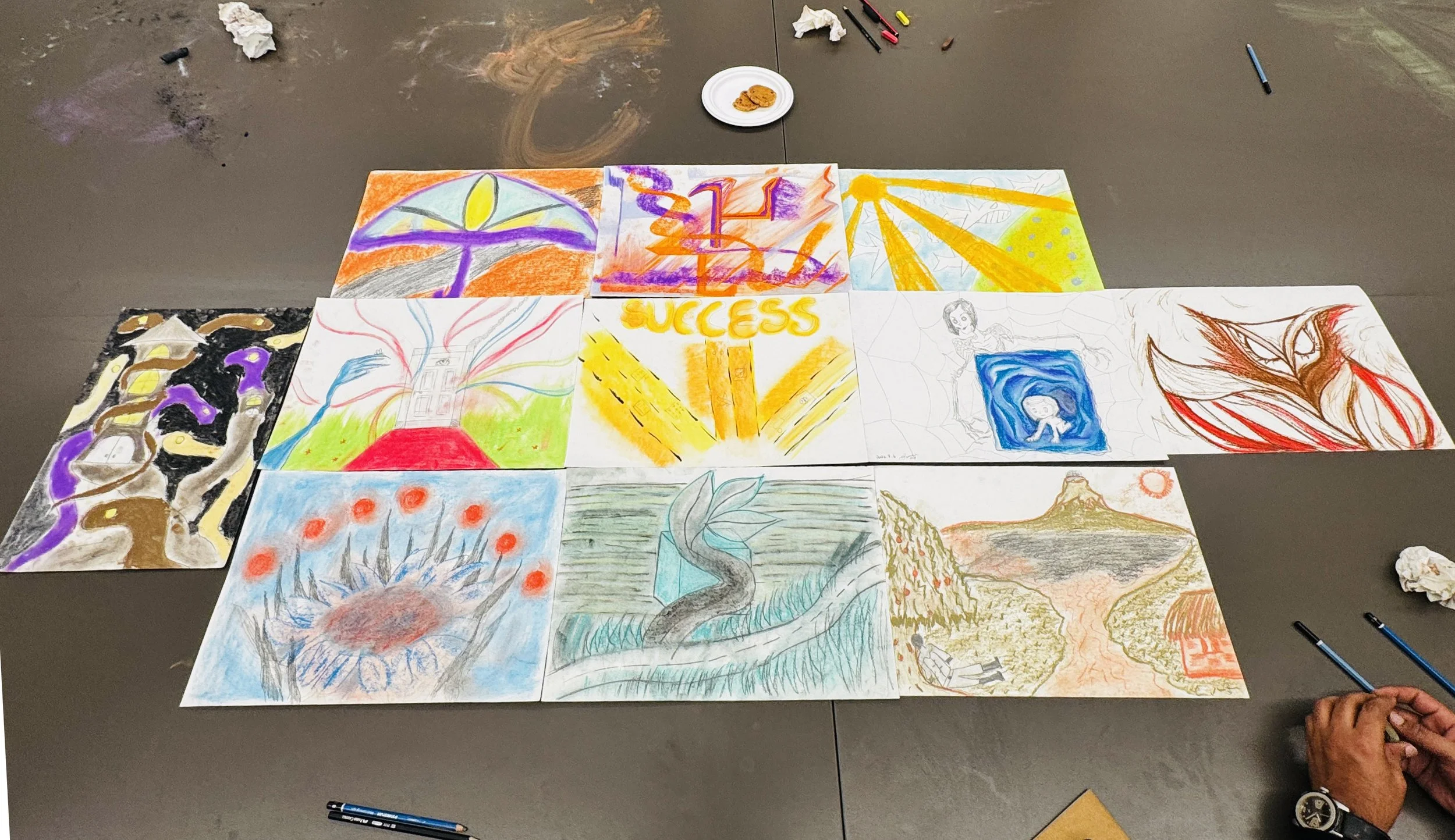
Undergraduate program
Interdisciplinary approach ArtsLAB UMSU
Leadership taught through and with Watercolour
UCBerkley