Deep Sea Story
Material, Memory and World Making
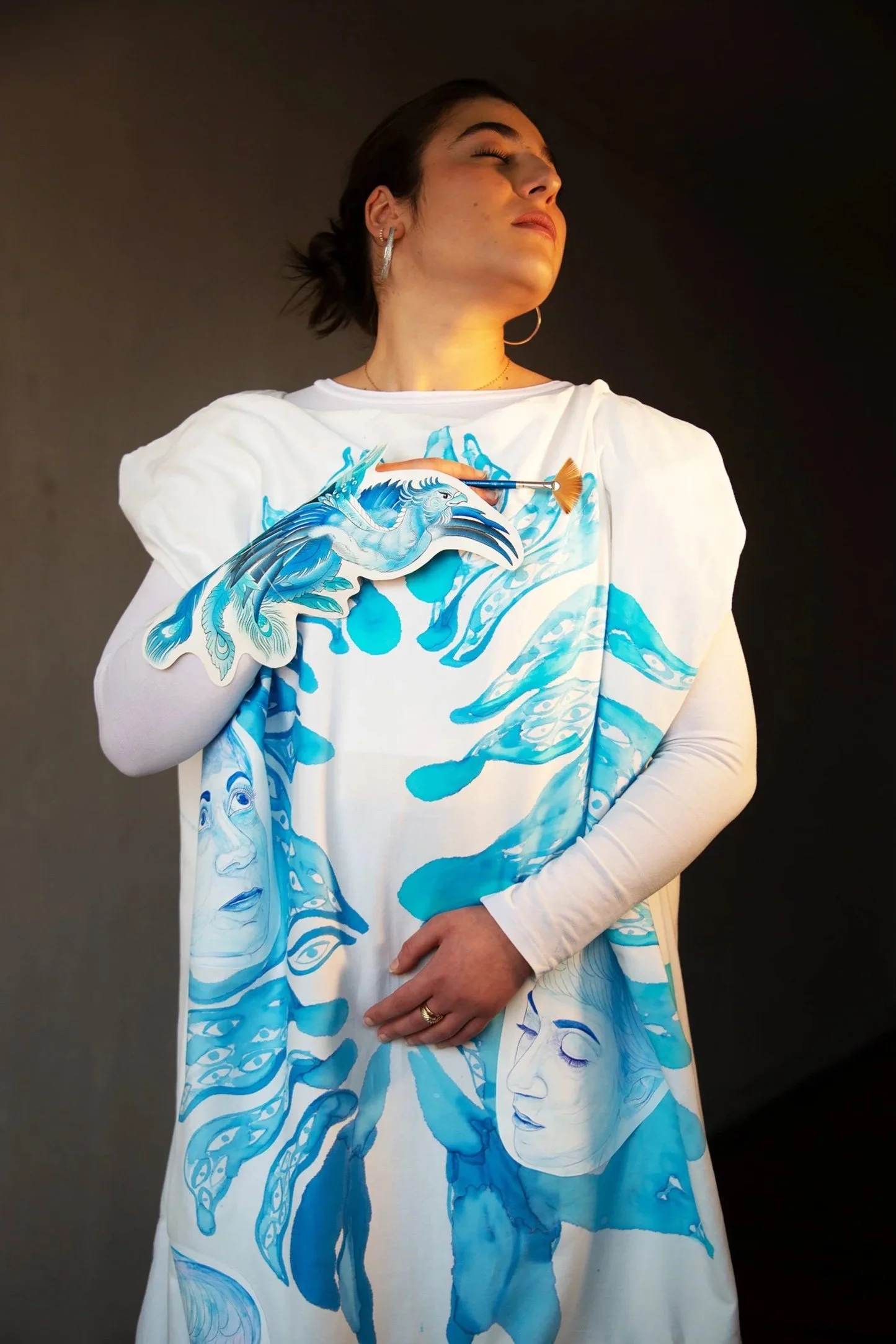
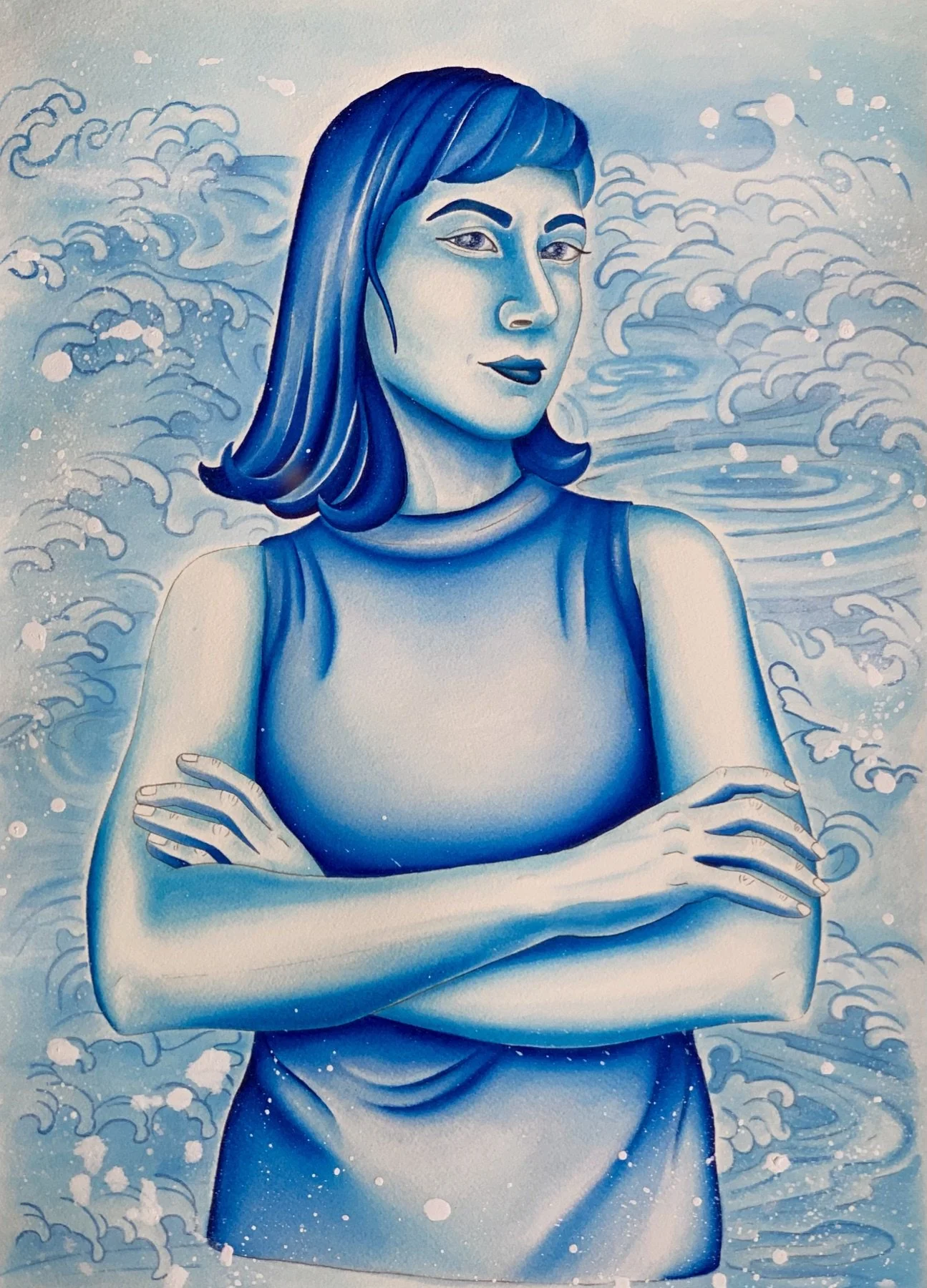
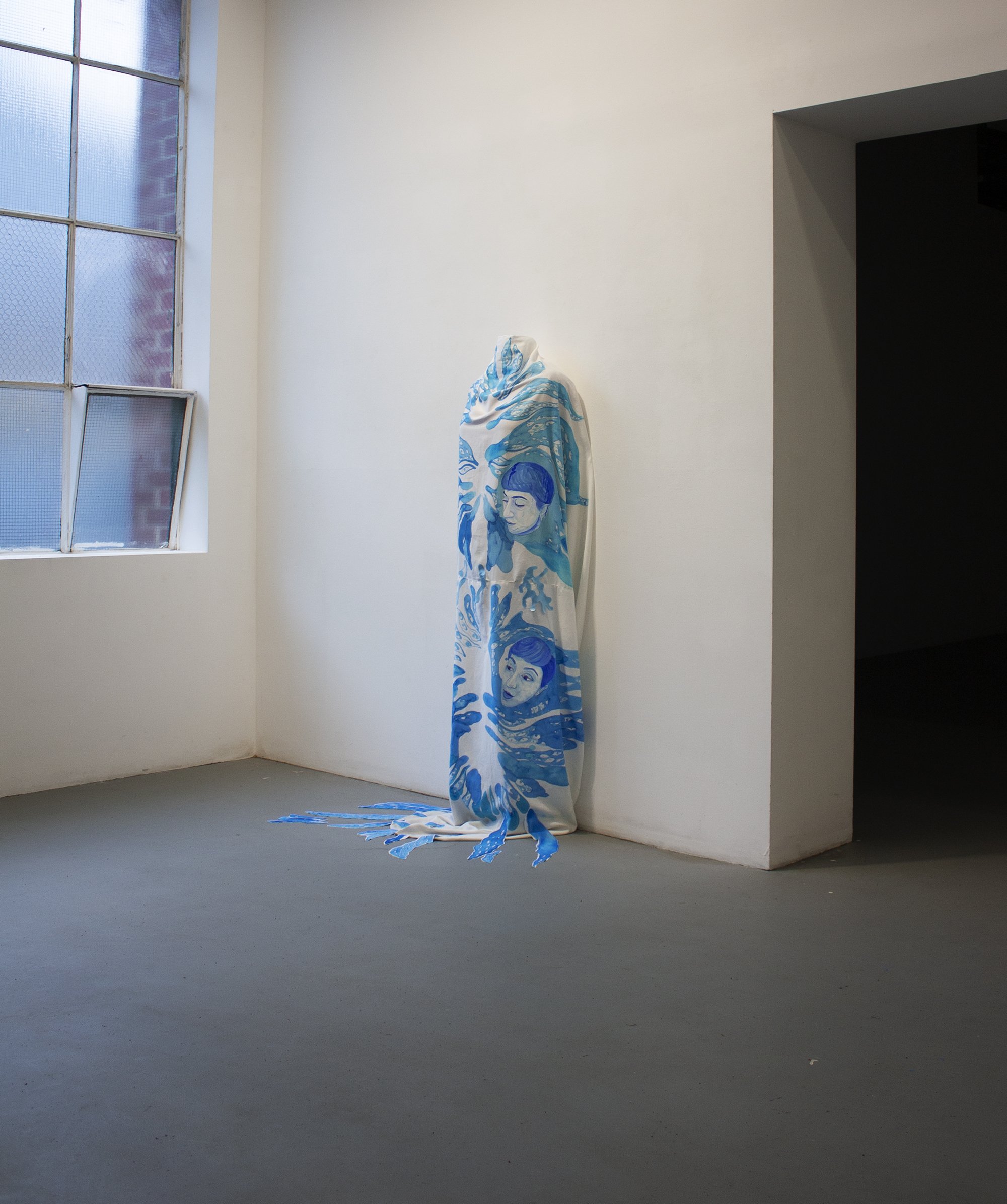
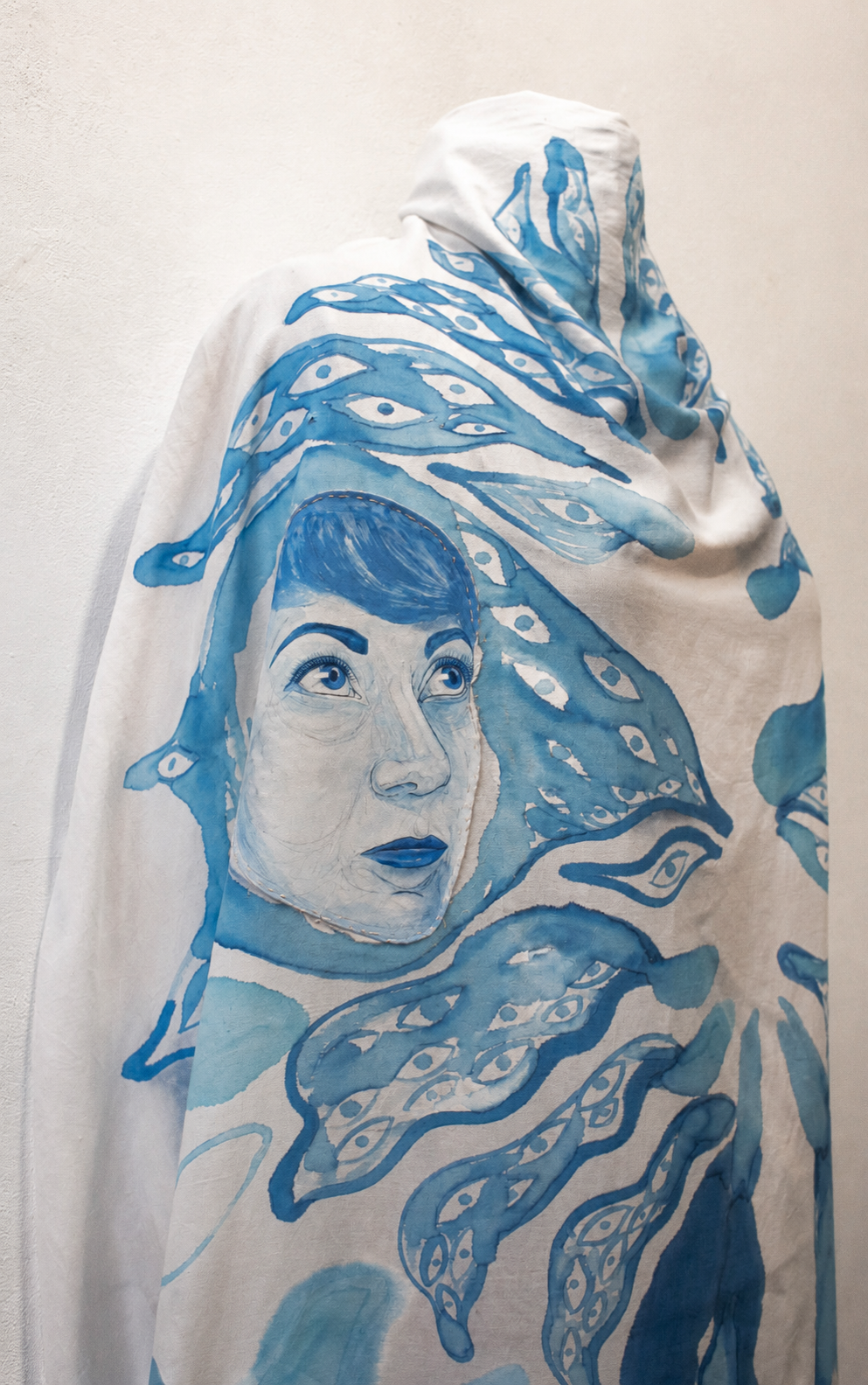
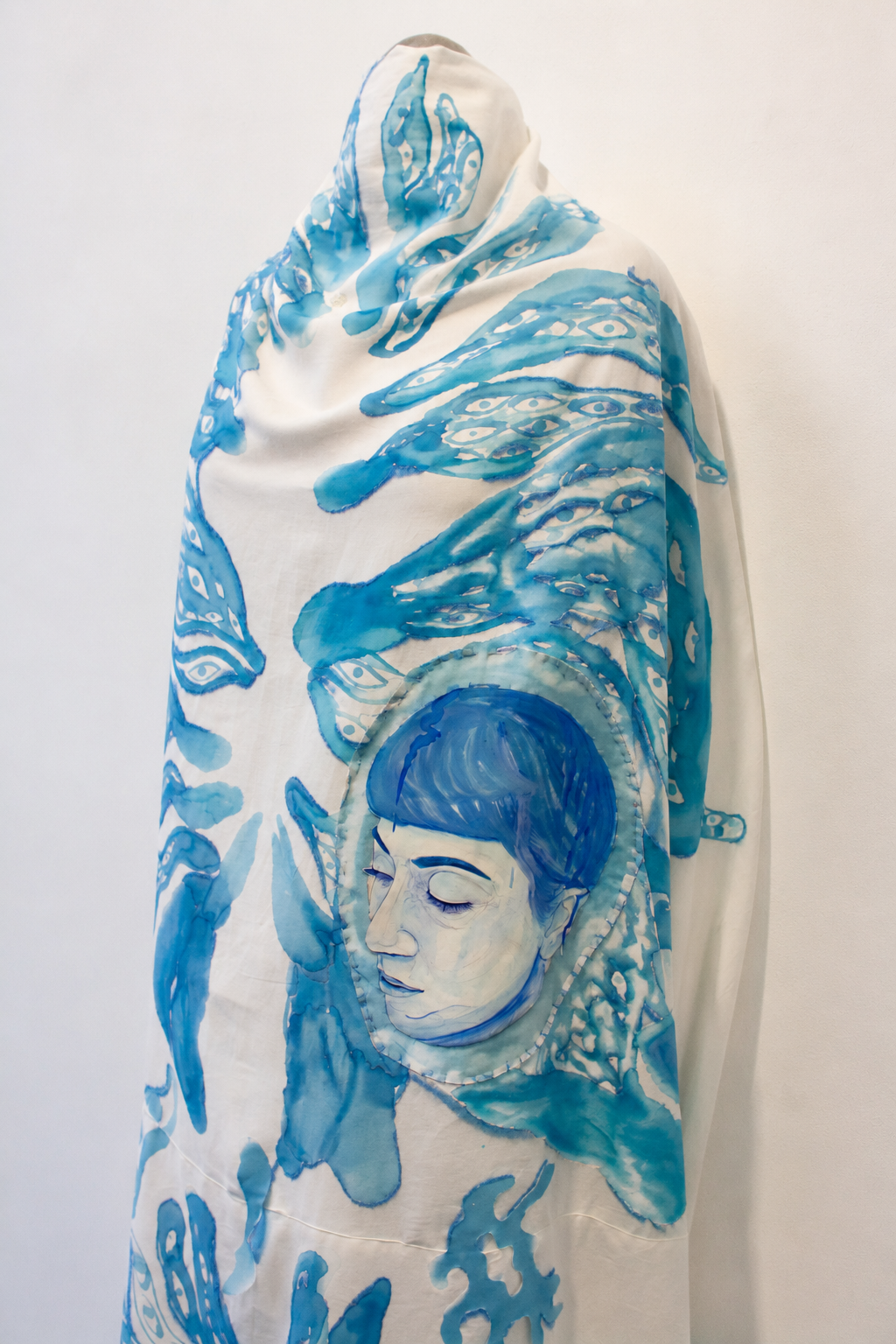
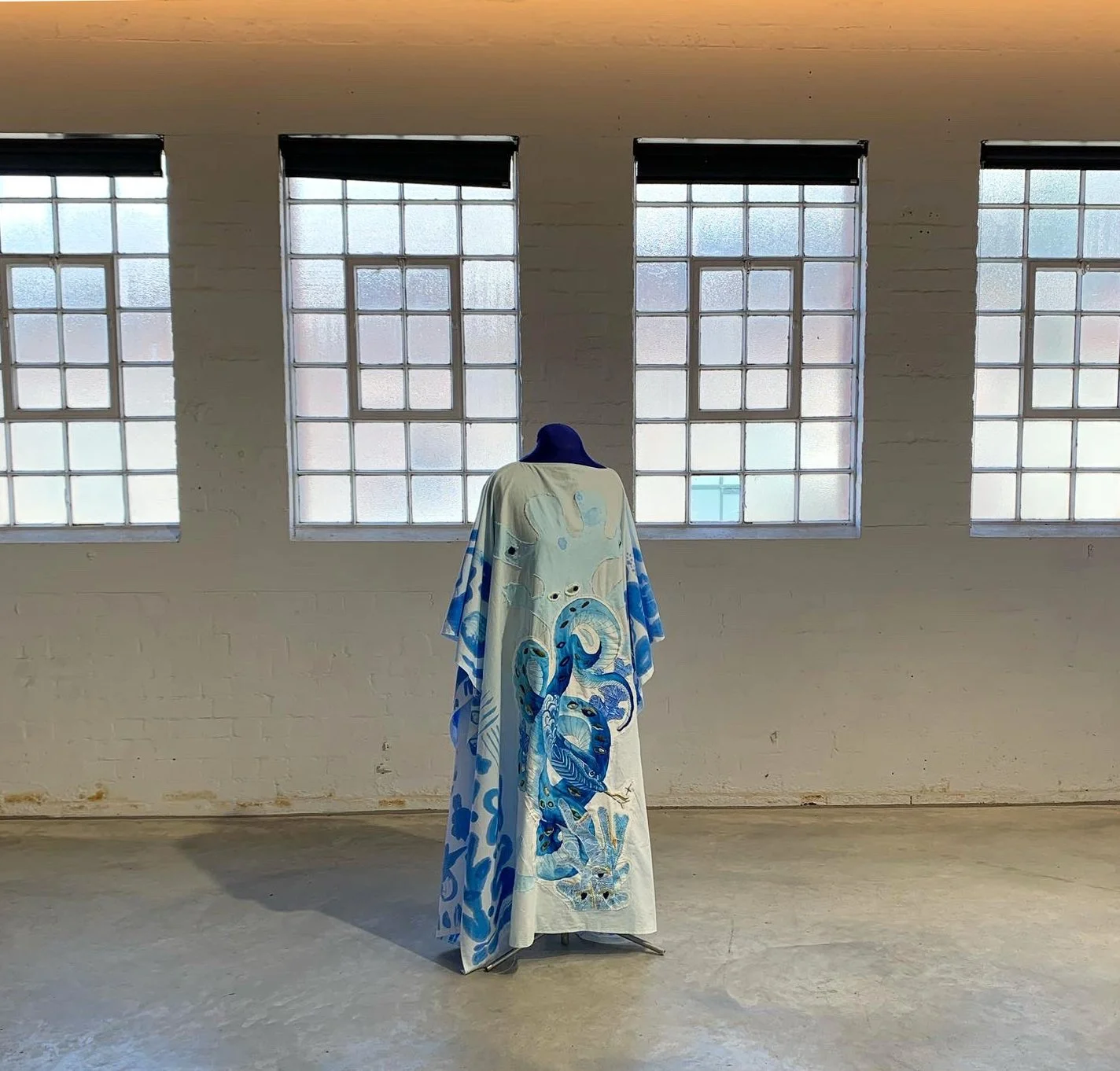
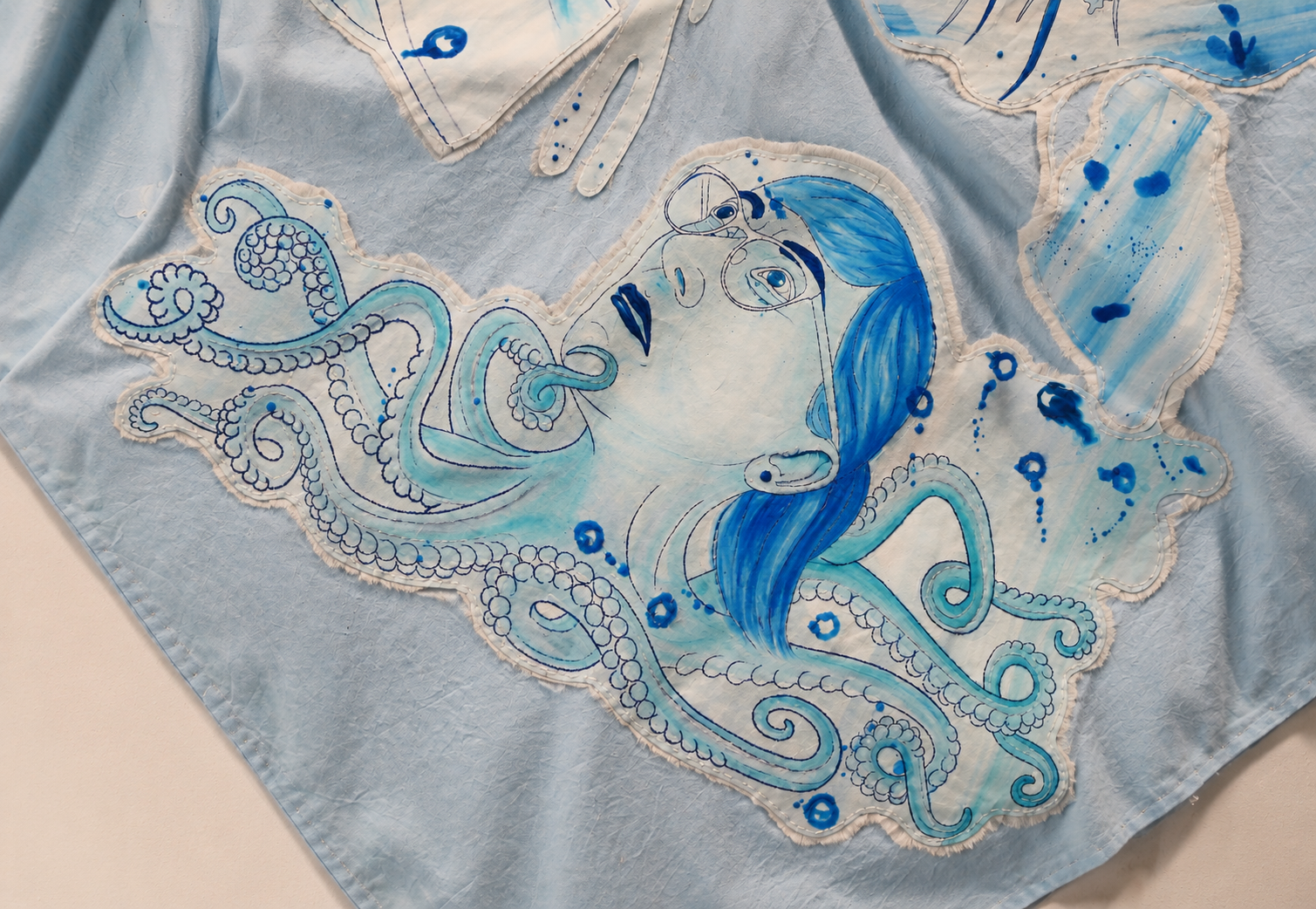
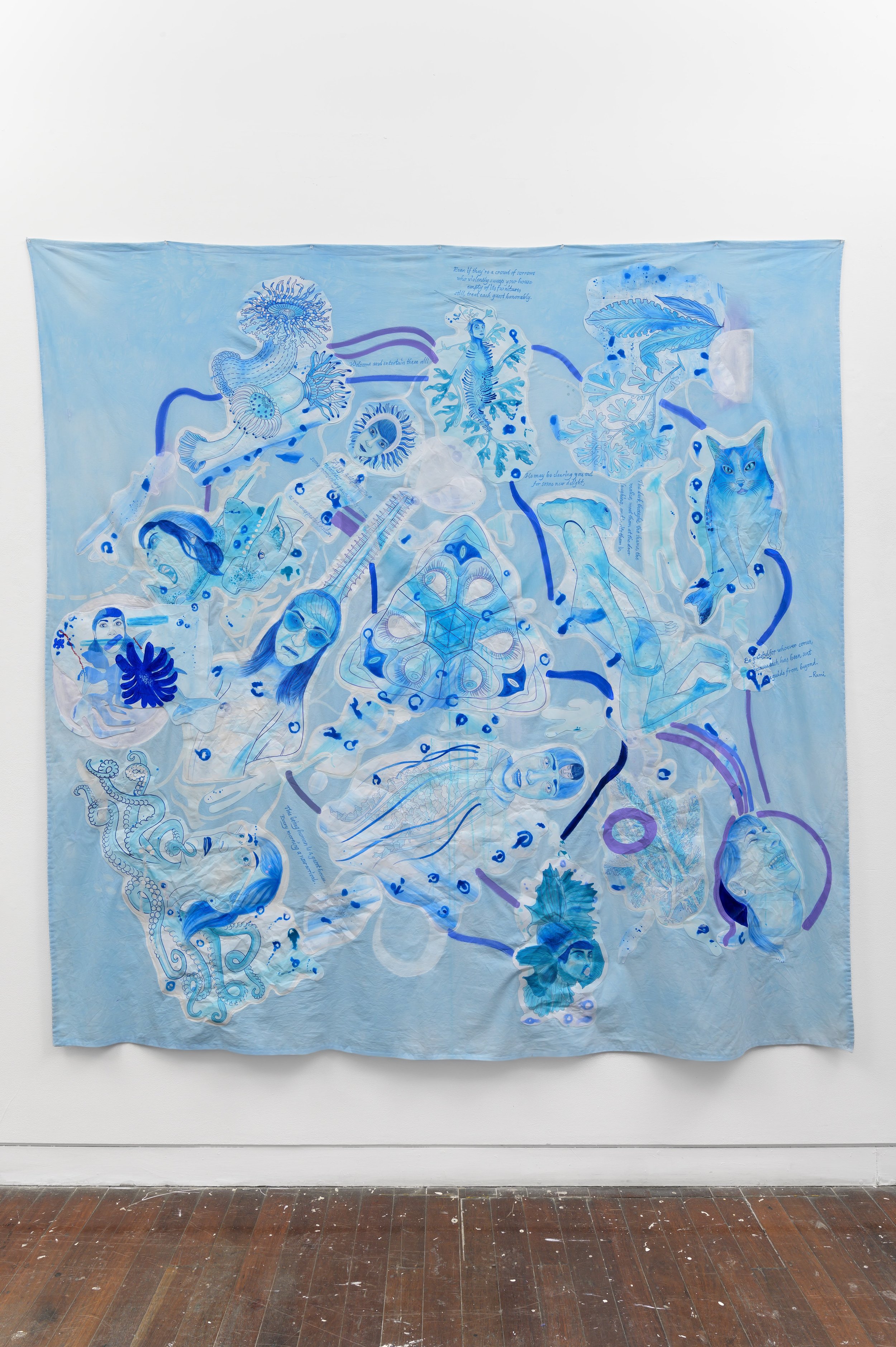
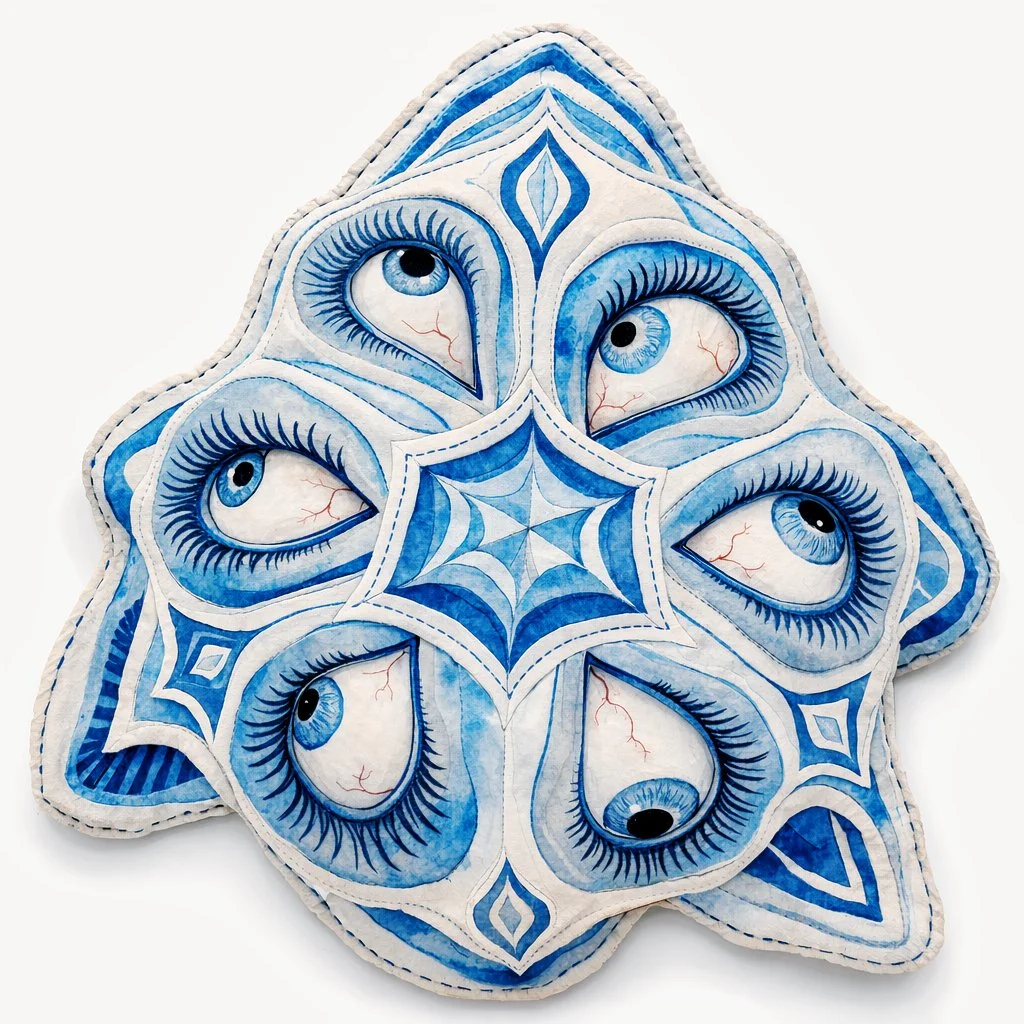
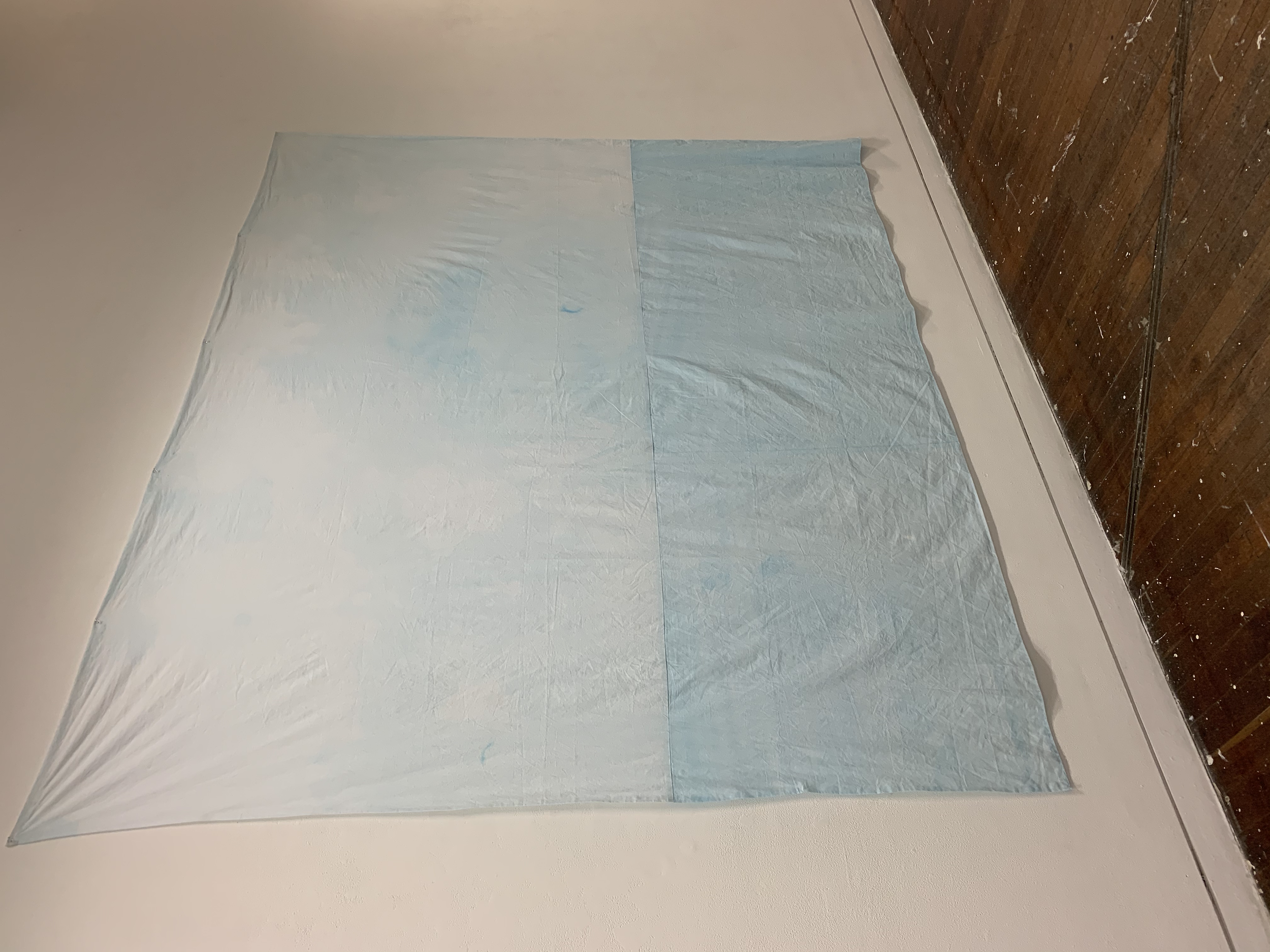
Blue Sees (2021)
Medium: Tyvek (house wrap), hand-dyed textiles, stitching, watercolour, digital print, pencil on paper
Research Question: How can drawing, material and installation create embodied worlds where memory, identity and imagination coexist?
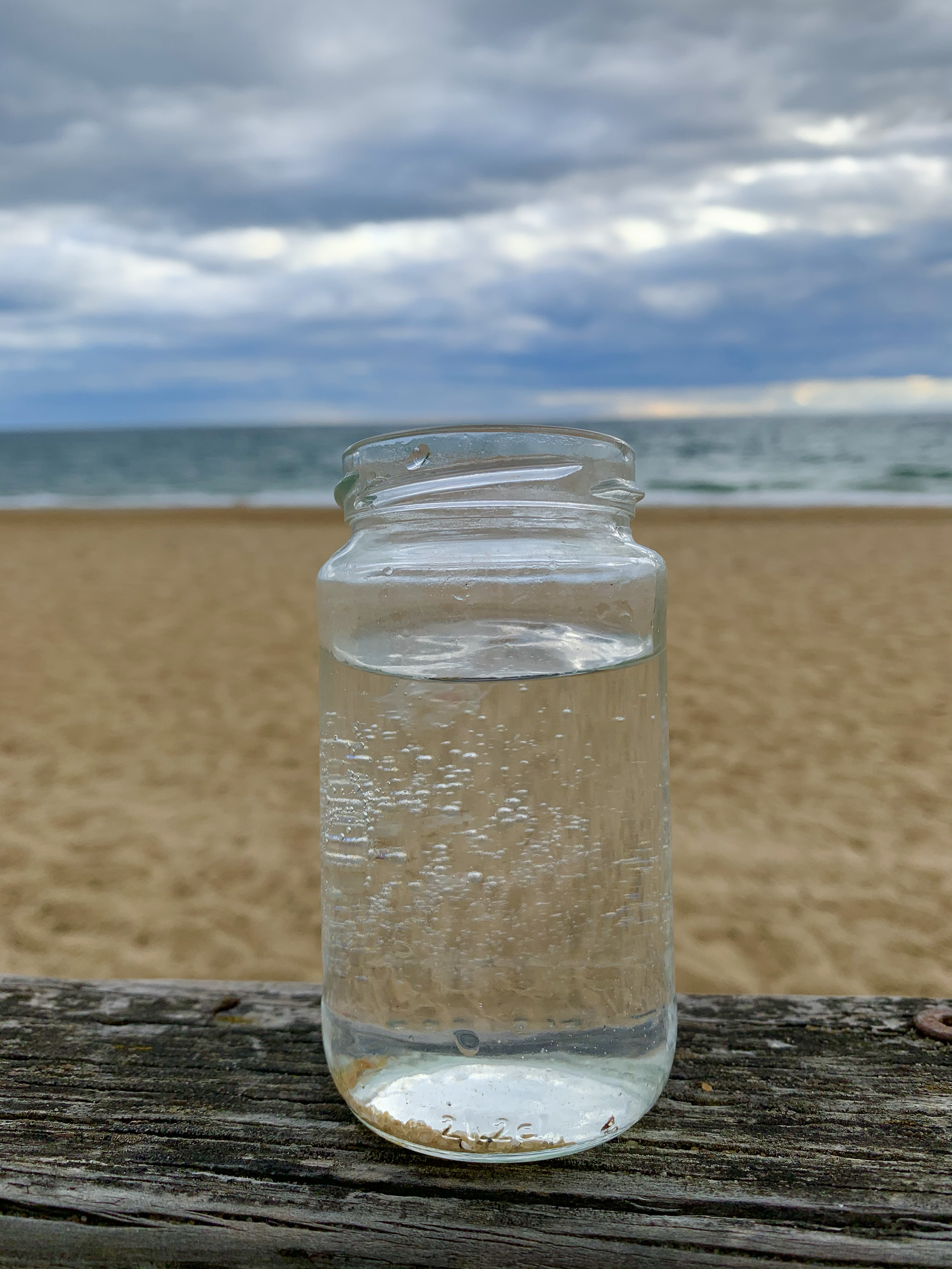
Blue Sees is a practice-led research project that investigates how expanded drawing can cultivate ecological imagination, empathy and relationships of care between human and more-than-human worlds. Developed during Melbourne's COVID-19 lockdowns in 2021, the project emerged while I was living alone in a beach house in Mentone. During this period, the boundaries between home, studio, workplace and landscape dissolved. Daily walks along the shoreline gradually became an extension of the studio, prompting me to ask how drawing might operate not simply as representation, but as a methodology through which knowledge is generated materially, spatially and imaginatively.
The title Blue Sees plays on the dual meanings of sea and sees, positioning vision as both subject and method. Rather than looking at the ocean as an external landscape, the project explores what it means to see through, with and alongside the more-than-human worlds it sustains. Seeing becomes an embodied and relational practice, where drawing emerges through encounters between body, place, memory and material.
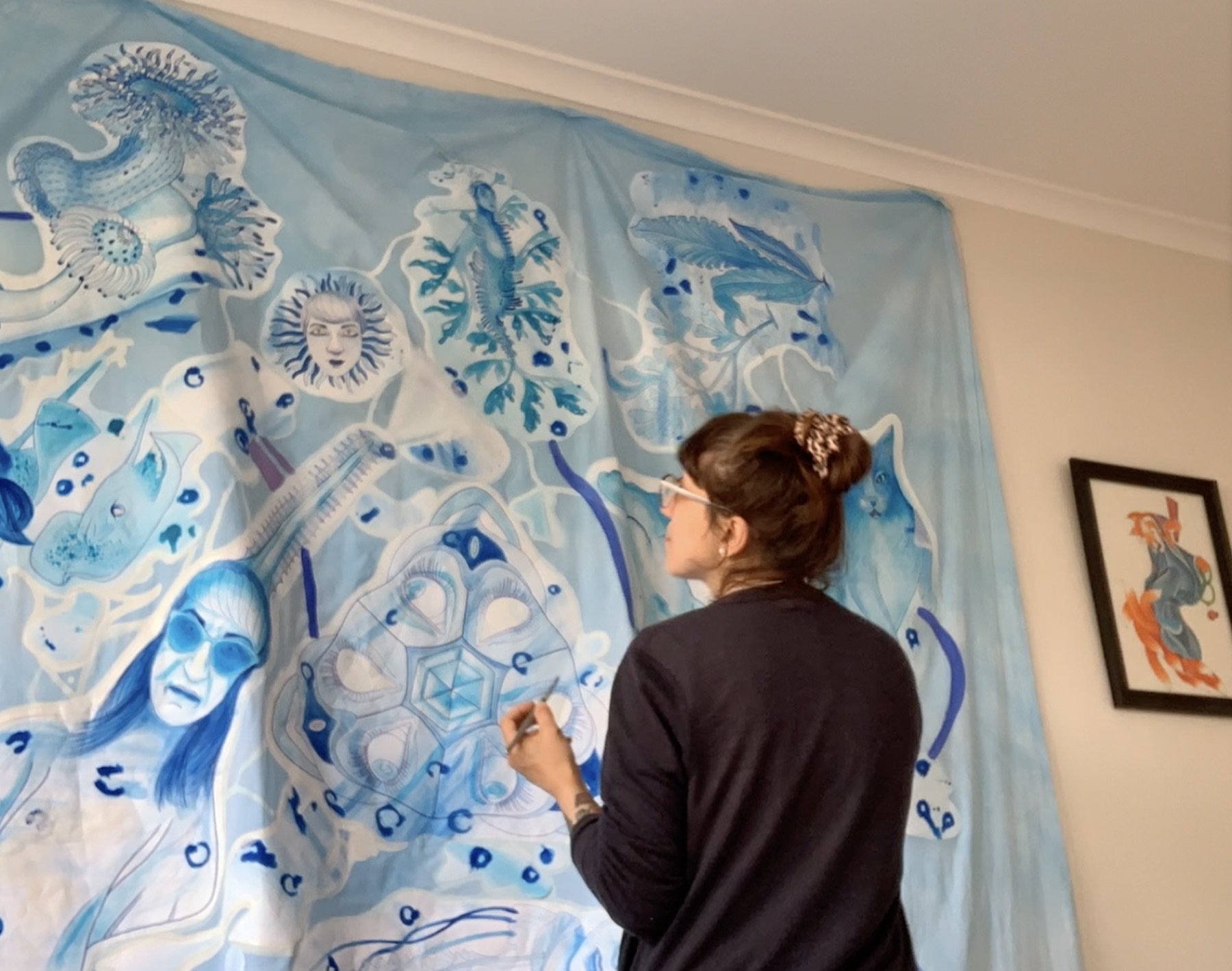
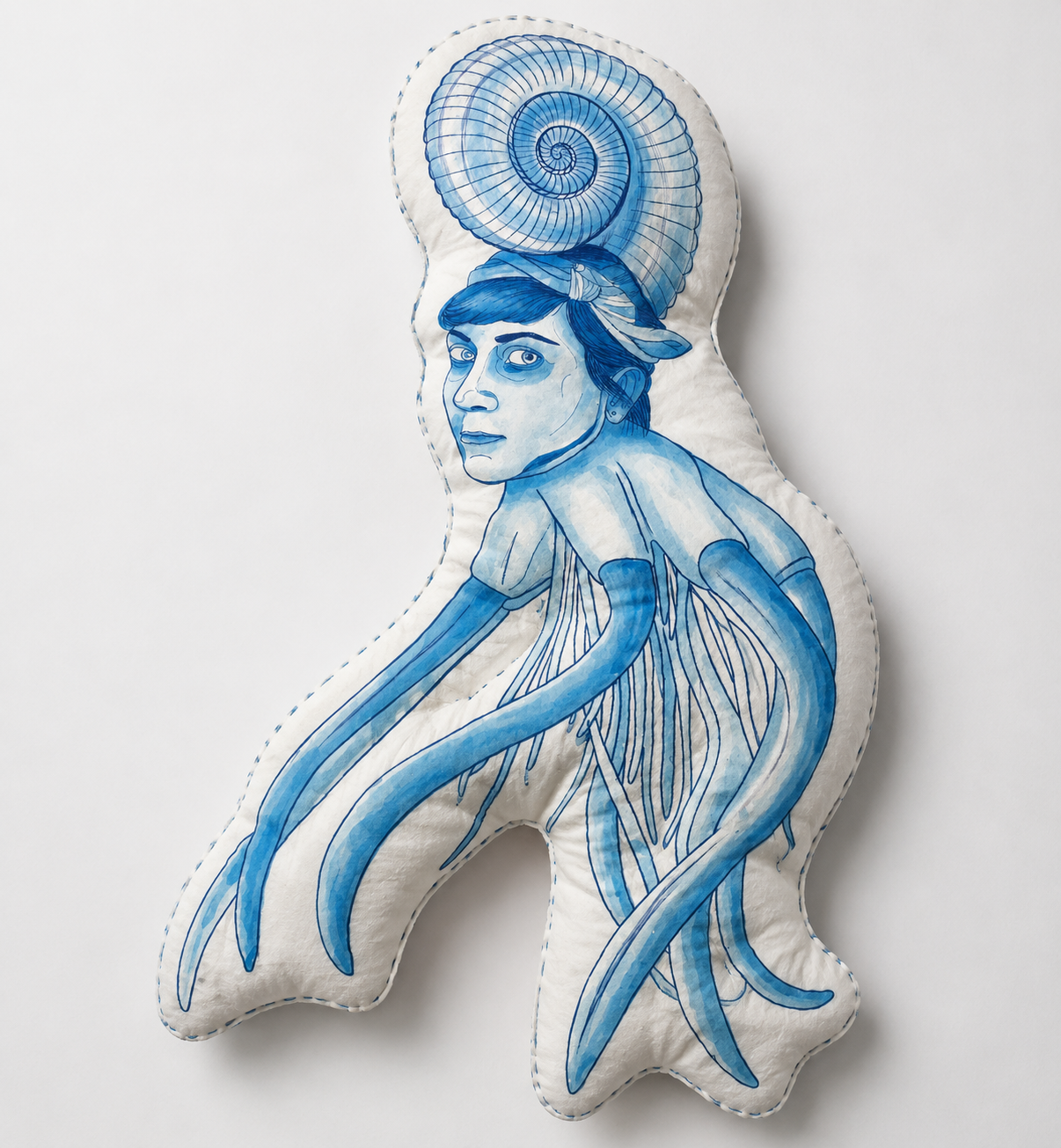
Working during lockdown transformed my understanding of the relationship between artist and environment. Rather than observing nature from a distance, I became interested in drawing from within ecological relationships. The shoreline became less a subject than a collaborator, and endangered Australian marine species emerged as hybrid companions through which questions of isolation, belonging, care and coexistence could be explored. Influenced by speculative practices that imagine new relationships between humans and other forms of life, I transformed my own body into imagined marine beings that exist somewhere between the human and the aquatic. These hybrid figures became vehicles for thinking through ecological kinship rather than illustrations of the natural world.
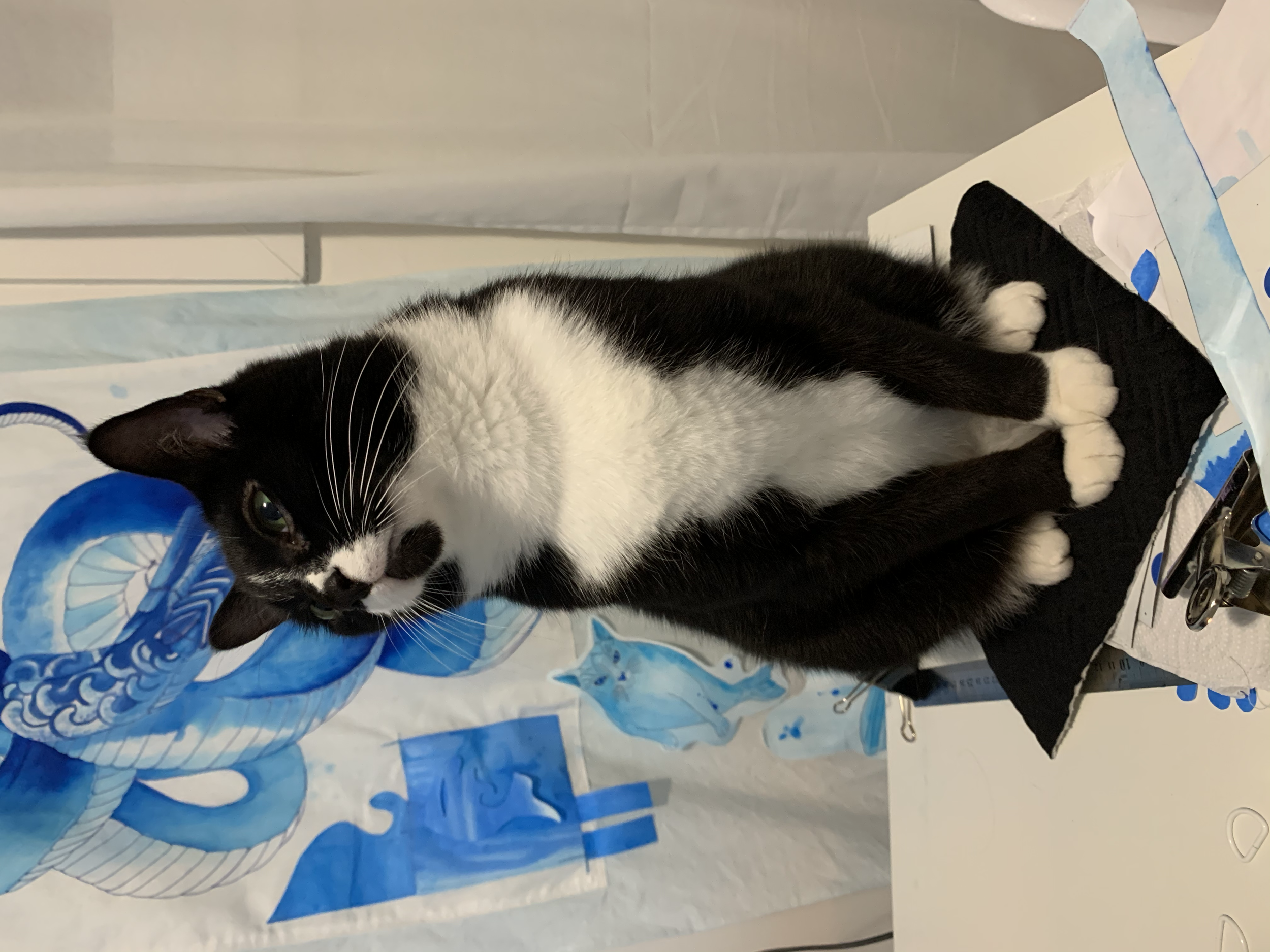
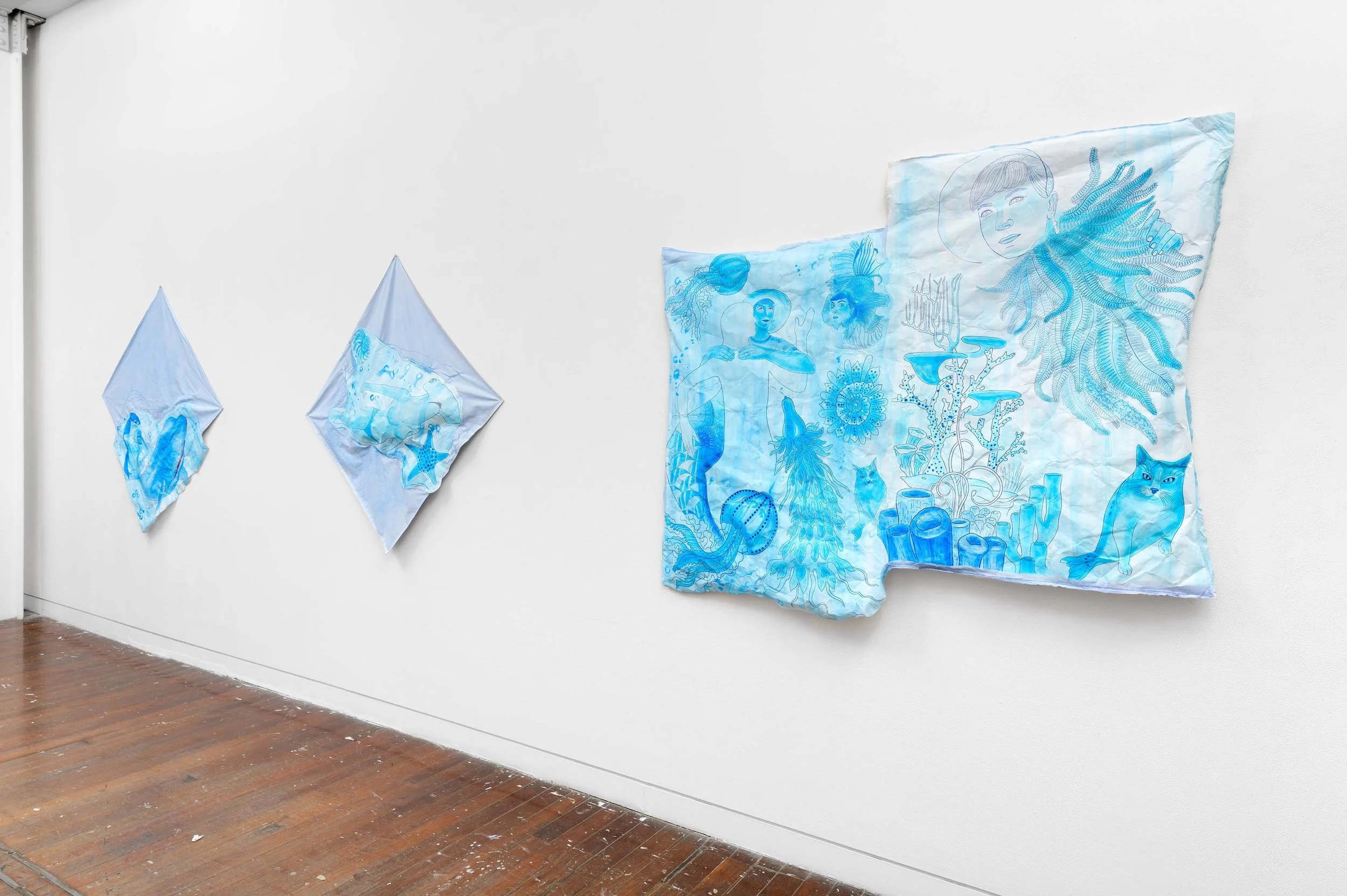
Material experimentation became inseparable from this inquiry. Rather than working on paper, I drew on Tyvek, an industrial construction membrane commonly used as house wrap. Having previously worked as an architectural draftsperson, I was drawn to a material associated with shelter, infrastructure and the construction of homes. Watercolour behaved unpredictably on its waterproof surface, resisting absorption and requiring continual negotiation between control and chance. The resulting works retain traces of architectural drawing while dissolving into fluid marine environments, connecting my background in drafting with an expanded drawing practice.
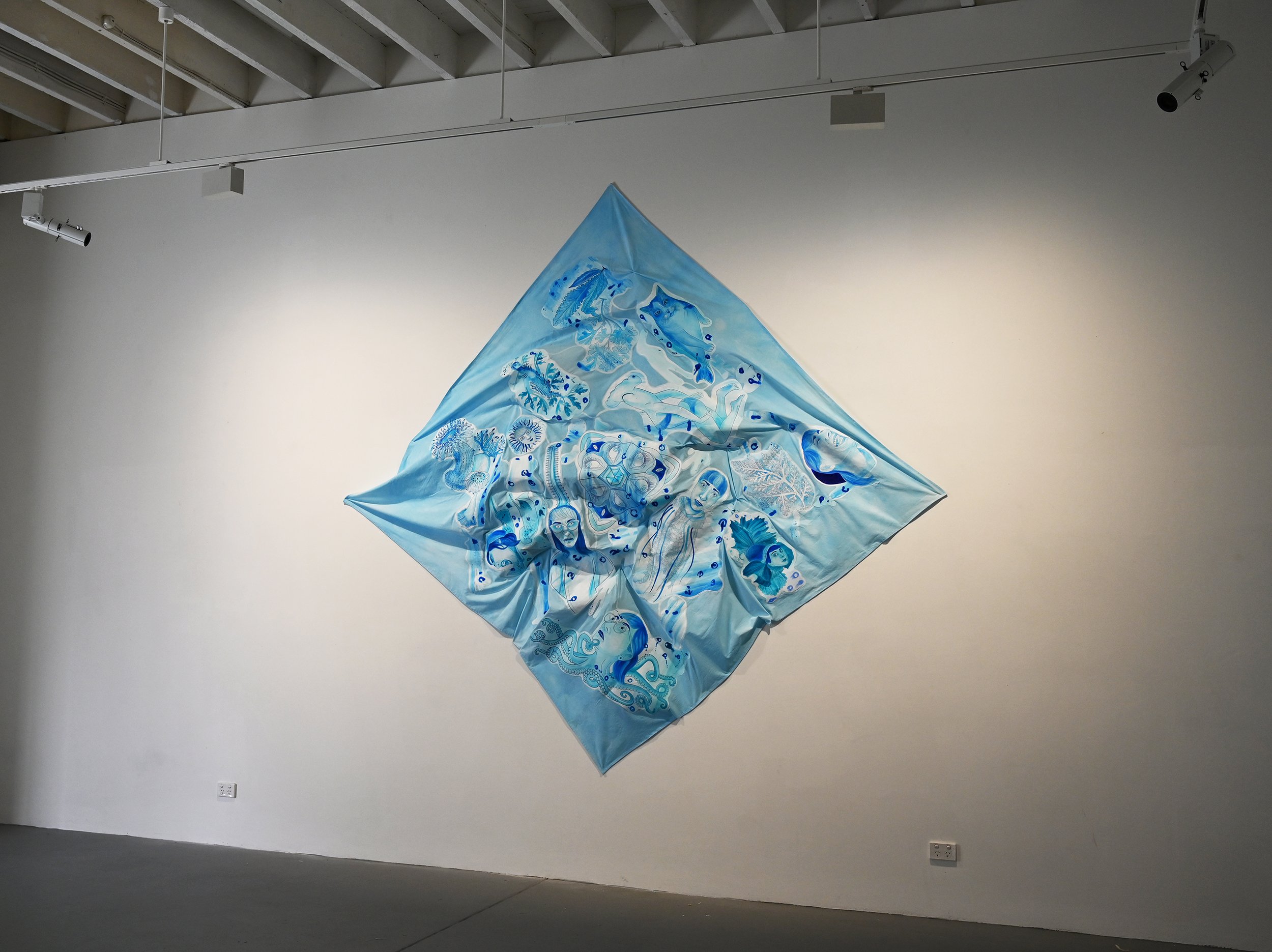
The installation also incorporated domestic textiles gathered from my own living environment. Bed sheets, fabric remnants accumulated across previous homes and materials from my personal archive were hand dyed using ultramarine pigments mixed with seawater collected from the Mentone shoreline. During lockdown, when the distinctions between living, working and making disappeared, these materials became both resource and record. The stitched surfaces carry traces of everyday domestic life, collapsing the boundaries between studio practice, dwelling and research.
Throughout the project, drawing expanded beyond mark making to include stitching, textile construction, digital processes and installation. Each material process contributed to the inquiry, allowing knowledge to emerge through making rather than illustrating predetermined ideas. The installation became an immersive environment where individual drawings no longer functioned as isolated images but as interconnected fragments within a larger ecological narrative.
Storytelling provides the conceptual framework that holds the work together. Drawing on the Iranian tradition of Naqqali, the installation brings together image, textile, poetry, autobiography and speculative ecology into a single narrative environment. Fragments of Jalāl al-Dīn Rumi's poem The Guest House are embedded throughout the stitched surfaces, encouraging viewers to move through the installation as participants rather than spectators. Rather than illustrating a single story, the work invites multiple interpretations as viewers navigate relationships between memory, imagination and the more-than-human world.
Reflecting on the project afterwards, I recognised strong resonances with Donna Haraway's concept of situated knowledges, Tim Ingold's understanding of drawing as a process of becoming, Anna Tsing's writing on interdependence and Nelson Goodman's proposition that worlds are made rather than merely represented. These ideas helped articulate what the practice itself had revealed: that drawing can function as a relational methodology through which humans, materials, environments and stories actively shape one another.
Blue Sees marked a significant turning point in my practice. While my earlier work investigated symbolic language through drawing and painting, this project expanded drawing into installation, textiles and embodied spatial experience. Rather than presenting images to be viewed, the installation constructs an environment to be inhabited, where material, memory and imagination become inseparable. It established the methodological foundations that continue to shape my research, positioning artistic practice not simply as a means of representing the world, but as a way of entering into relationship with it through making.