A selection of Artworks containing drawing, painting, and textiles works.
Origins of a Visual Language
How can drawing and painting create symbolic meaning?
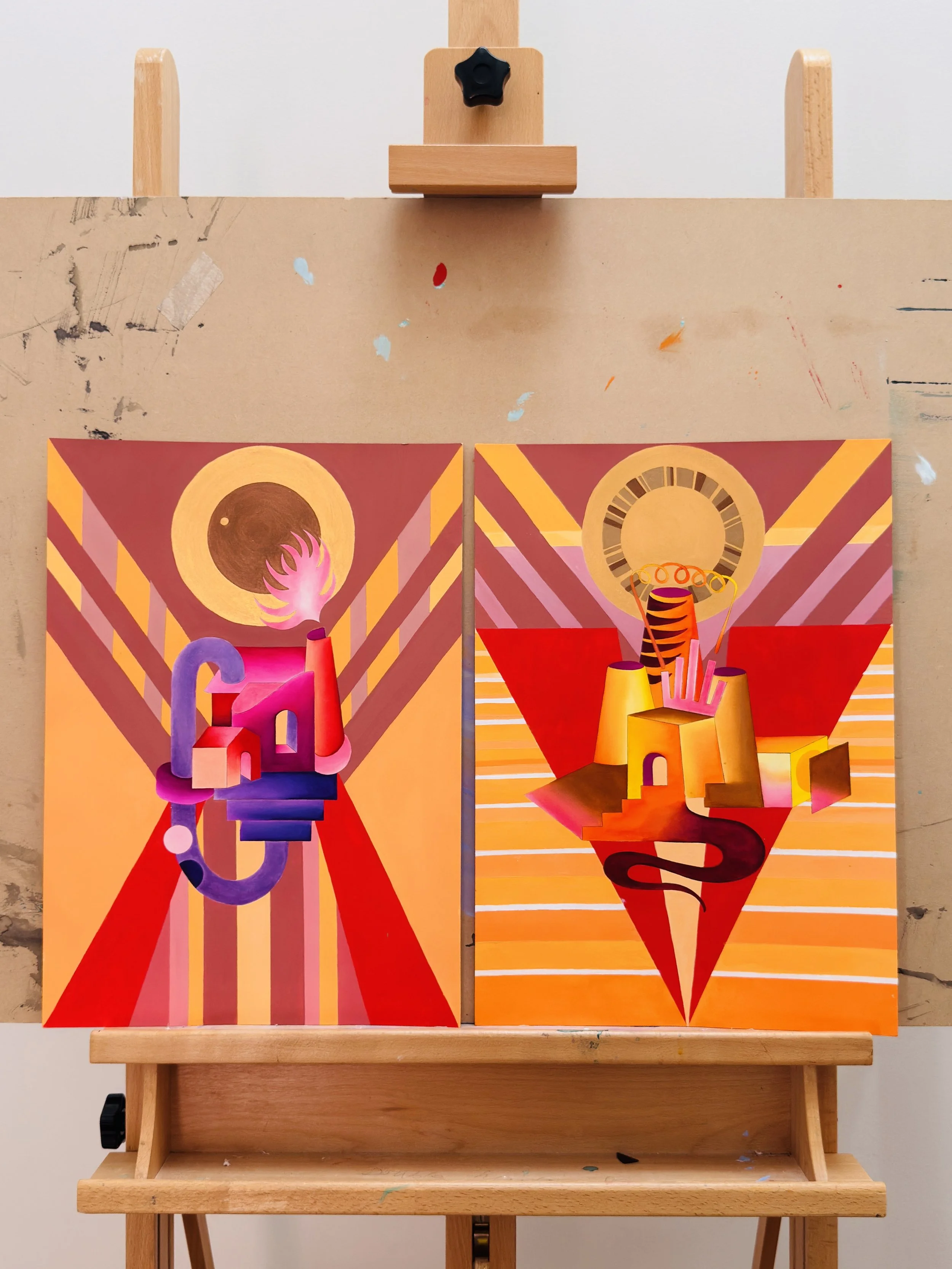
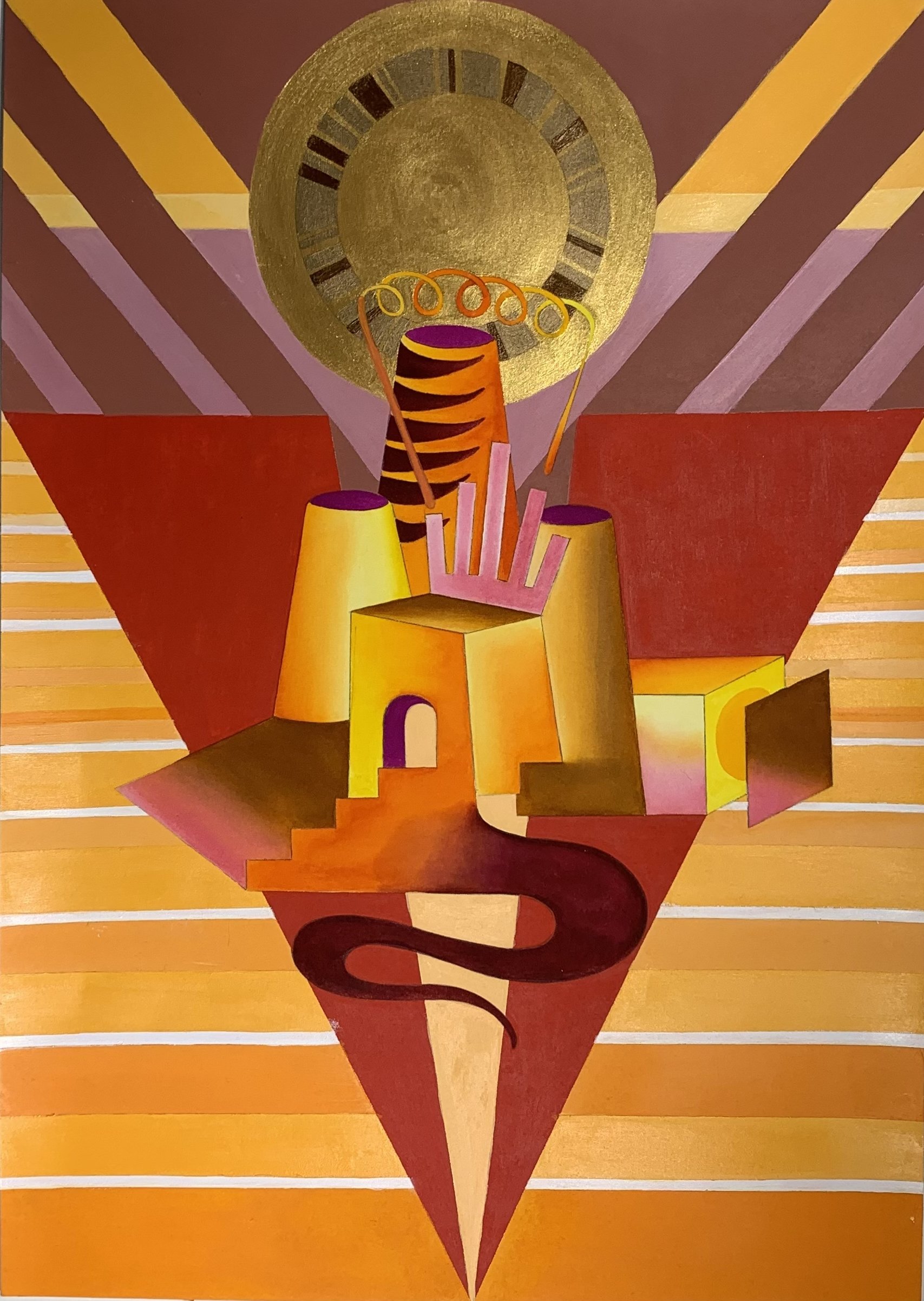
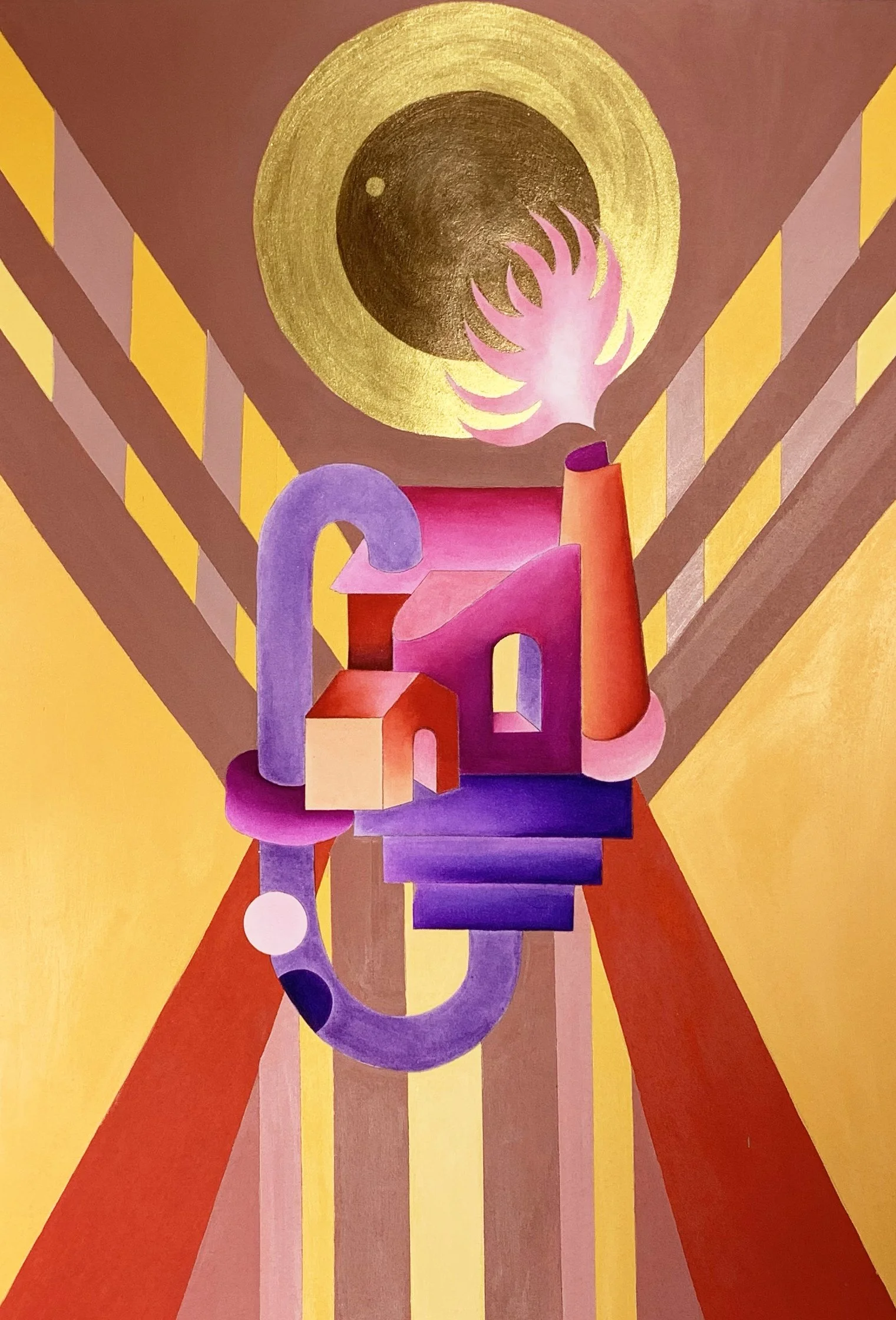
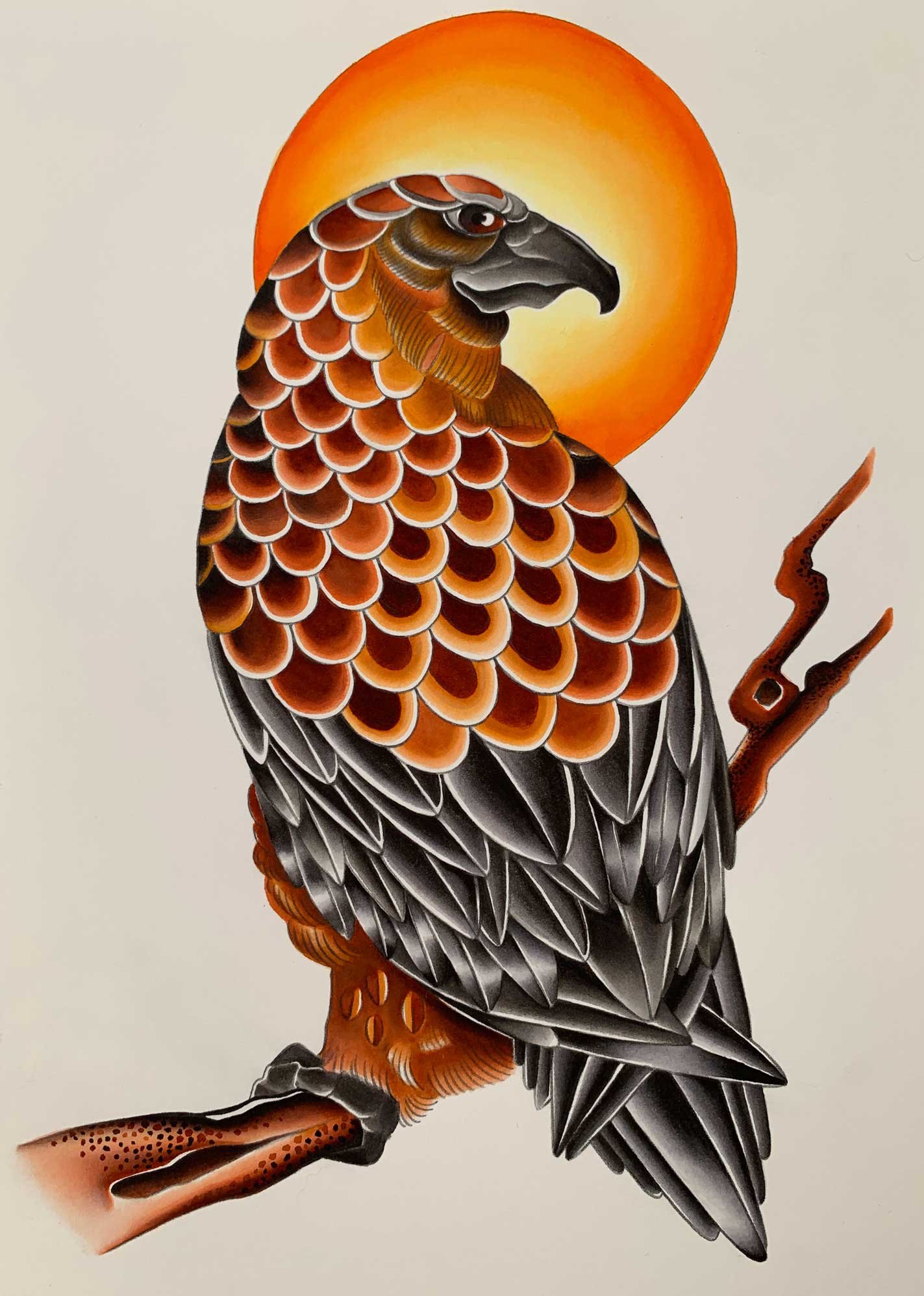
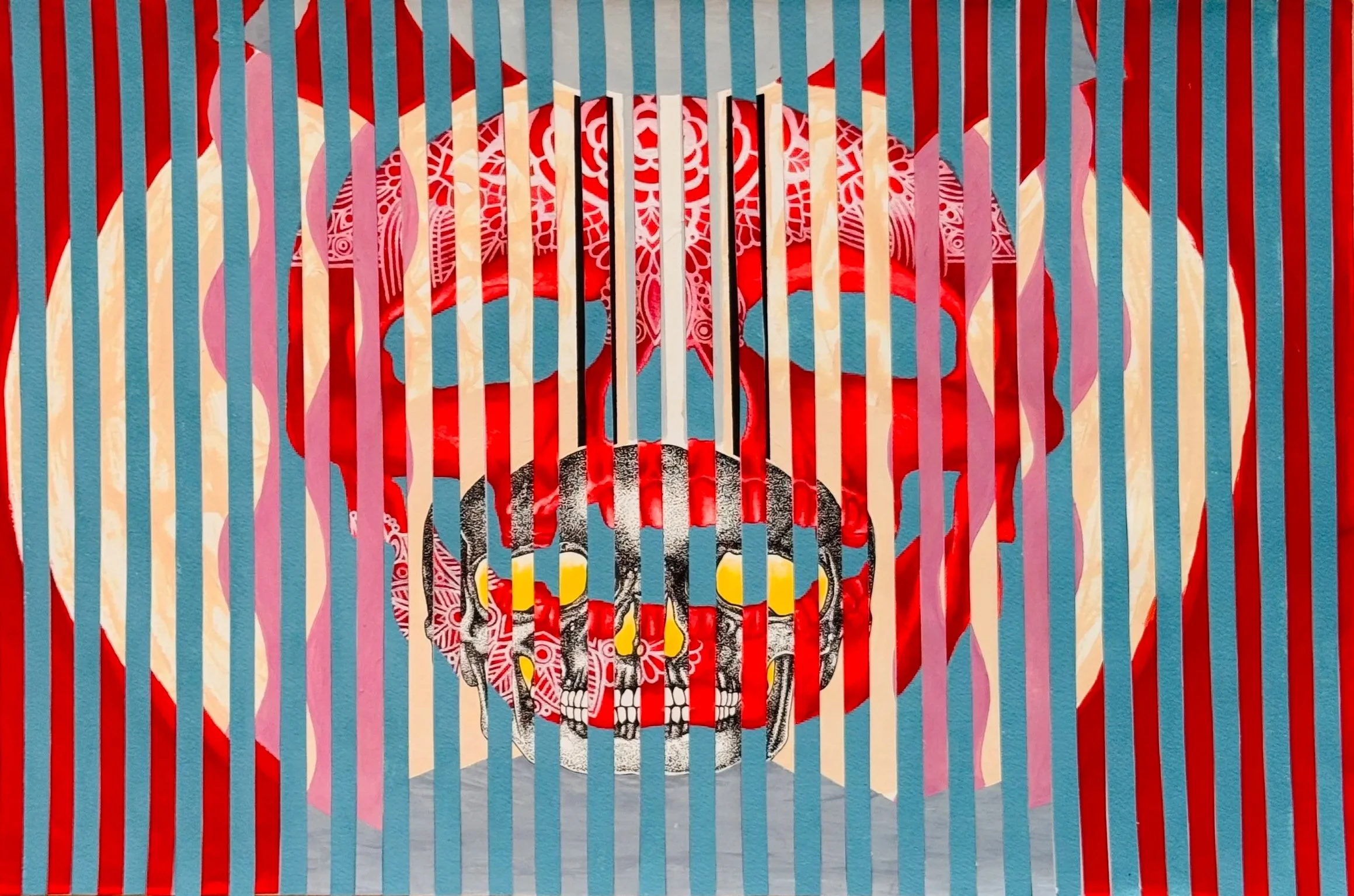
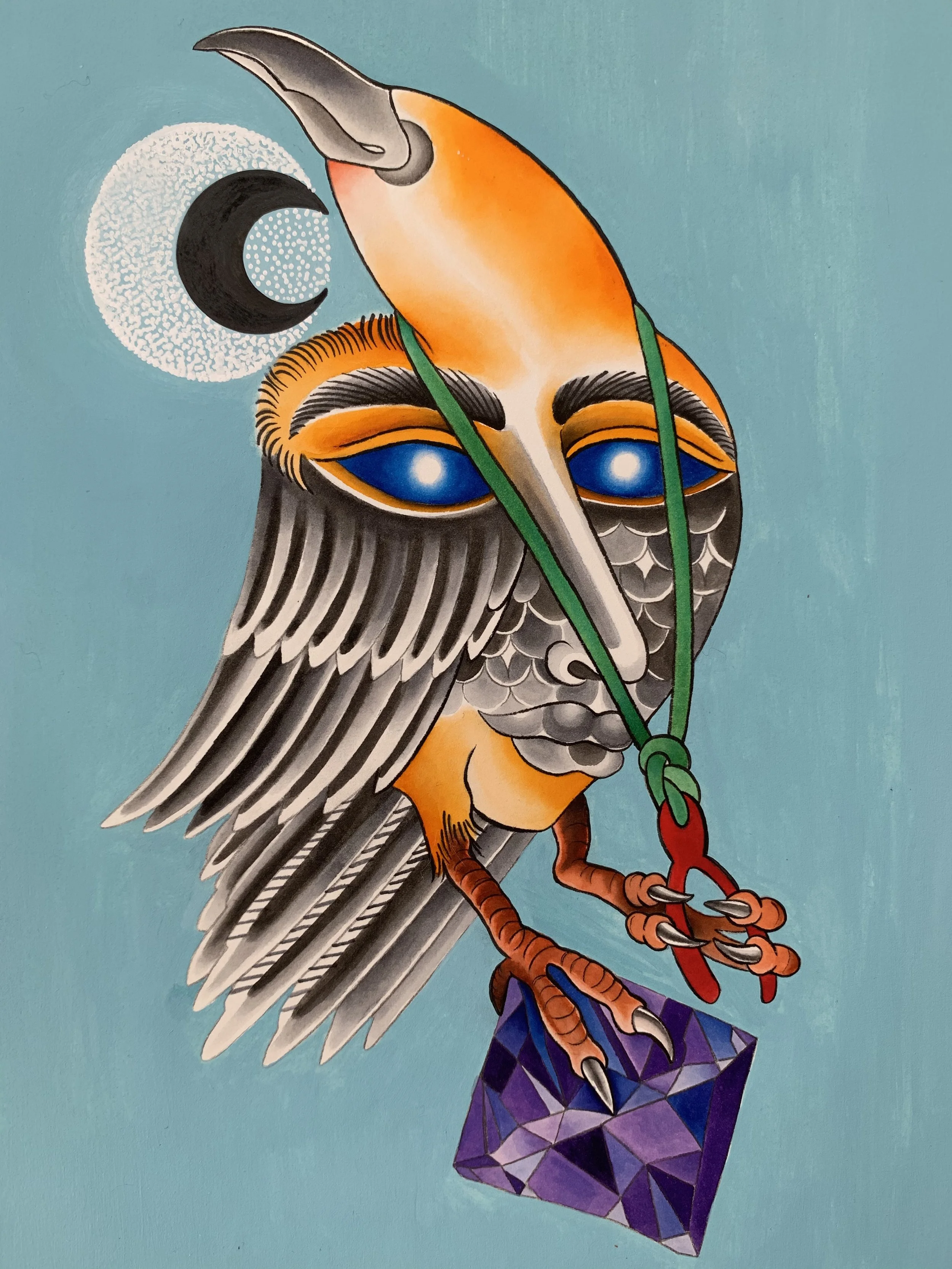
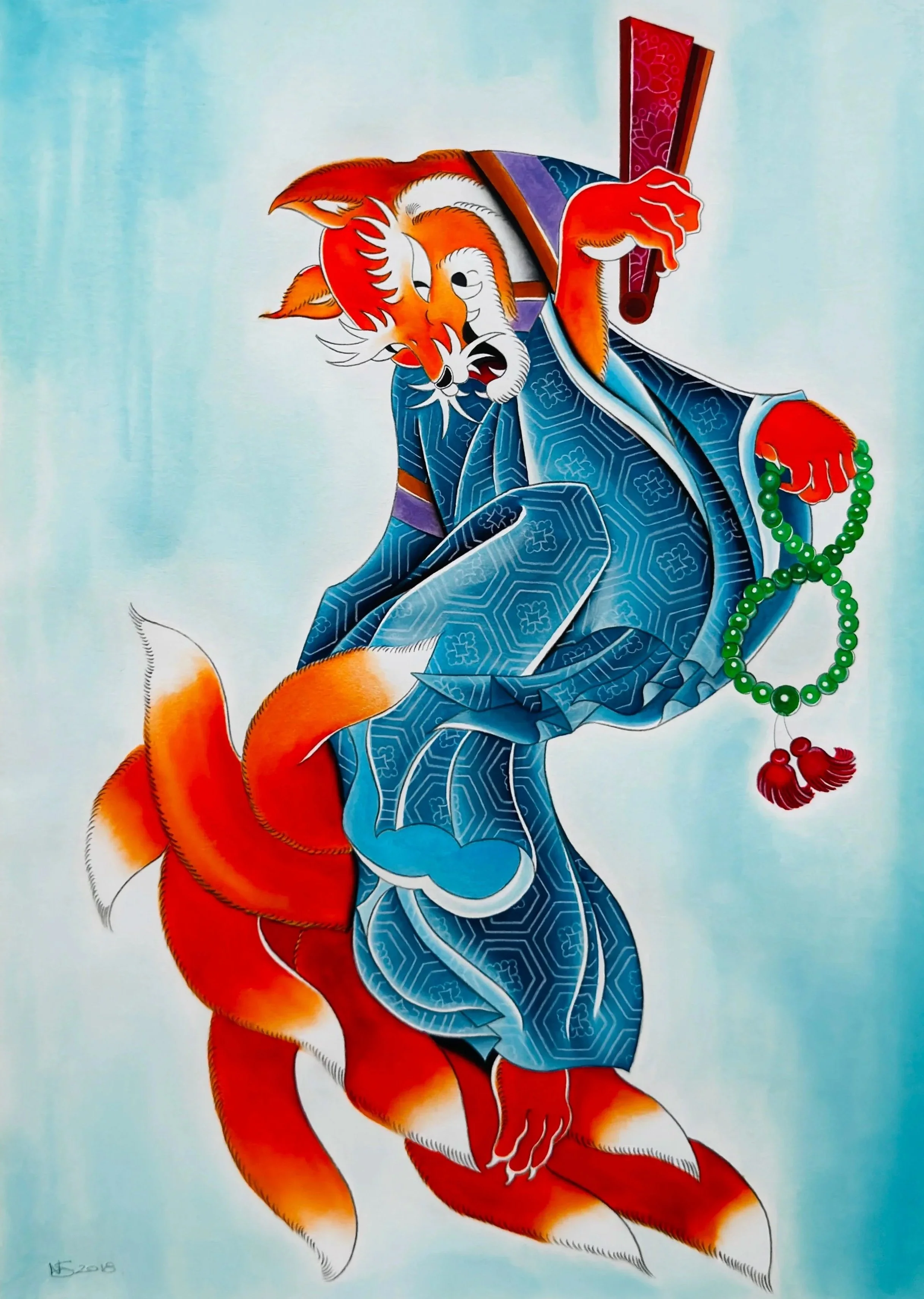
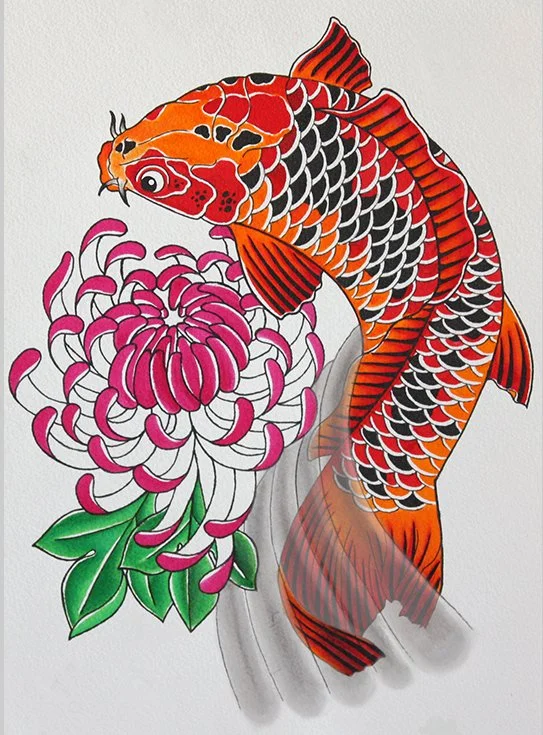
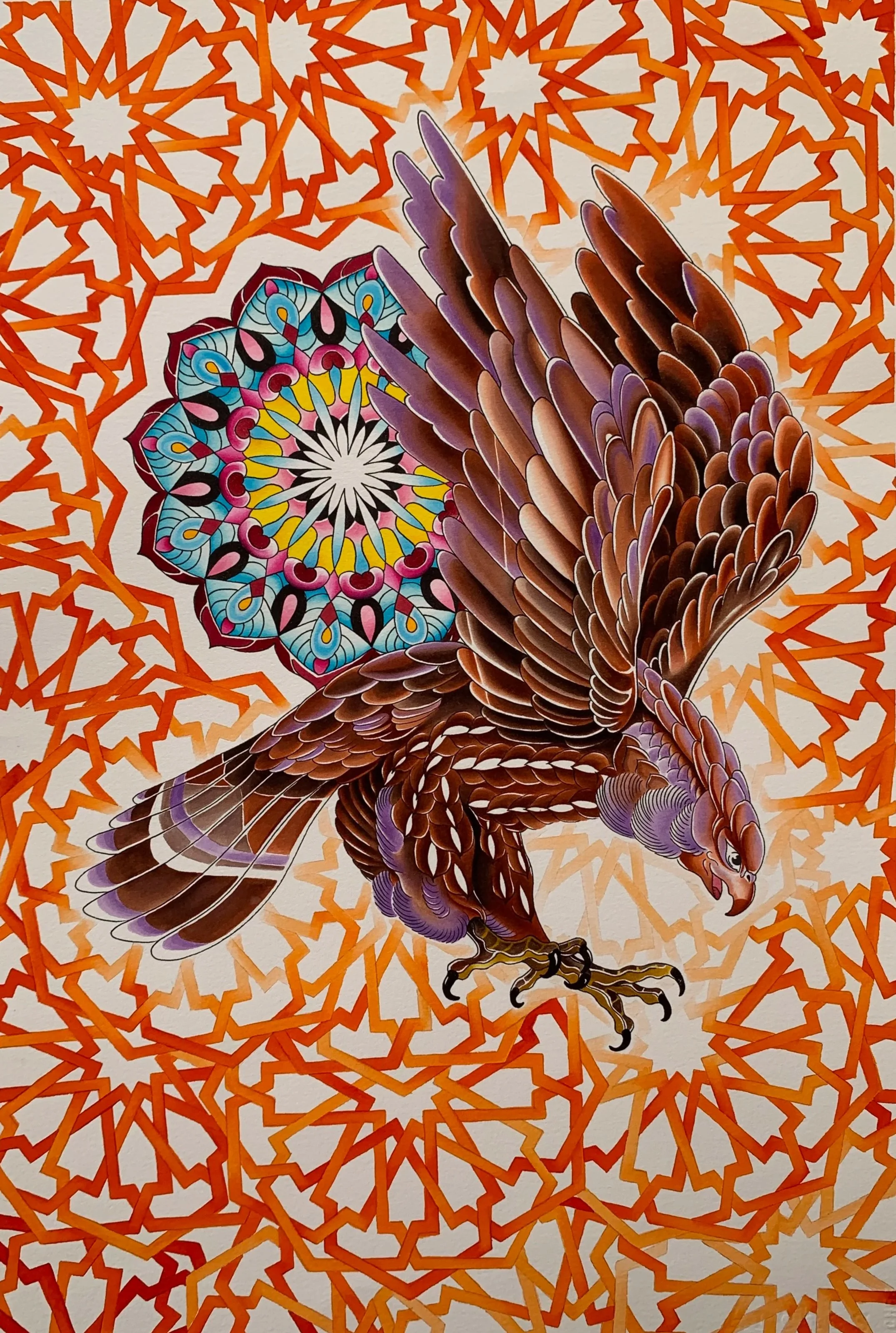
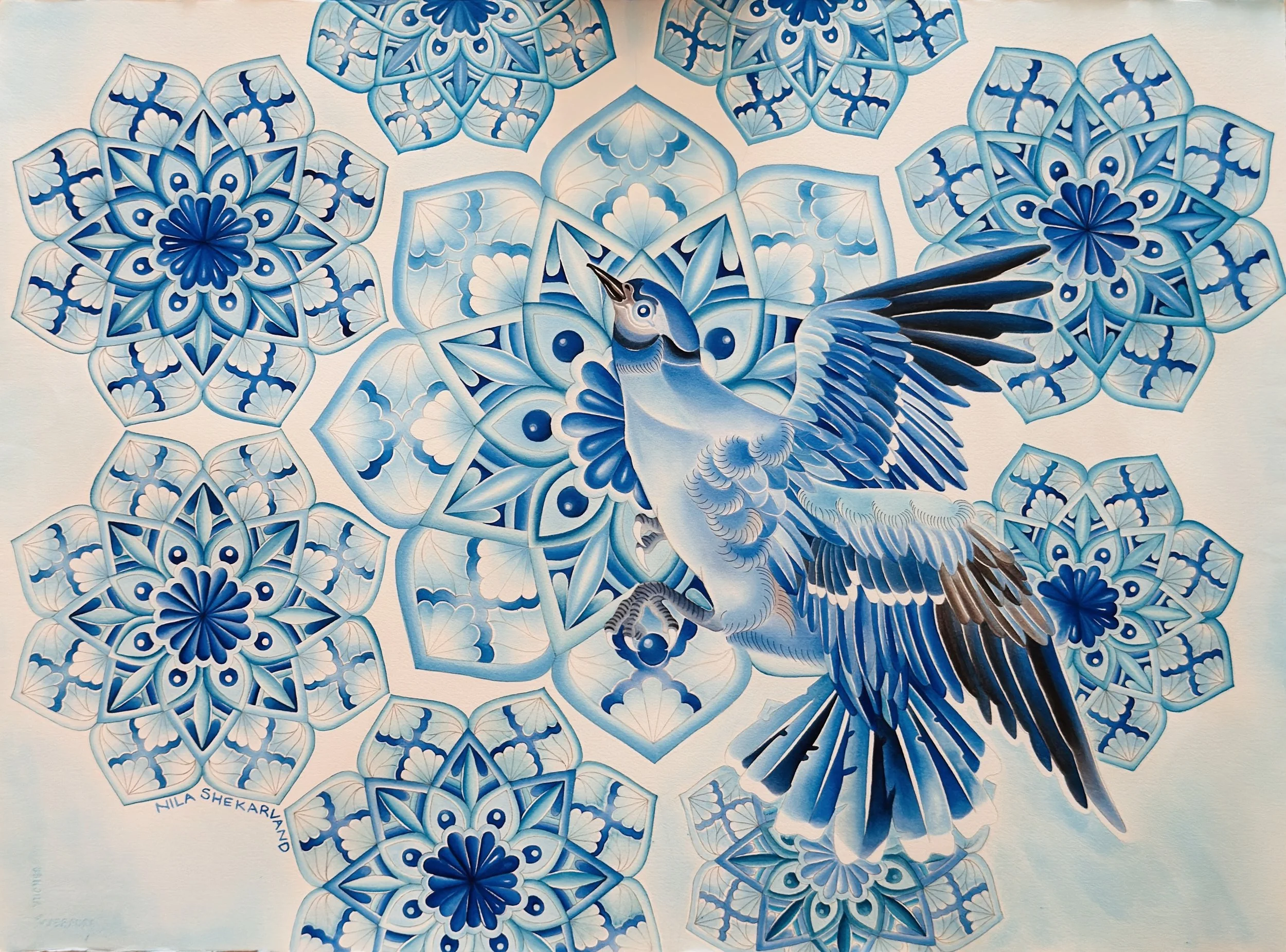
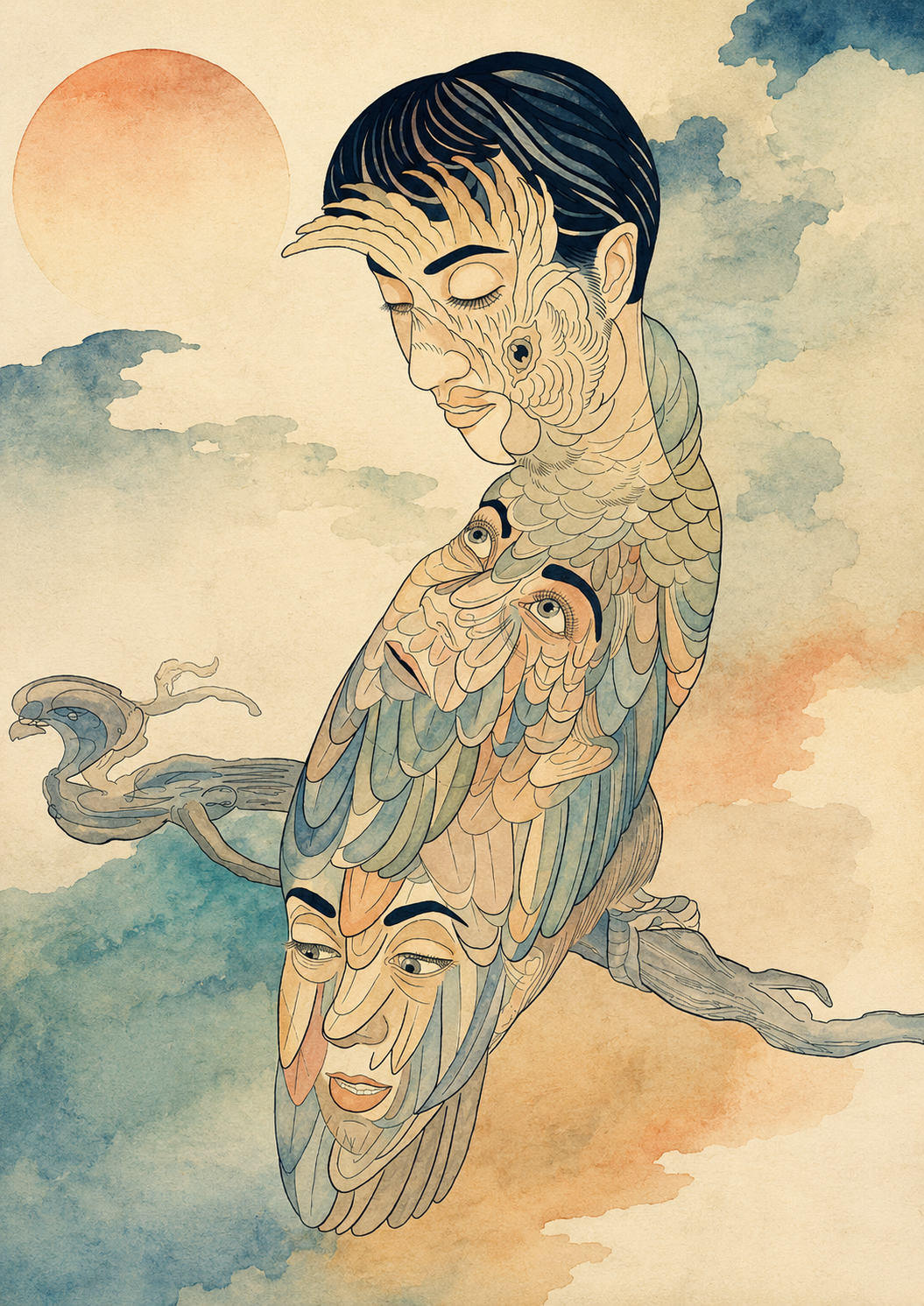
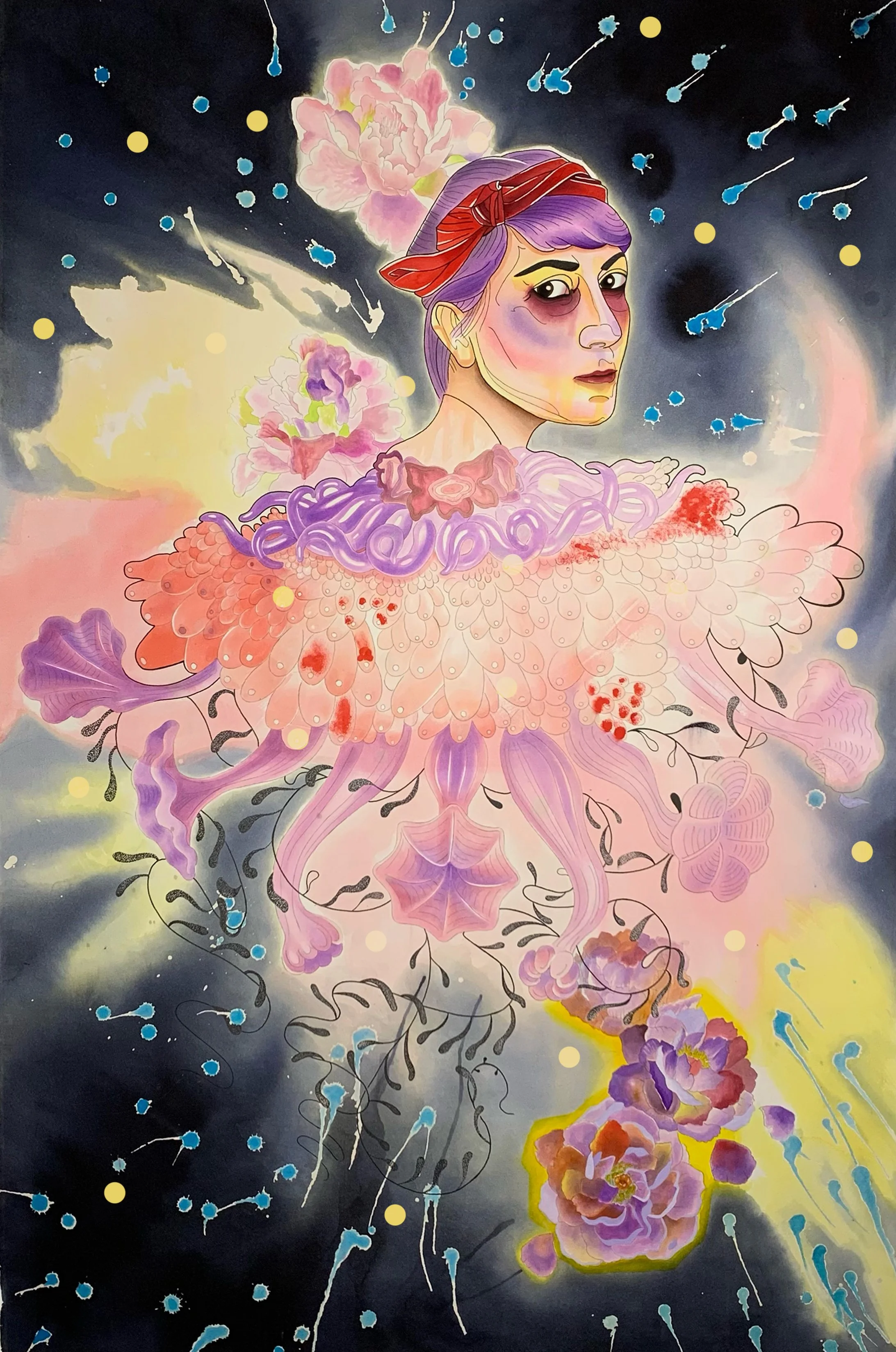
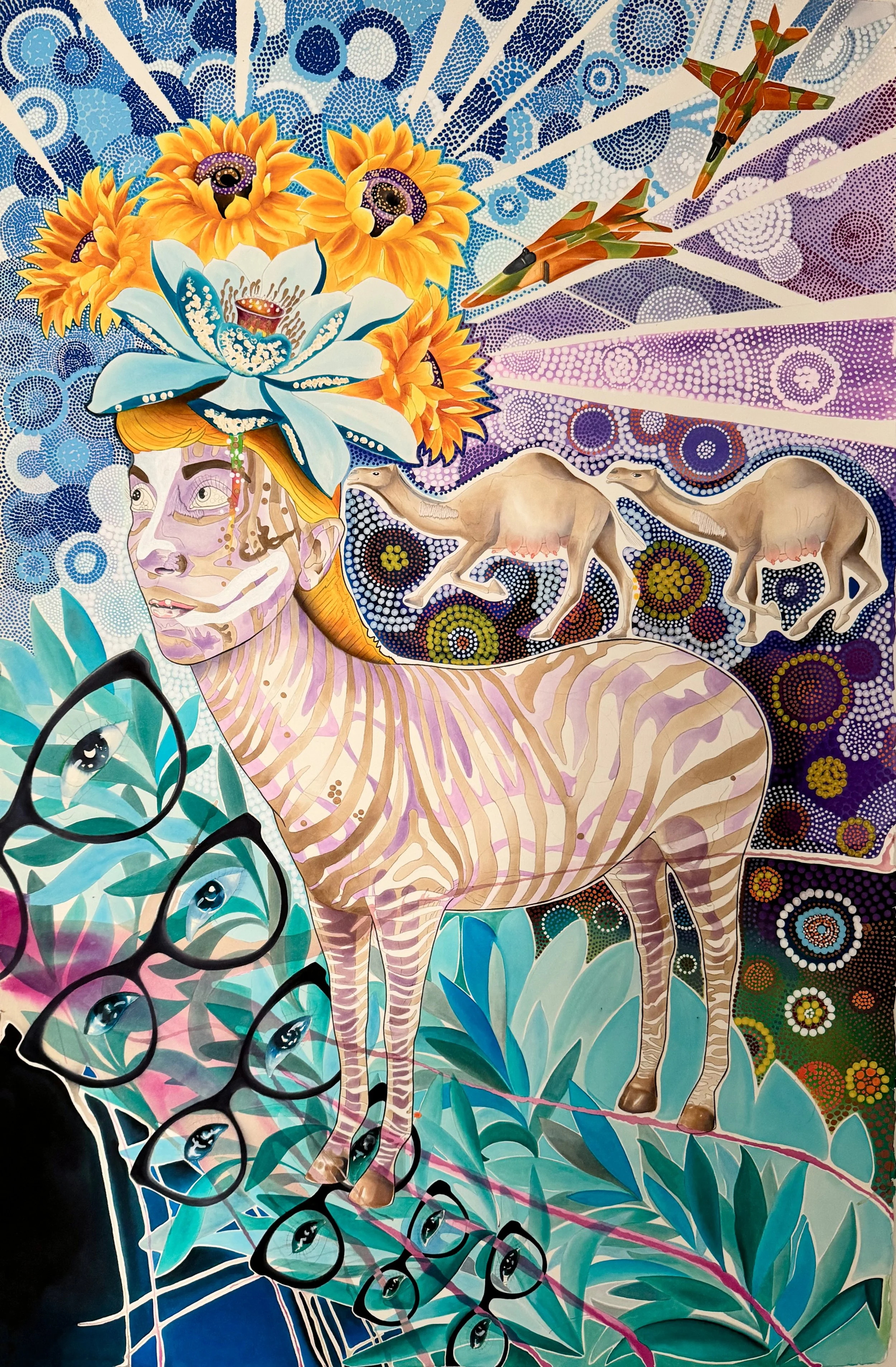
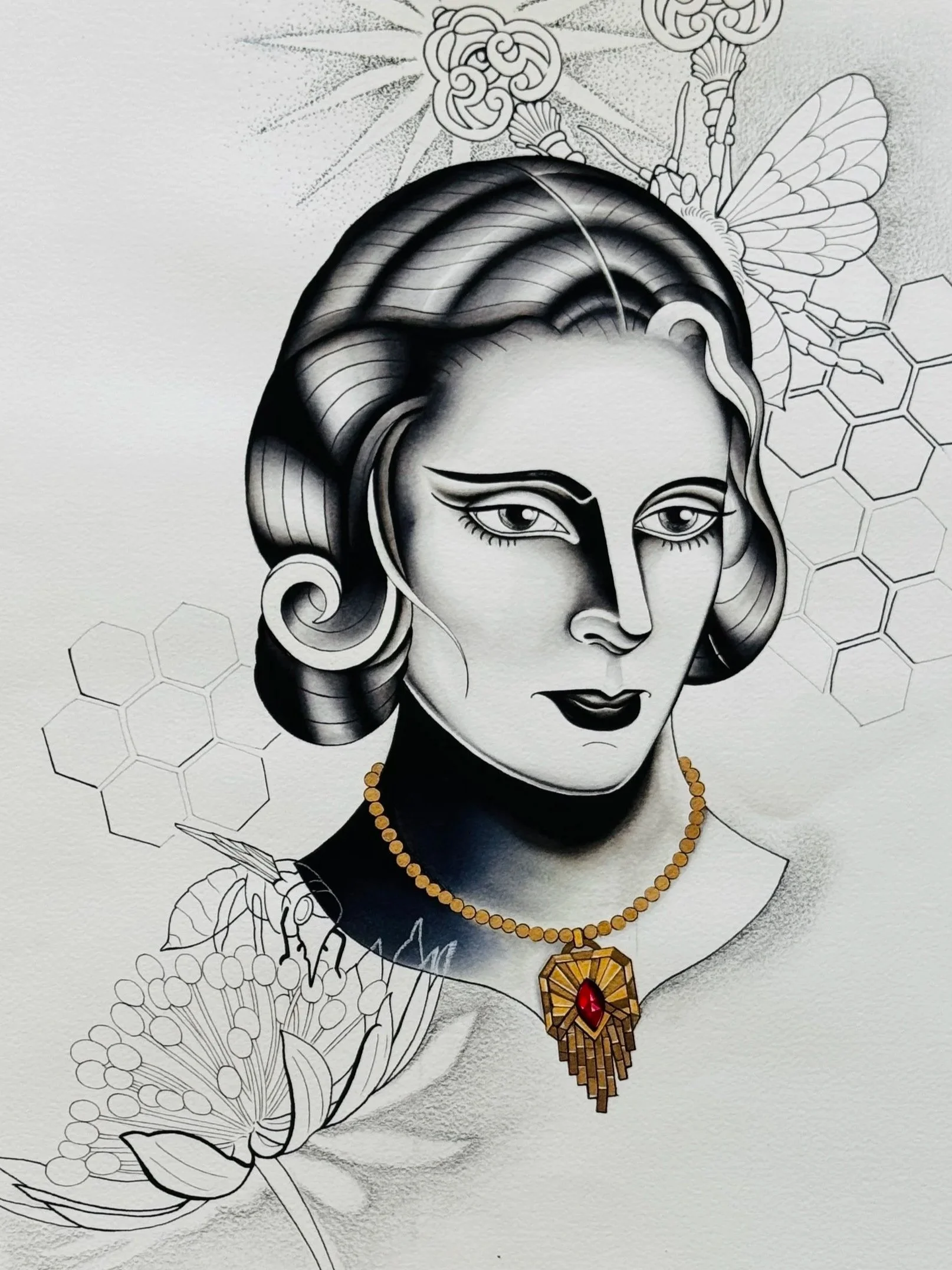
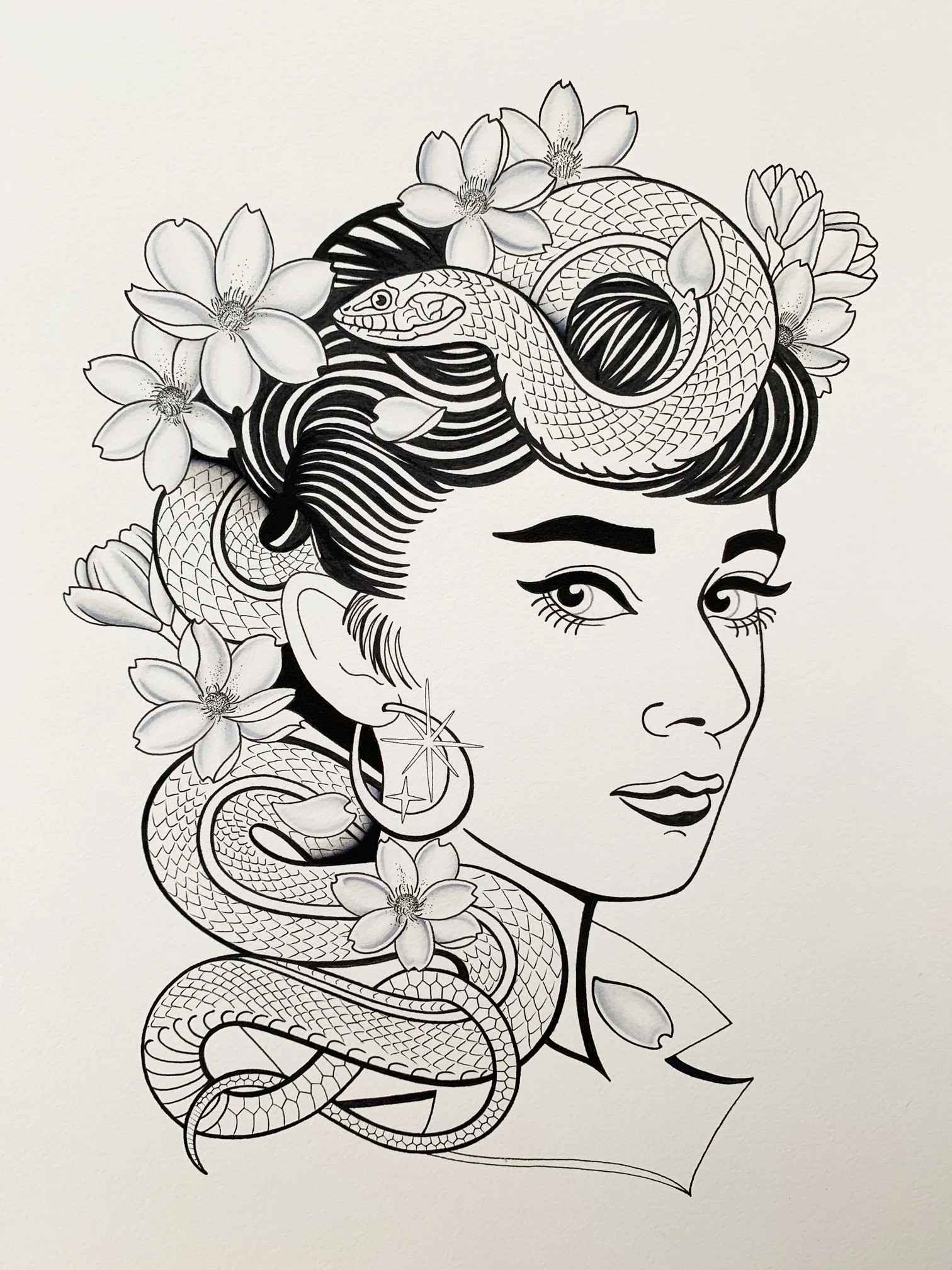
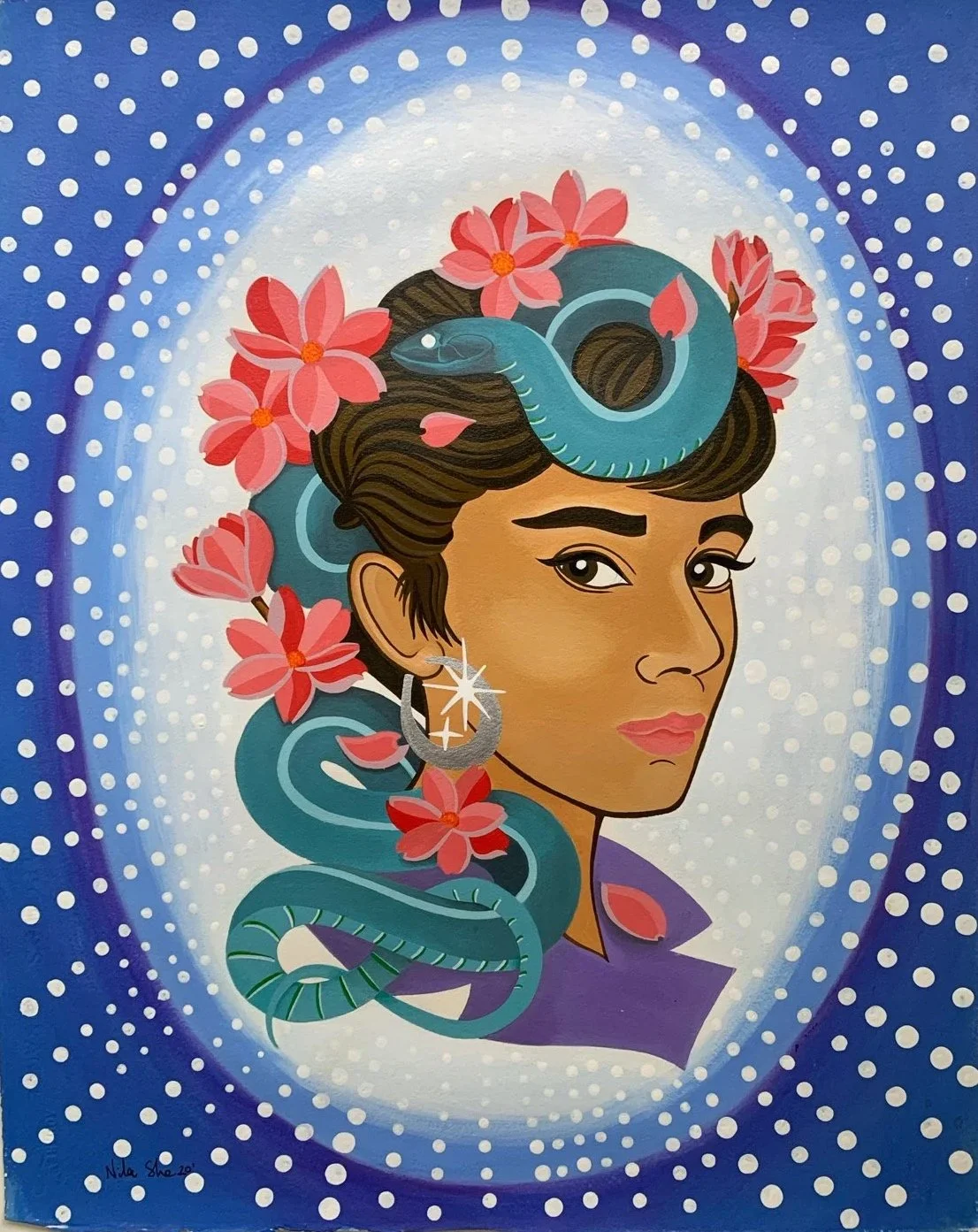
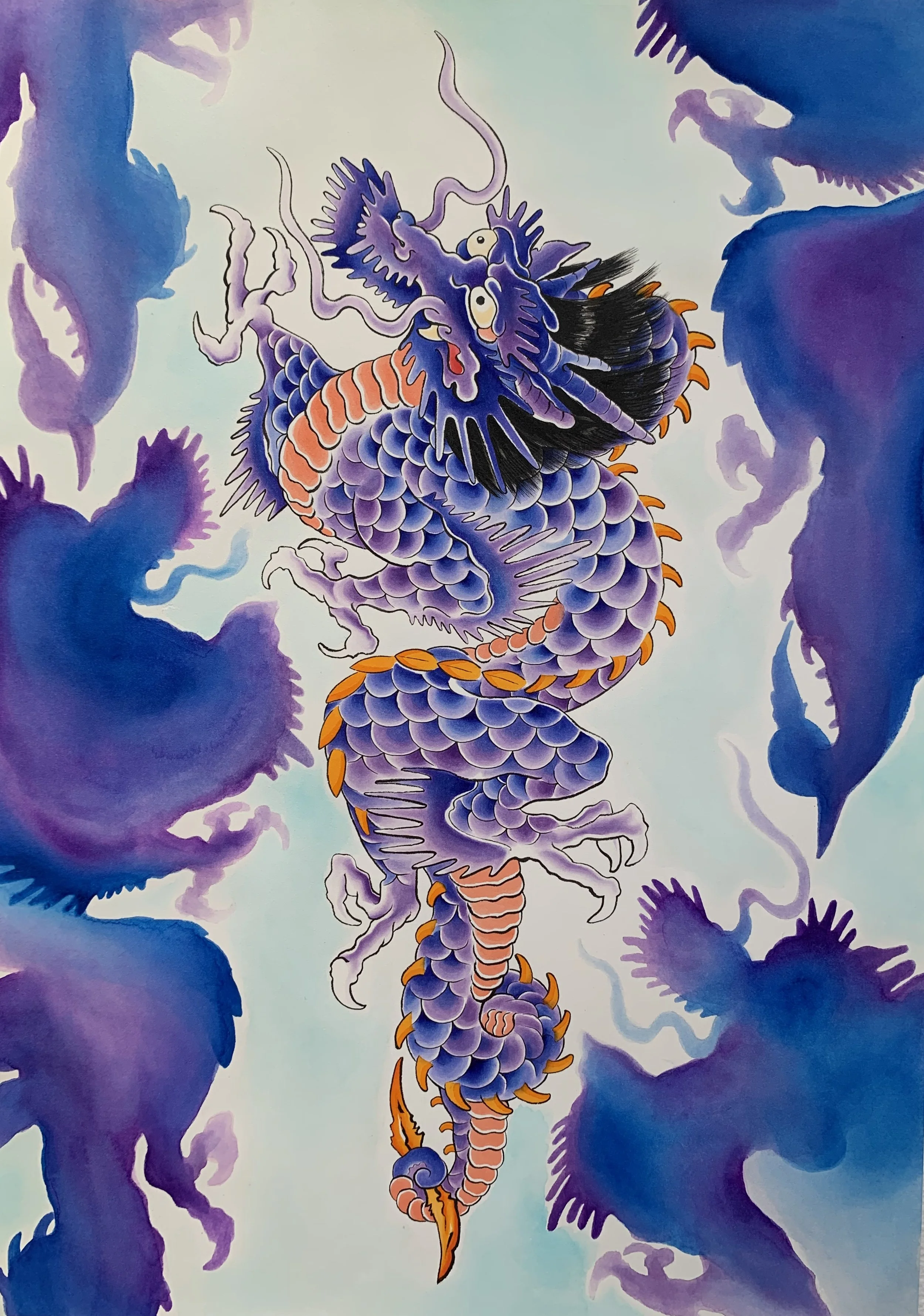
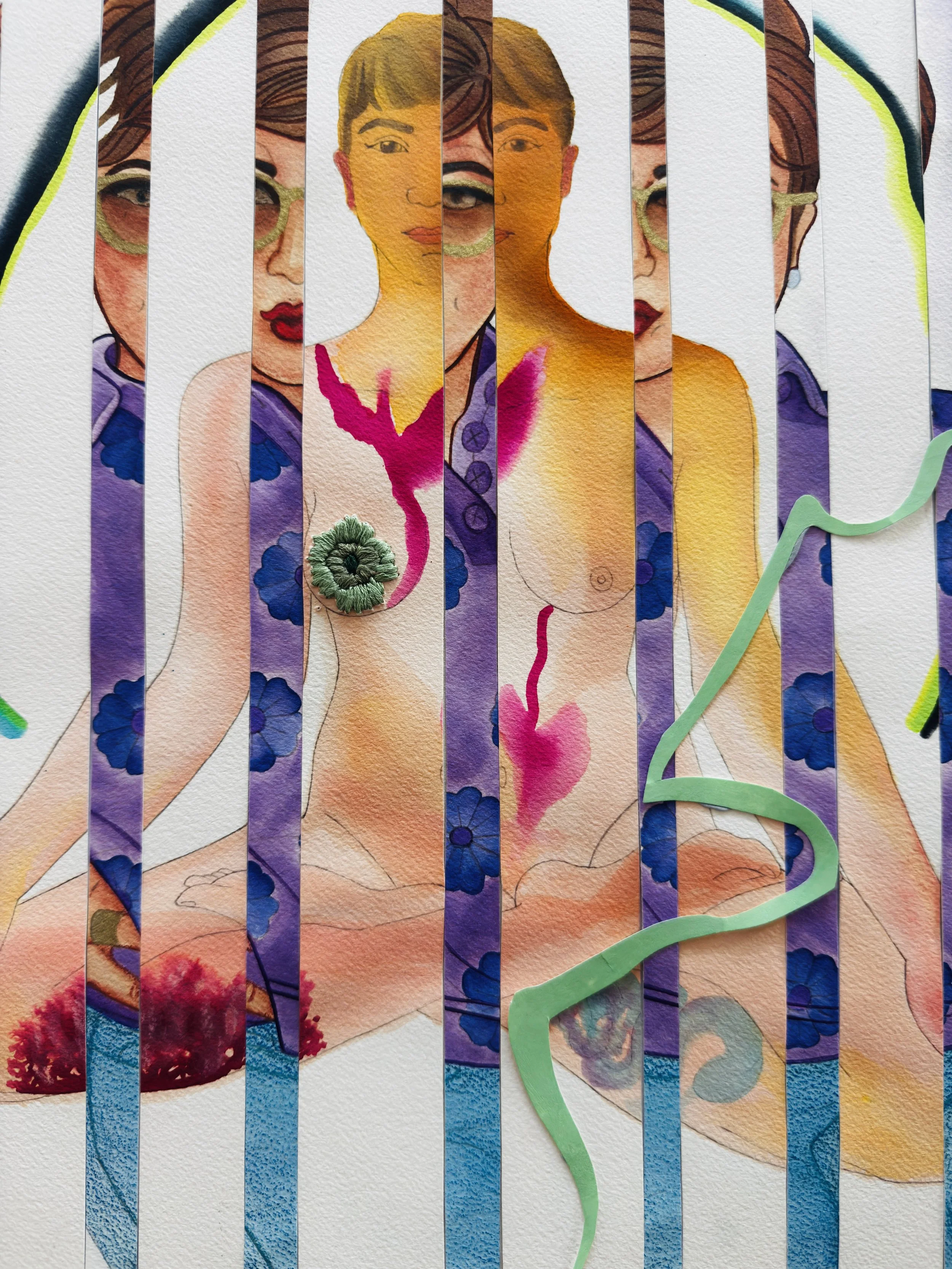
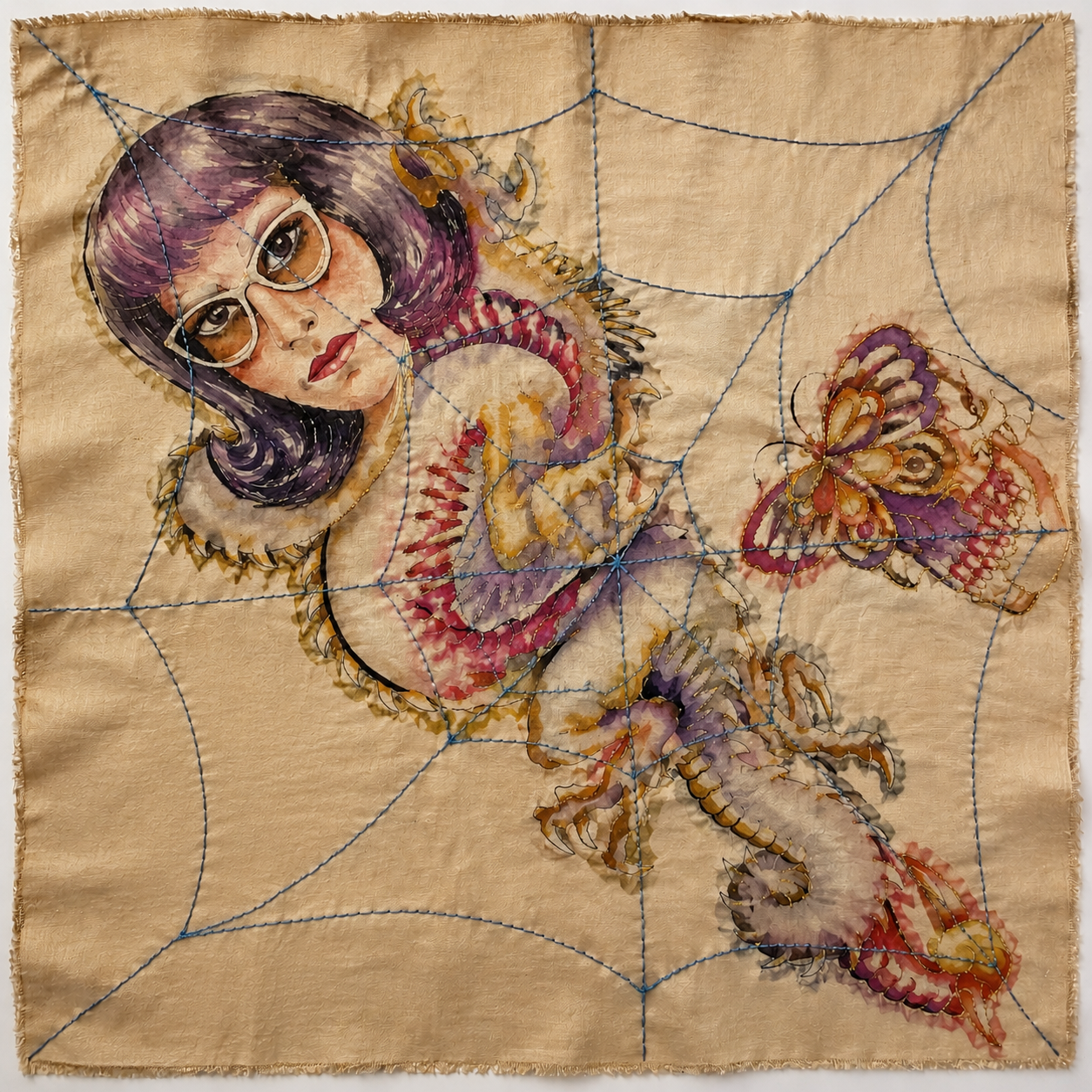
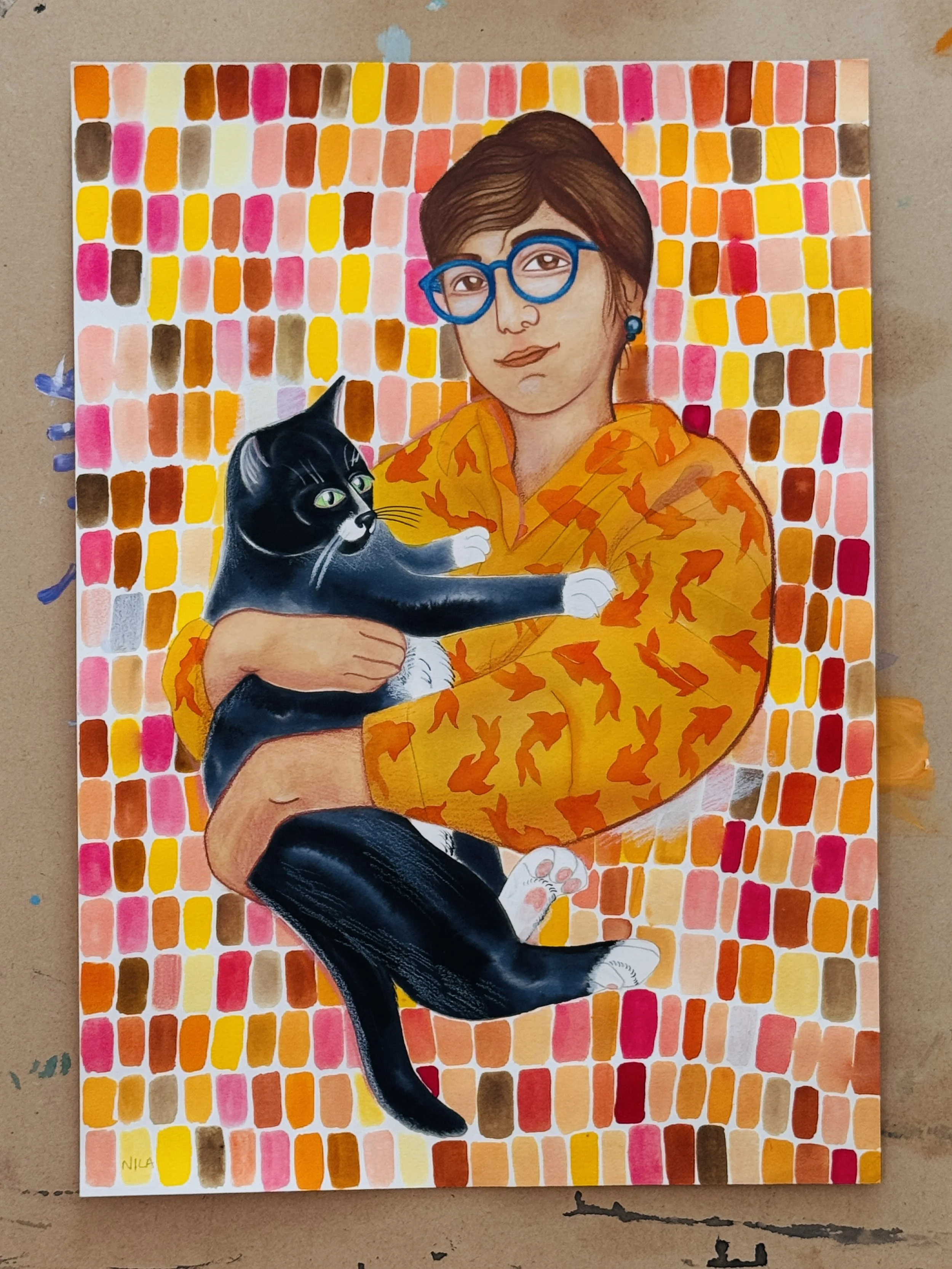
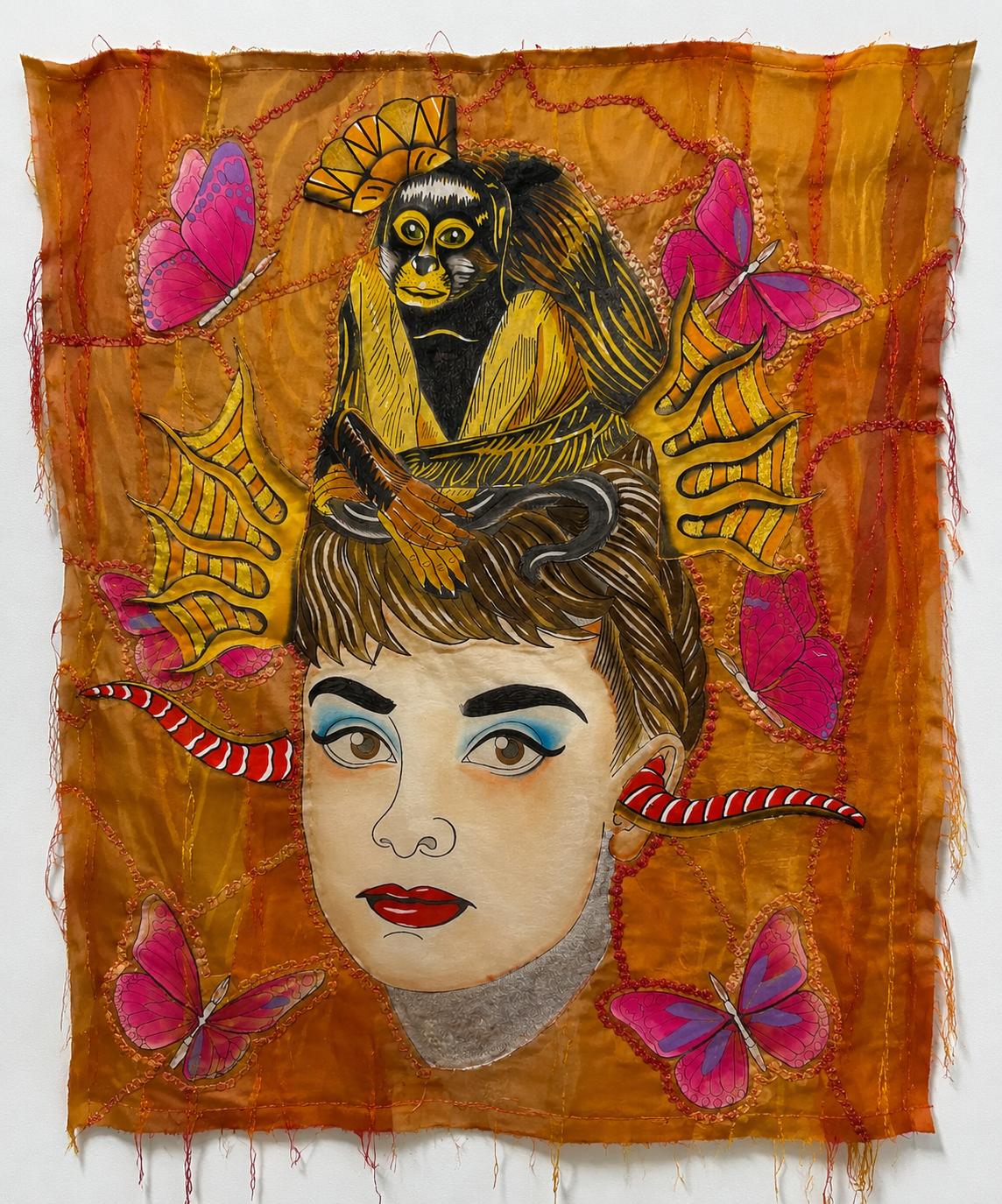
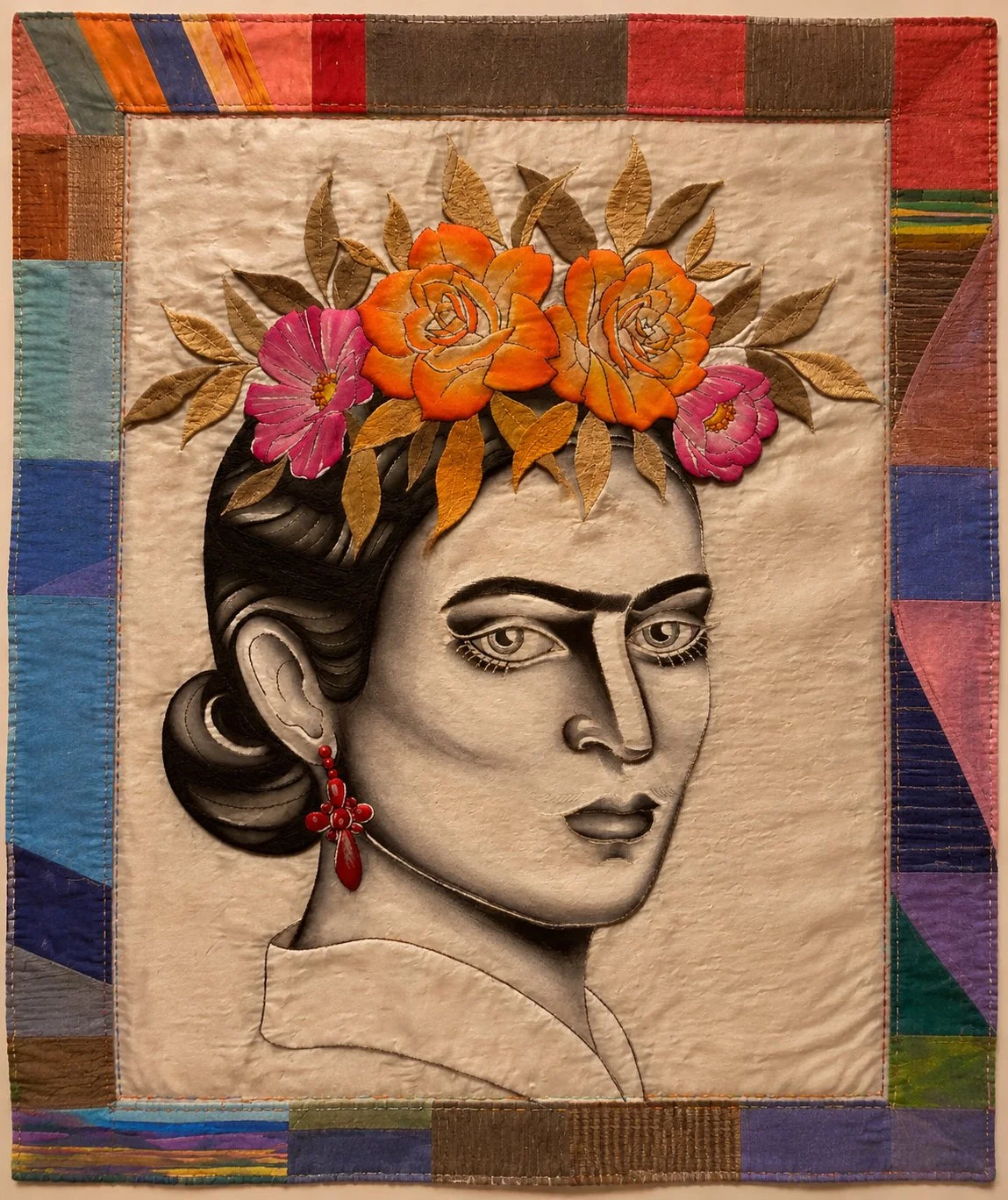
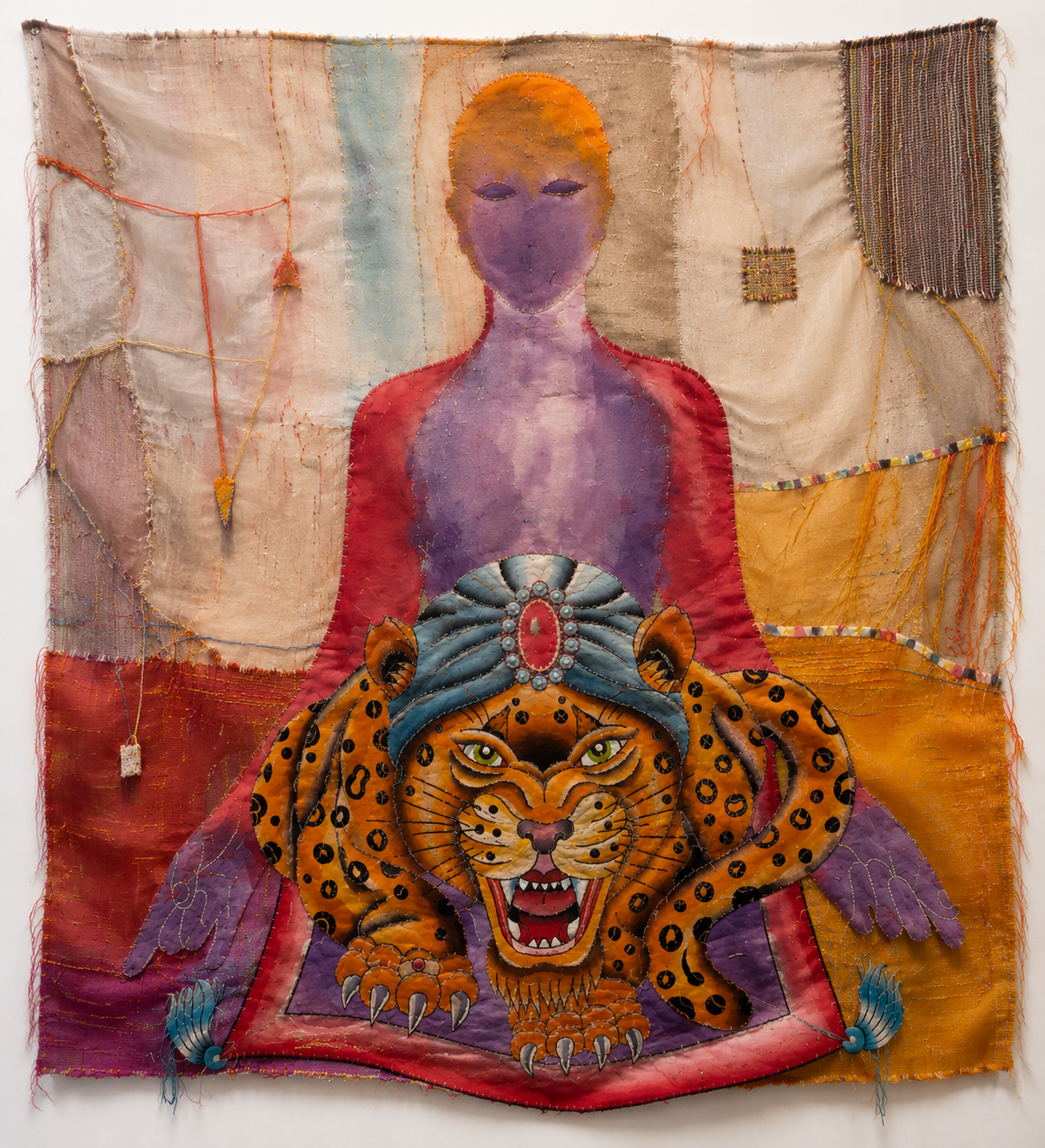
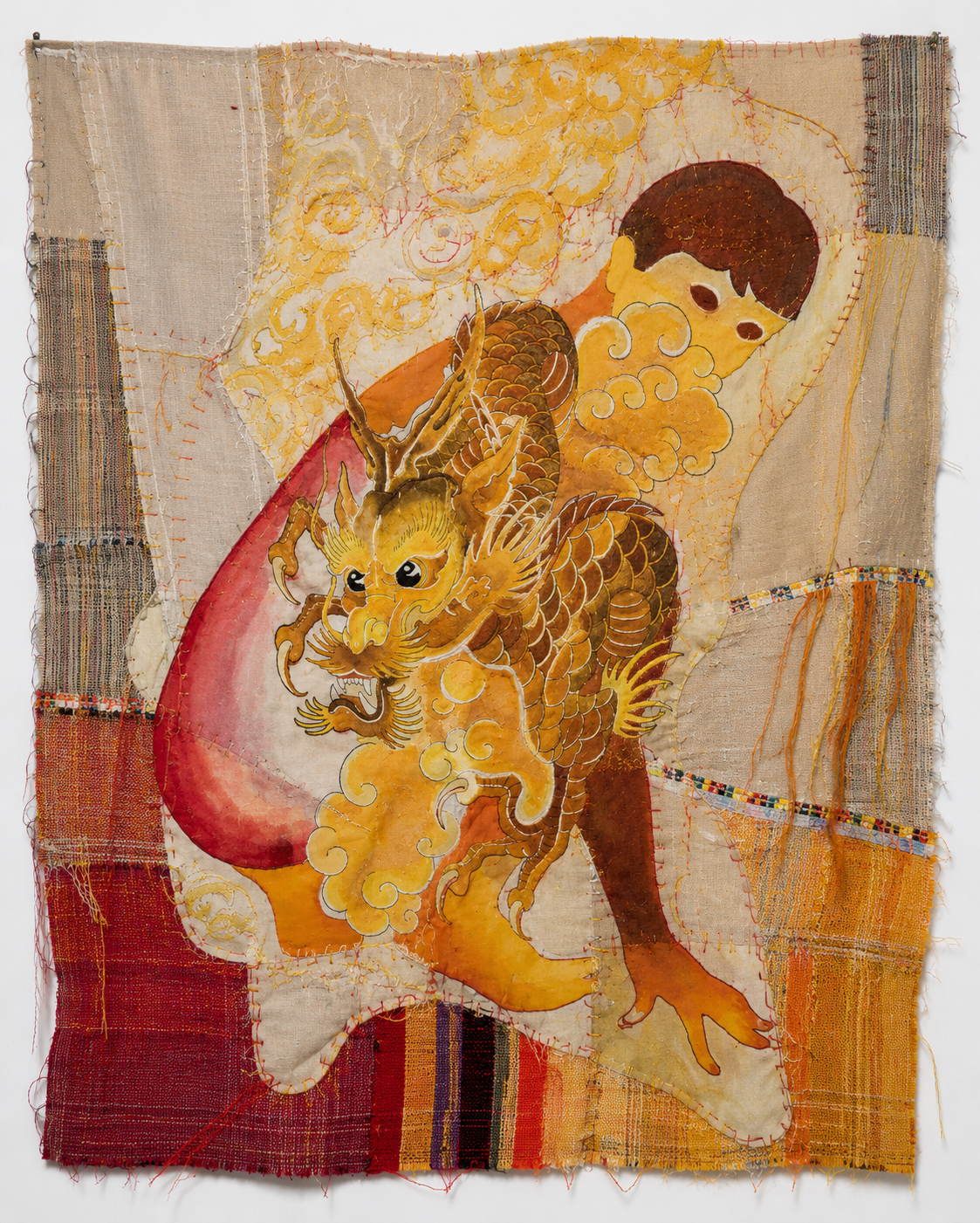
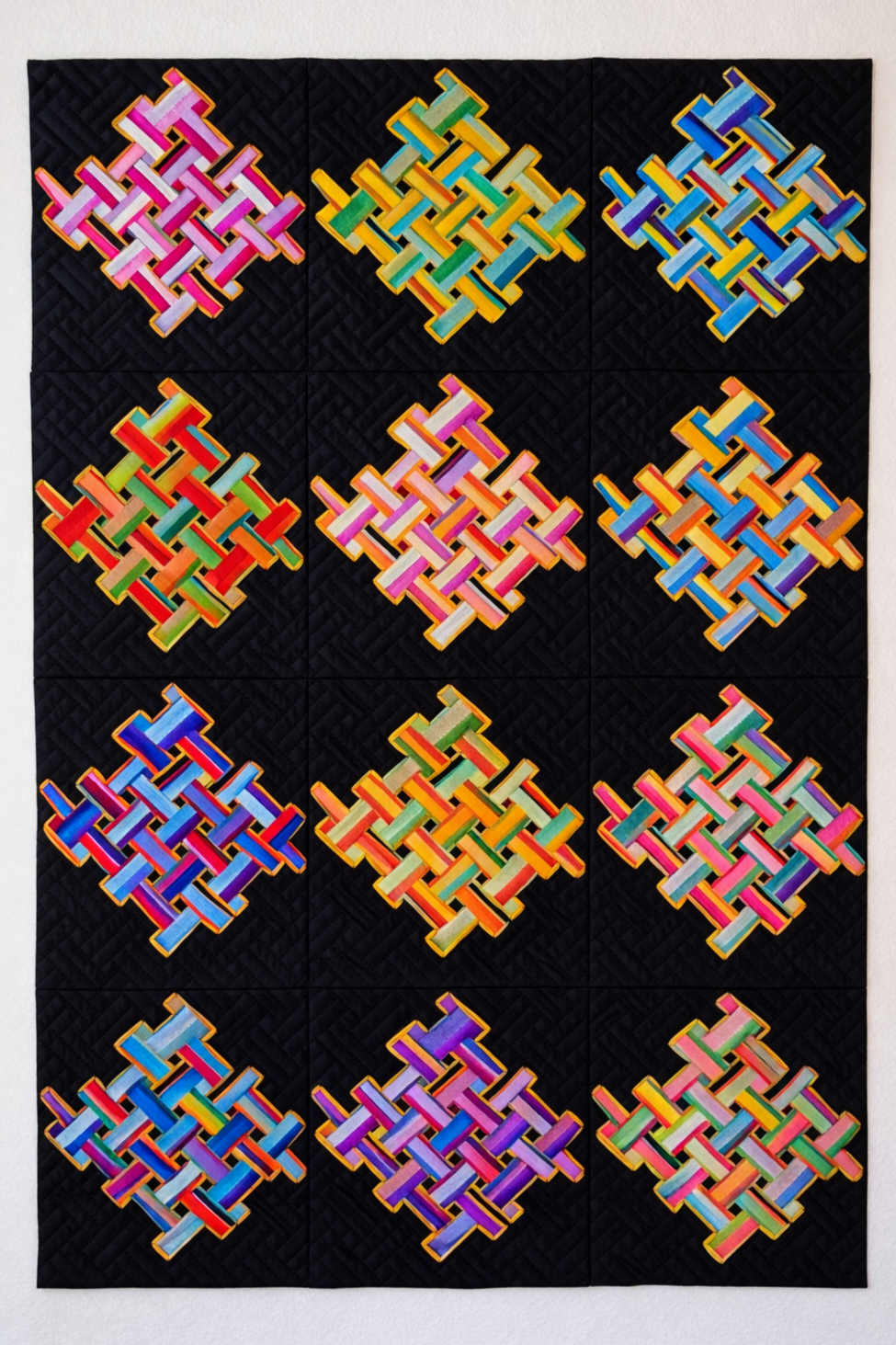
Research Question: How can drawing and painting create symbolic meaning?
My early practice began through learning the visual languages of drawing and painting. I became interested in how symbols communicate across cultures and time, and how images can express identity, memory and transformation beyond words.
Working primarily through drawing and painting, I explored decorative pattern, mythology, portraiture and ornamentation as methods of visual inquiry. Dragons, snakes, birds, butterflies and geometric forms became recurring motifs, not as illustrations of particular stories, but as symbolic forms through which I investigated ancestry, belonging and cultural memory. Through repetition, observation and material experimentation, I gradually developed a personal visual language grounded in symbolism and metaphor.
As a Persian Australian artist, these works reflect an ongoing search for cultural belonging. Rather than illustrating autobiographical narratives directly, I used mythology and symbolic imagery to explore questions of identity, migration, femininity and cultural inheritance. Portraiture became a site where human figures, animals and imagined beings merged, allowing identity to be understood as layered, relational and continually evolving.
This body of work established the conceptual foundations of my practice. It introduced many of the questions that continue to shape my research, including drawing as a mode of thinking, the relationship between humans and the more-than-human world, and the capacity of symbolic language to generate meaning. While these works remain grounded in drawing and painting, they also mark the beginning of an inquiry that would later expand into material, embodied and participatory forms of practice.
Research Transition
Embodied Drawing Experiments
Photographic documentation exploring drawing as an embodied, performative and spatial practice.
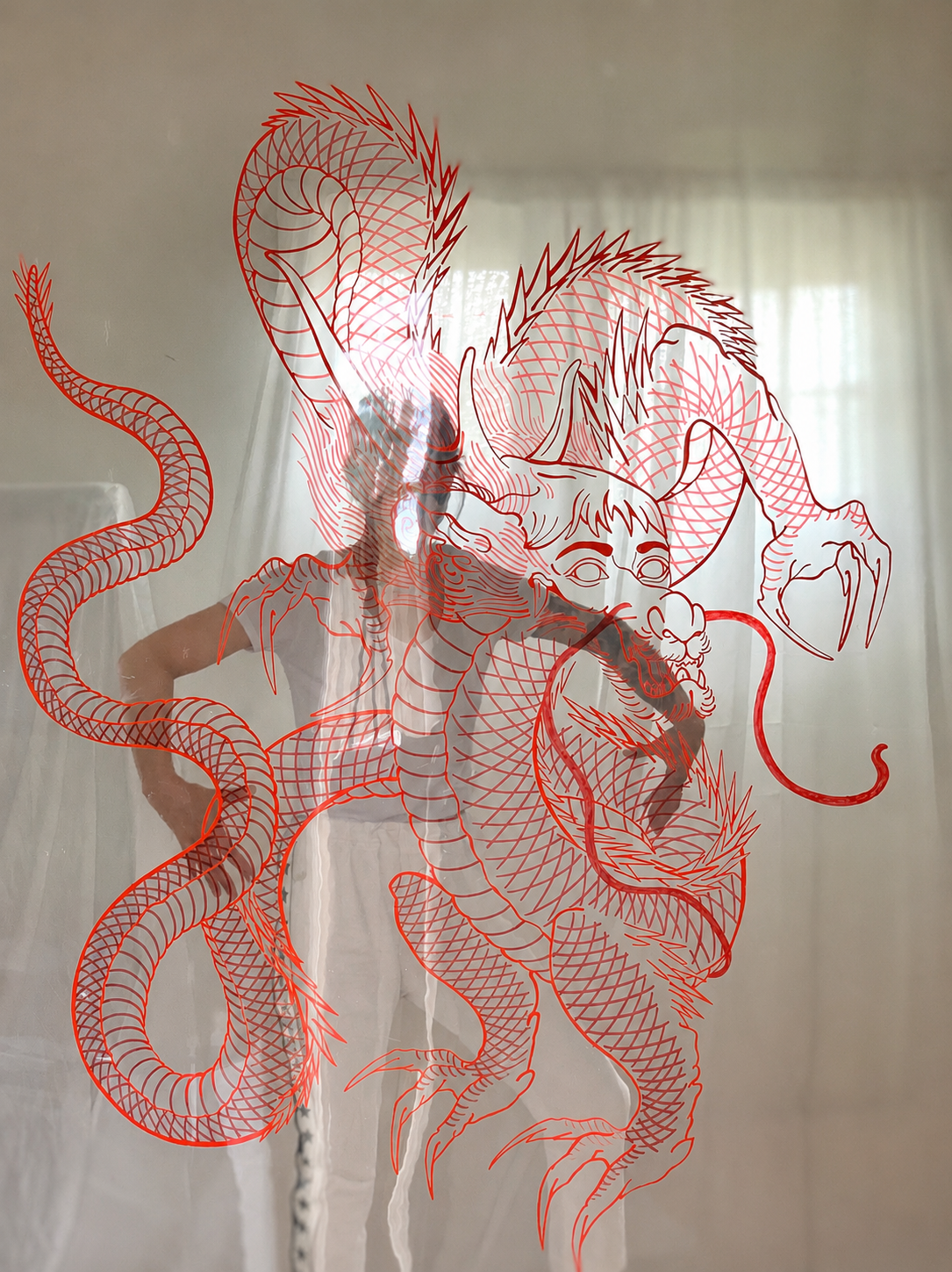
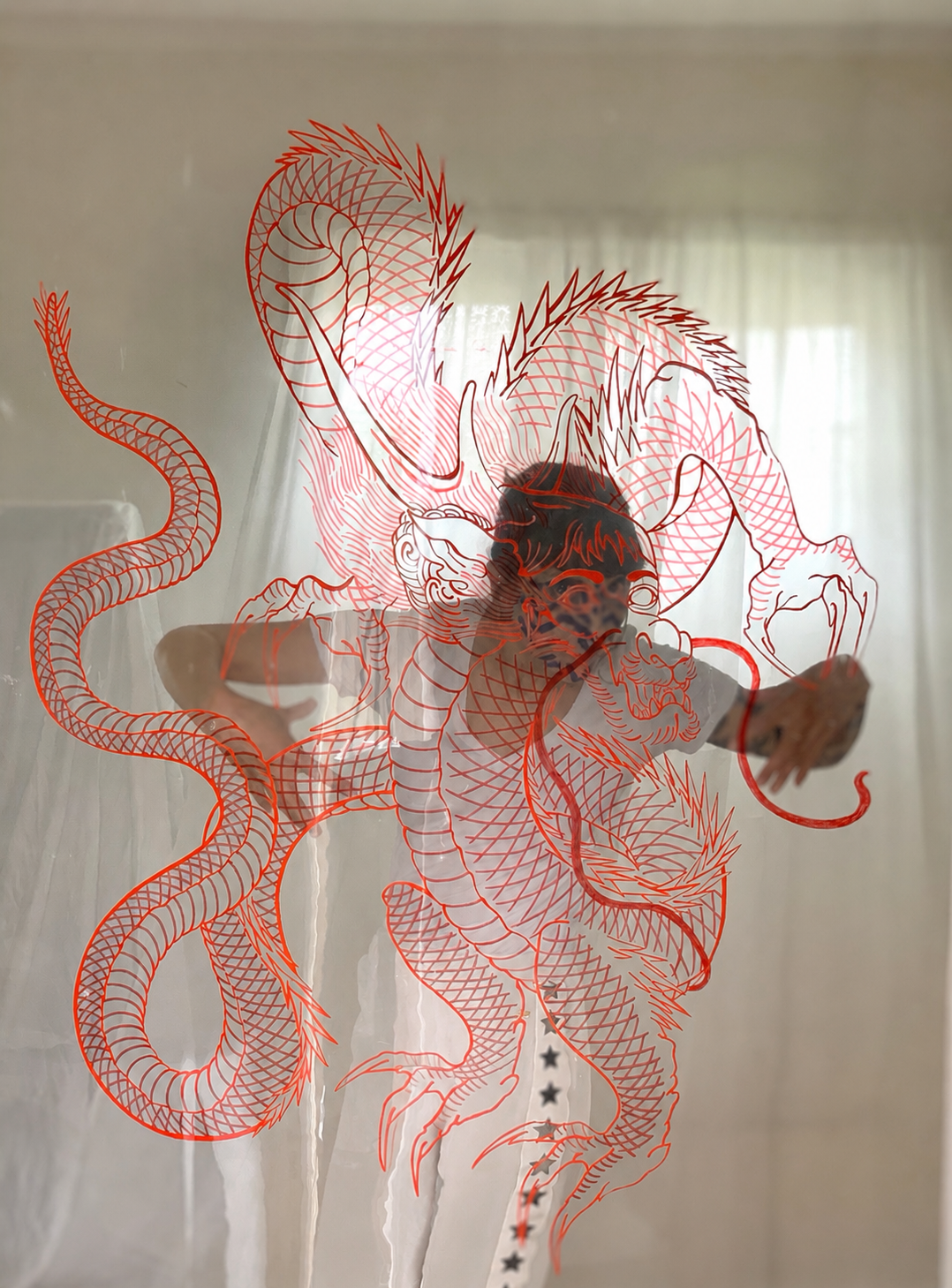
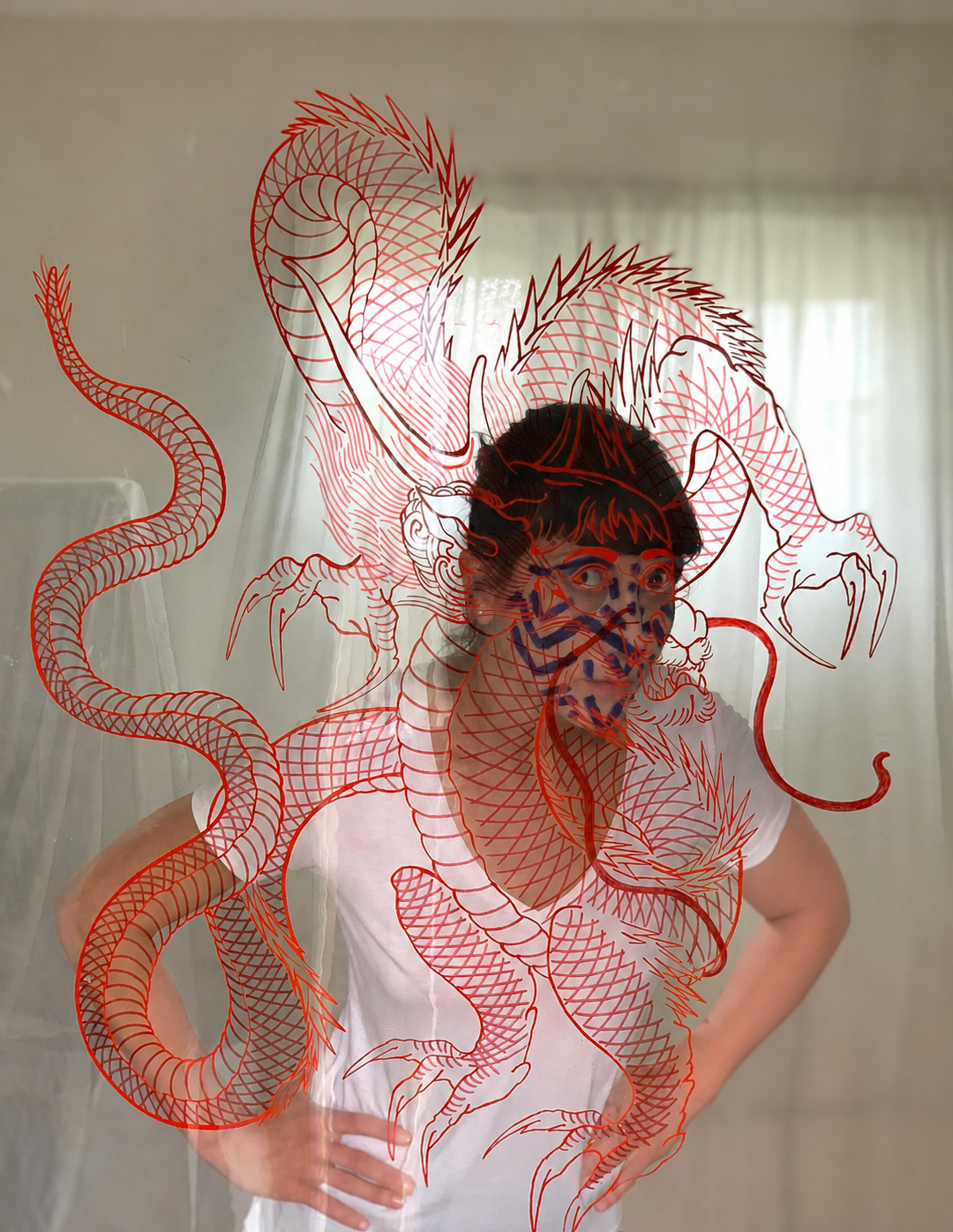
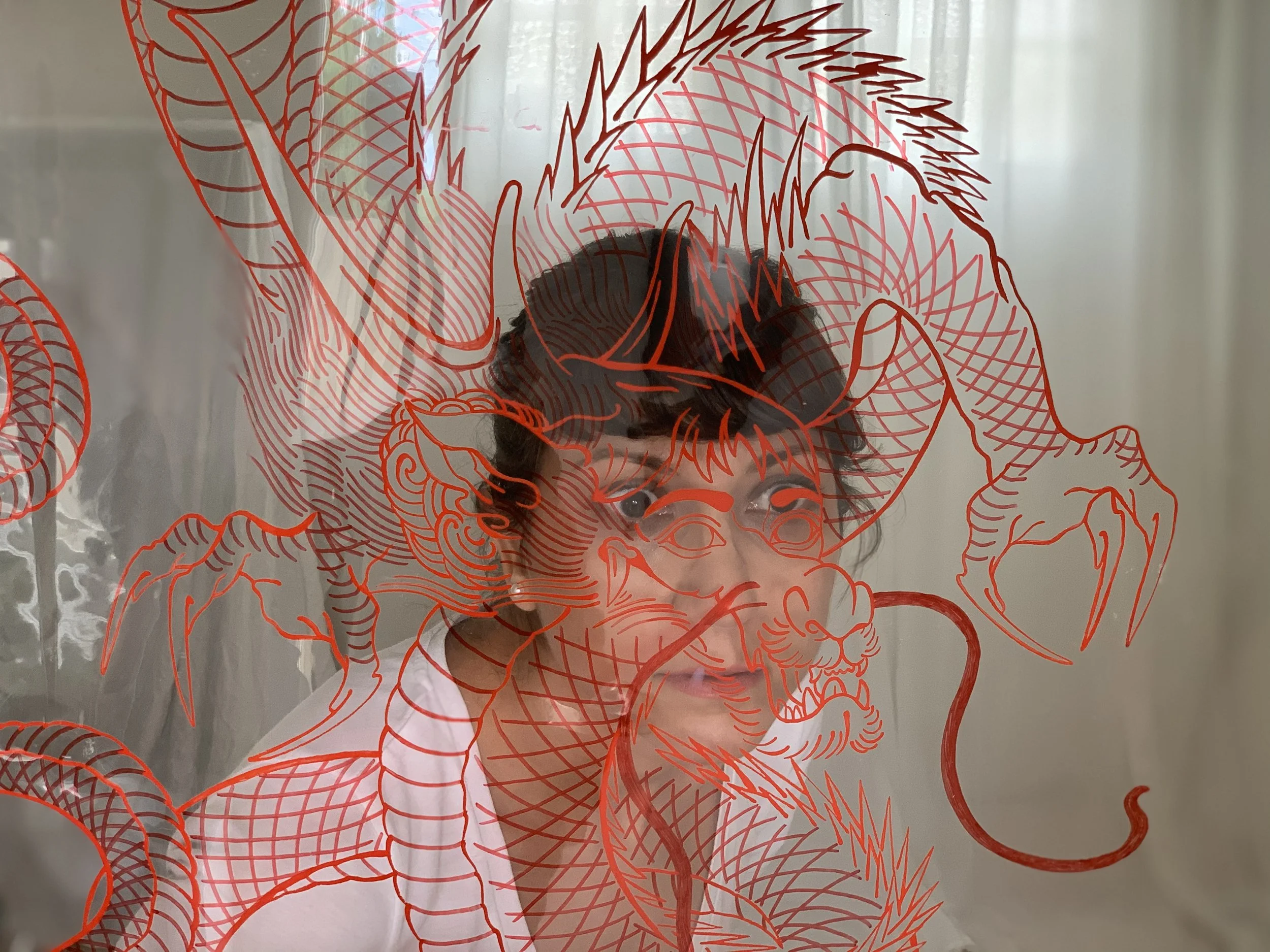
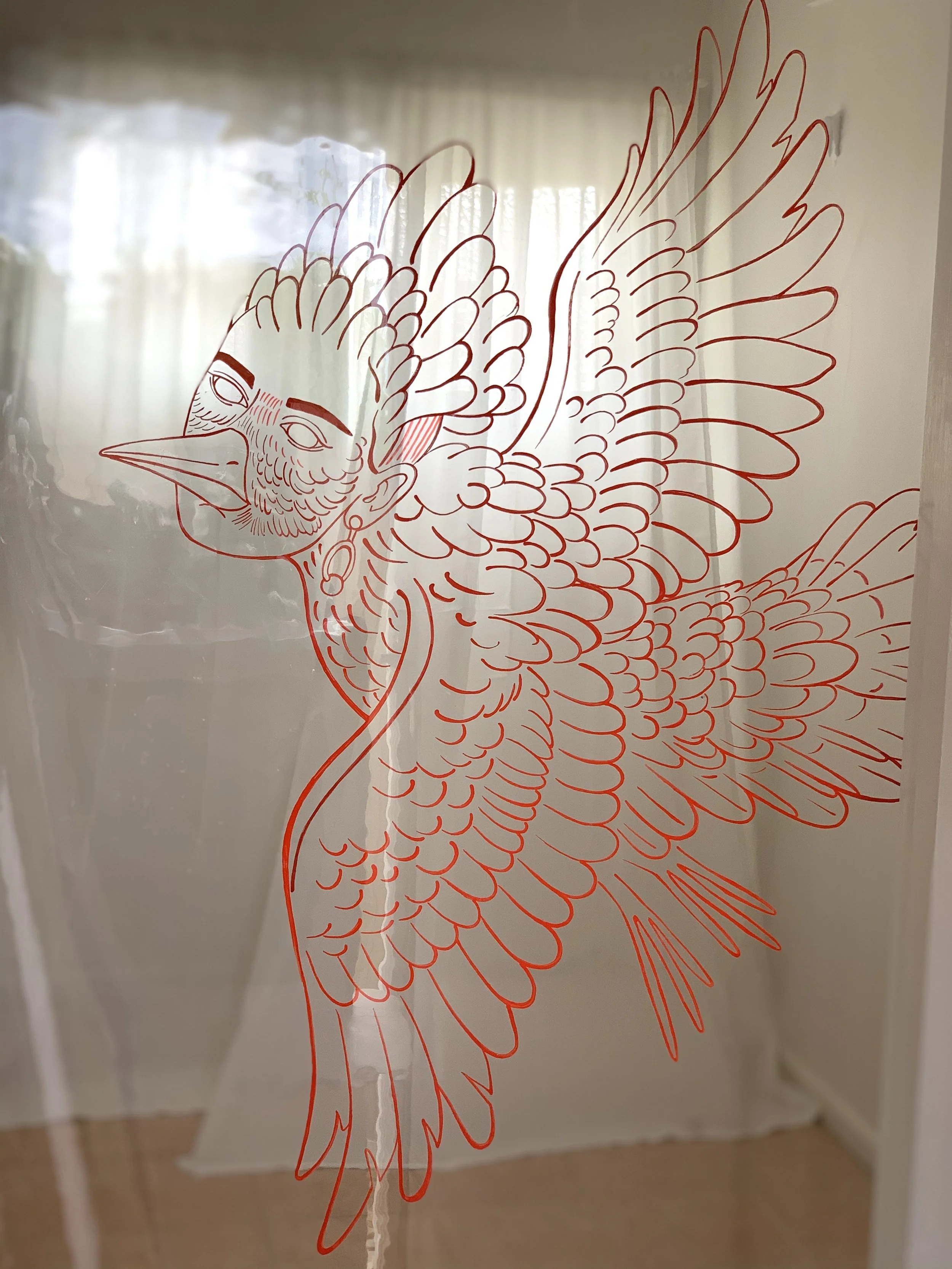
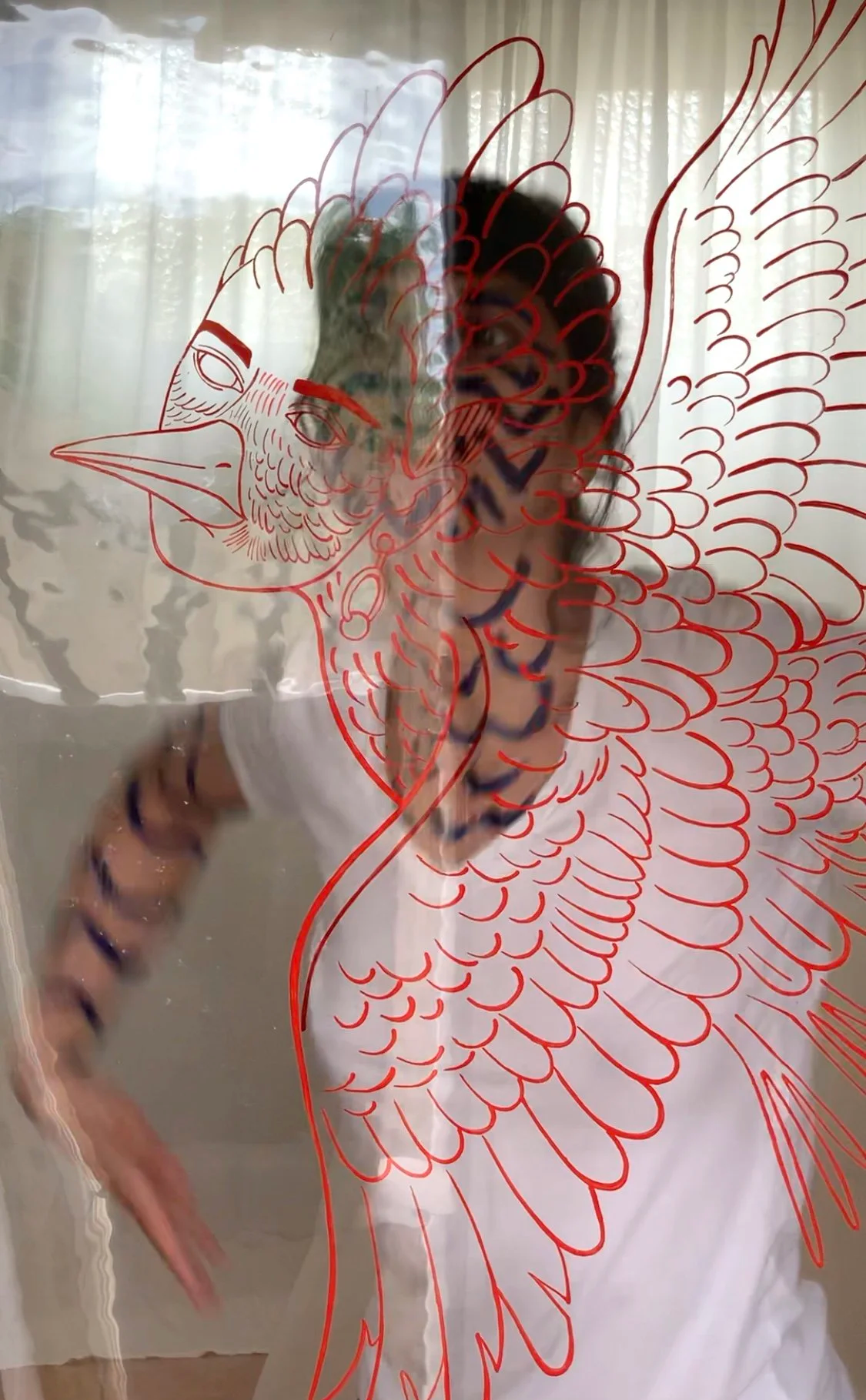
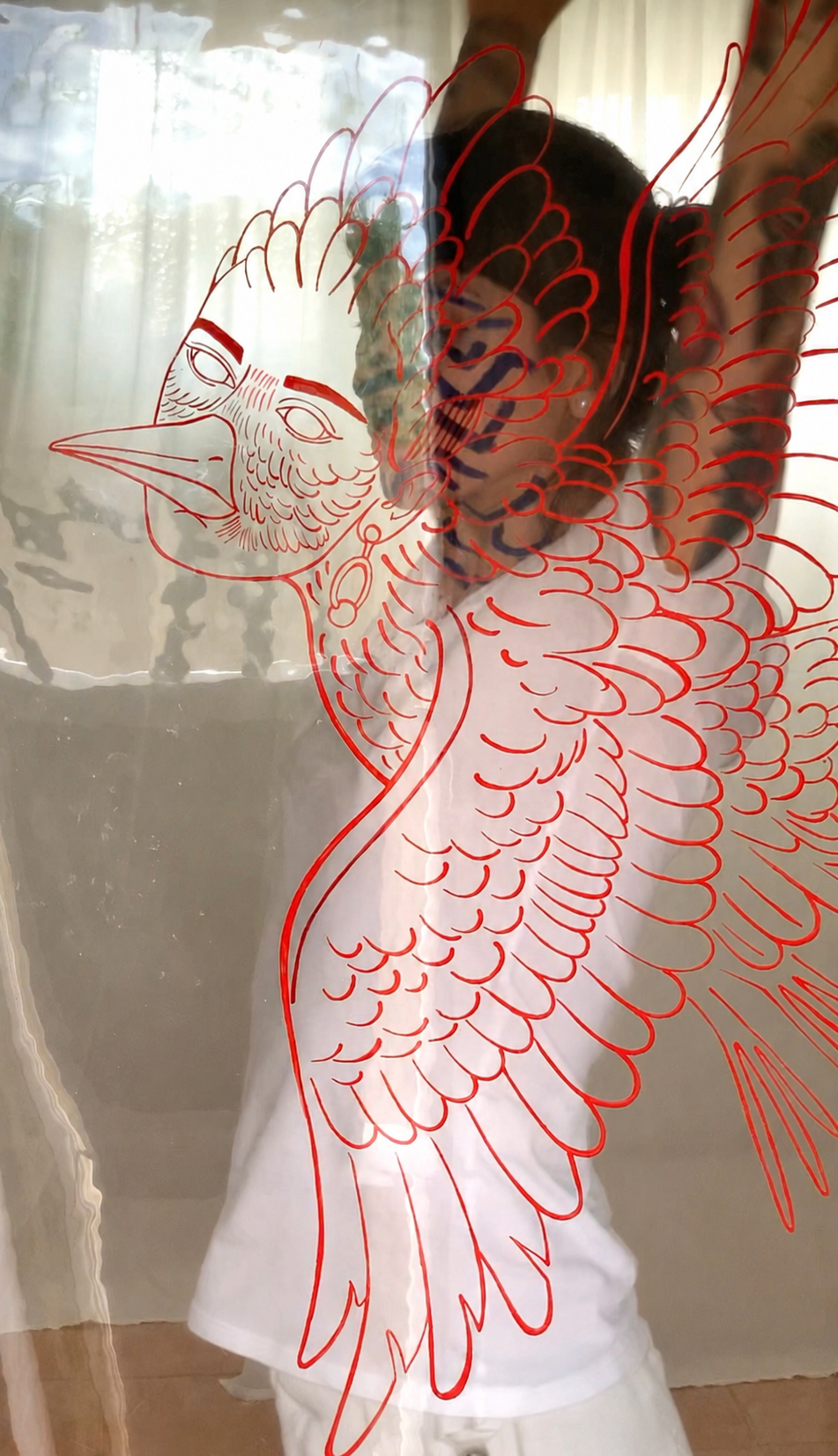
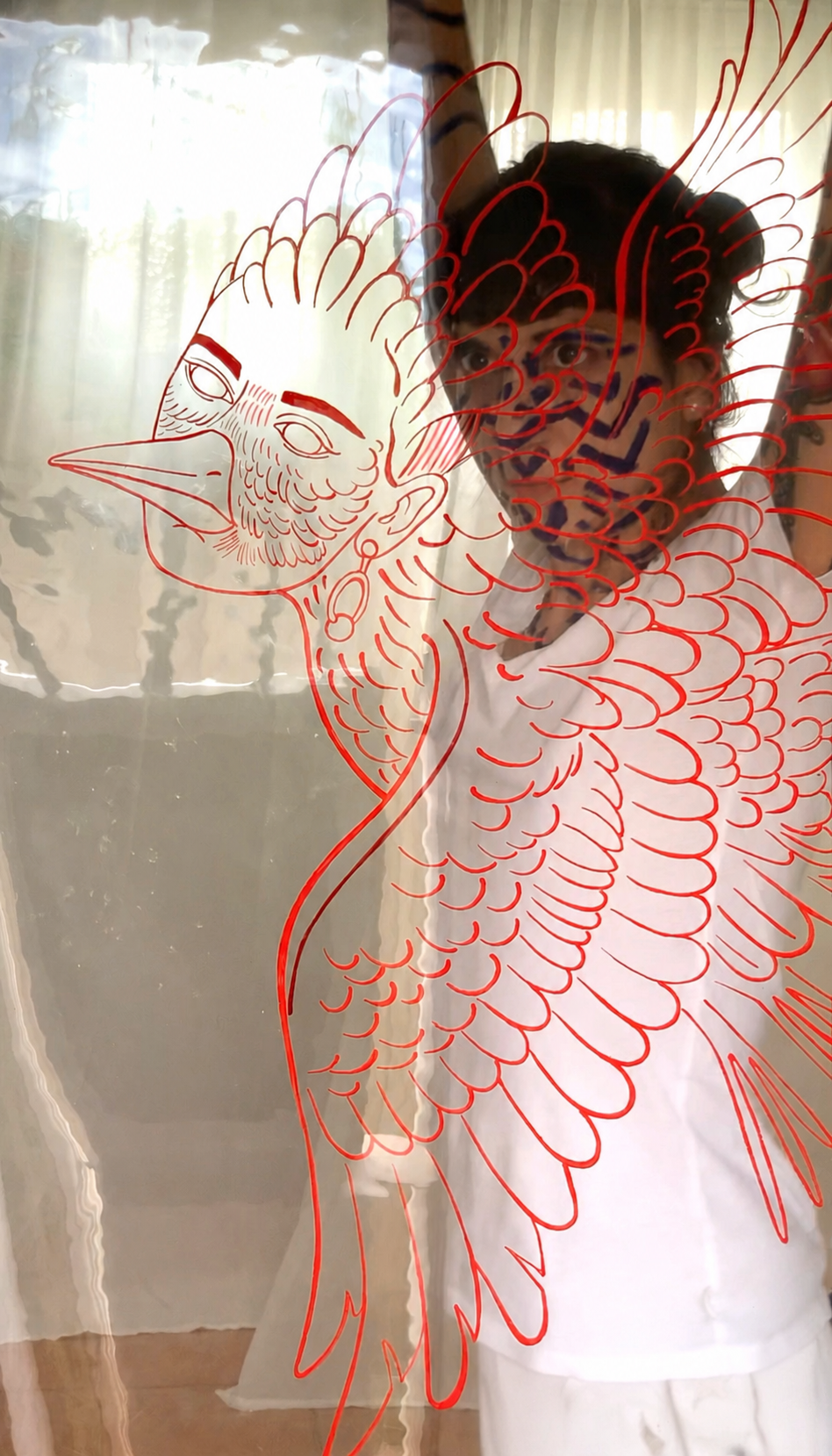
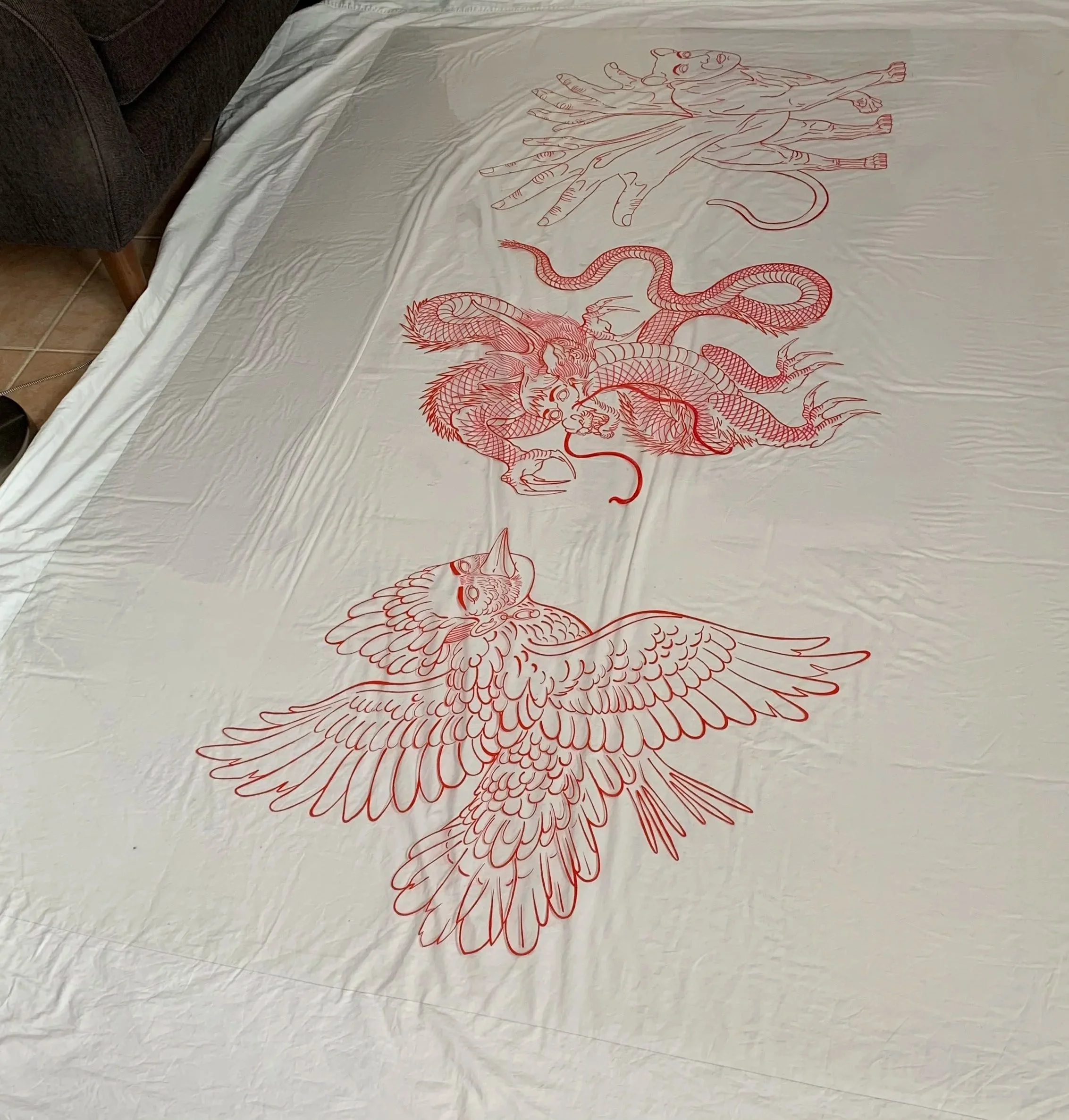
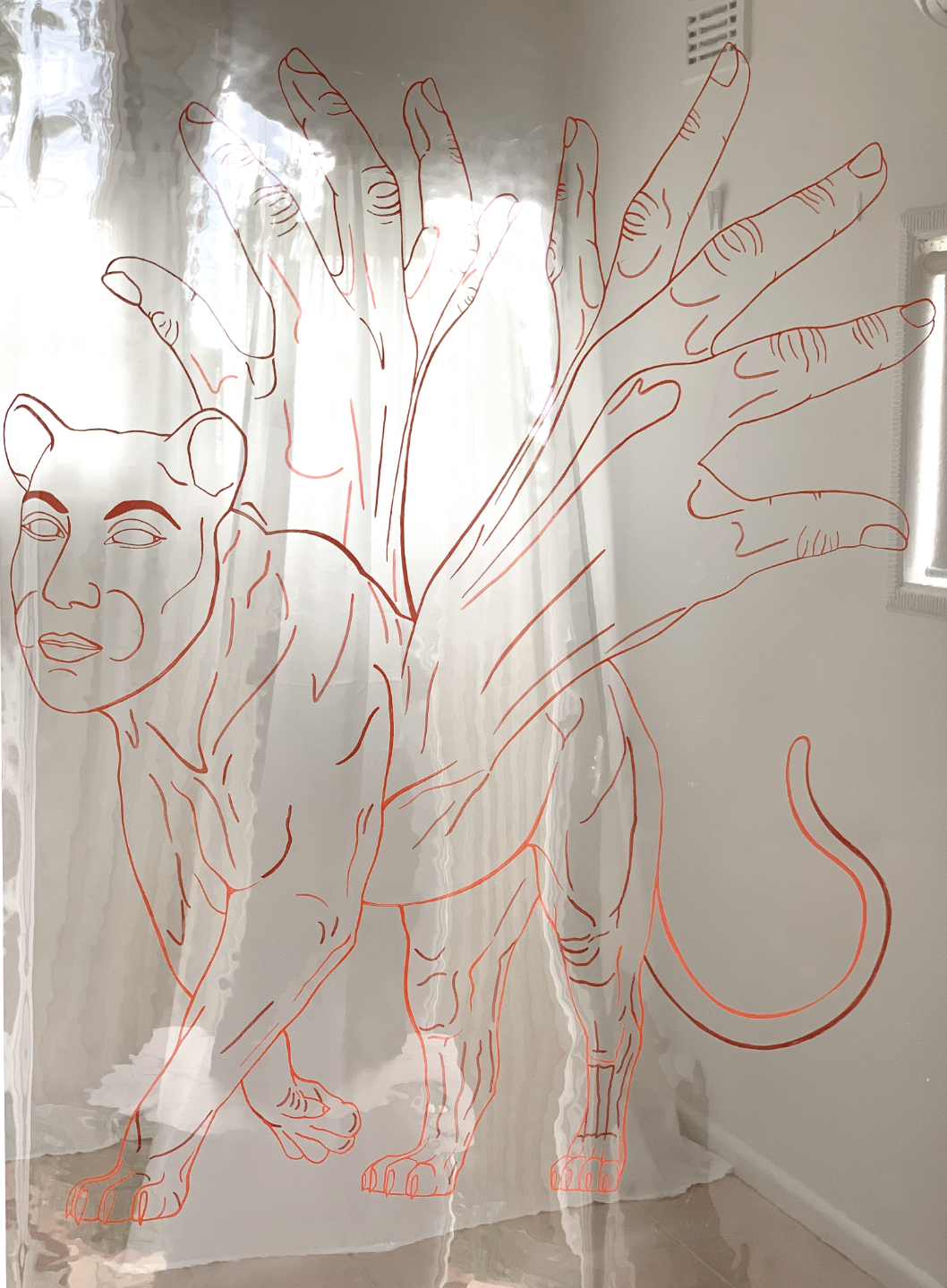
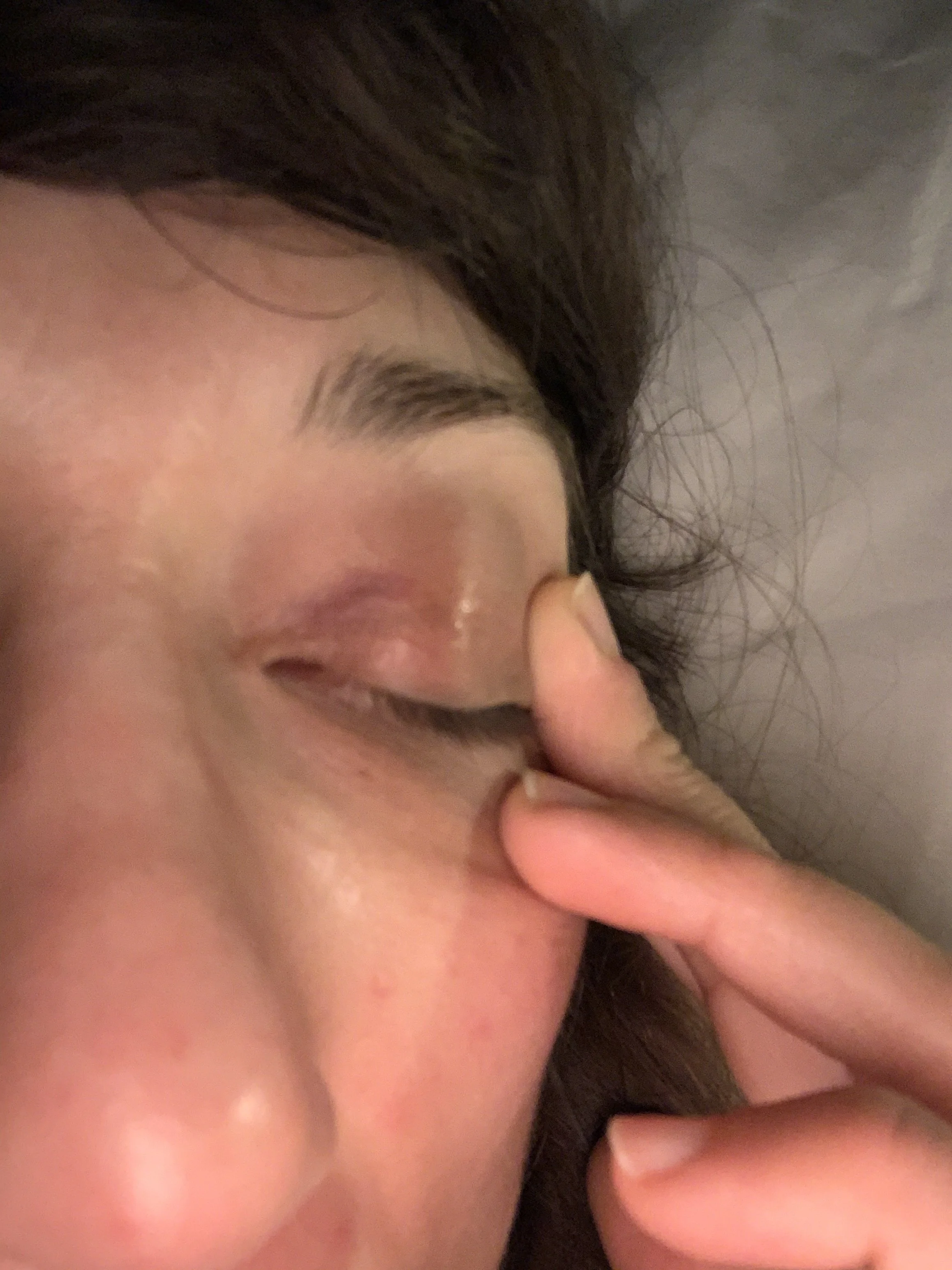
Encountering: Un/Covering Bodies of Prehistory (2020)
Medium: Transparent plastic, acrylic paint, performance, photography, installation
Research Question: How might drawing become a method of archaeological inquiry, uncovering forgotten histories through embodied practice?
This project marks a significant transition within my artistic practice. Having developed a symbolic visual language through drawing and painting, I began questioning whether drawing could move beyond representation and become an embodied method of research. Rather than producing symbolic images alone, I became interested in how drawing, material, performance and the body might work together to generate knowledge. These investigations laid the conceptual and material foundations for Deep Sea Story, where drawing expanded into Tyvek, installation and soft sculpture.
Encountering: Un/Covering Bodies of Prehistory is a practice-led research project that investigates how drawing, performance and material practice can function as methods of archaeological inquiry. Developed during Melbourne's COVID-19 lockdowns, the project emerged through an exploration of prehistoric archaeology, feminist art history and my own Persian cultural heritage. Rather than reconstructing the past, the work asks how contemporary artistic practice might enter into dialogue with histories that continue to shape the present through the body.
-
The project developed alongside research into Lucy R. Lippard's Overlay: Contemporary Art and the Art of Prehistory (1983), Marija Gimbutas' The Living Goddesses (1999), Amelia Jones' writings on embodiment and encounter, Judith Butler's theories of performativity and Maurice Merleau-Ponty's philosophy of embodied perception. Rather than functioning as references to illustrate existing ideas, these texts became companions within the making process, shaping how I began to think through drawing as an archaeological and embodied practice.
Lippard encouraged me to understand prehistoric imagery not as distant artefacts belonging solely to museums, but as visual languages capable of entering contemporary artistic practice. Gimbutas' writing on prehistoric signs and symbolic systems prompted a different question. Rather than reproducing archaeological motifs, I became interested in developing my own symbolic language informed by my Persian ancestry. The recurring figures of the lion, the dragon and the bird gradually emerged through this process. They were not intended as historical reconstructions but as contemporary symbols that allowed me to think through ancestry, mythology, identity and belonging. Tracing these visual histories also made me increasingly aware of the absence of women within dominant narratives of Western art history. Rather than searching for definitive historical answers, I turned to drawing as a means of uncovering overlooked stories while questioning how histories are continually written, remembered and forgotten.
Working within the limitations of Melbourne's lockdowns, I transformed my home into a temporary archaeological site. Furniture was removed wherever possible while the remaining objects were draped with white sheets until the domestic interior existed somewhere between studio, excavation and performance space. Large transparent plastic table coverings became my drawing surface. This material carried its own history. It was the same transparent plastic upon which I first learned to draw as a seven-year-old while sitting beside my father. Returning to it unexpectedly connected childhood memory with contemporary artistic inquiry, allowing personal history and material history to become inseparable.
As the drawings developed, I found myself asking:
"If I consider my body to be the earth from Iran..."
Rather than treating archaeology as the excavation of distant objects buried beneath the ground, I began imagining my own body as a living archaeological site. If the earth carries histories beneath its surface, perhaps the body also carries inherited cultural memory waiting to be uncovered.
The lion, dragon and bird emerged through an ongoing dialogue between prehistoric visual culture and my own Persian heritage. Inspired by Gimbutas' discussion of symbolic languages, I became interested in creating contemporary symbols rather than reproducing archaeological imagery. These creatures occupied an uncertain space between mythology, ancestry and imagination. They became speculative companions through which I could think about inherited memory and cultural identity rather than illustrations of historical fact.
The physical act of drawing became inseparable from archaeological practice. Working on the floor, I spent more than twenty-five hours bent over transparent plastic sheets, slowly tracing each contour with a fine brush. The repetitive movement of line recalled the gestures of an archaeologist carefully uncovering fragile artefacts from the earth. Every mark required patience, restraint and sustained attention. Rather than revealing an image already known, the drawing unfolded through gradual acts of excavation.
At times I realised:
"I was making the work like I was uncovering it."
Knowledge did not precede drawing.
Knowledge emerged through drawing.
Merleau-Ponty's understanding that perception is grounded within embodied experience became increasingly tangible through the process. The body learned through posture, repetition and movement. Thinking occurred through making rather than before it.
The sustained physical labour transformed my understanding of artistic practice itself. Remaining folded over the drawings for hours at a time, my knees bruised against the floor while the constant downward gaze left dark circles beneath my eyes. The labour of making became inseparable from the research. Uncovering the drawings felt less like producing images than participating in a slow cycle of emergence. Completing each drawing brought an unexpected stillness. After weeks of sustained concentration, resting felt almost like a small death, marking the completion of one encounter while preparing another to begin. The inquiry was not something that existed outside my body; it was lived through it.
Performance extended this archaeological process.
Standing behind the transparent drawings, I carefully aligned my body with the contours of each creature until the empty eye sockets framed my own face. The drawings shifted from two-dimensional images into wearable masks suspended between drawing, sculpture and performance. I gradually embodied the physical qualities I imagined each creature might possess: expanding my posture to inhabit the authority of the dragon, grounding my weight to embody the strength of the lion and softening my gestures to evoke the delicacy of the bird. These performances were never attempts to reconstruct prehistoric rituals. Instead, they became speculative encounters between my contemporary body and inherited cultural imagery.
Only when the drawings were inhabited did they feel complete.
Breath animated line.
Gesture transformed image.
Movement allowed the creatures to exist again, however briefly, through the living body.
Photography did not simply document these performances. It became the trace of encounter itself. Drawing excavated the forms. Performance animated them. Photography recorded the fleeting moment in which body, image and history occupied the same space. Making therefore became an act of reanimation, allowing forgotten symbols to exist once more within contemporary experience.
Amelia Jones' writing on embodiment and encounter provides an important framework for understanding this relationship. Rather than positioning the artwork as an object to be viewed, Jones argues that meaning emerges through the reciprocal relationship between body, image and viewer. My work extends this proposition by positioning drawing itself as a site of encounter where archaeology is not merely represented but physically inhabited. Judith Butler's understanding of performativity further shaped my awareness of how gesture, posture and movement continually negotiate inherited ideas of identity. The performances revealed that cultural identity is never simply possessed but continually performed, embodied and reimagined.
The transparent plastic further complicated this archaeological process. Unlike paper, the material continually oscillated between revelation and concealment. The drawings simultaneously obscured and revealed the body positioned behind them. Empty eye sockets became windows through which my face emerged, transforming the creatures into masks that invited participation rather than observation. Transparency therefore became more than a material quality. It became a metaphor for history itself. Every act of uncovering simultaneously conceals something else. Archaeology never reveals complete truths but continually negotiates fragments, absences and possibilities.
Gimbutas argues that archaeological objects reveal as much about those who interpret them as about the cultures that produced them. This understanding profoundly shifted my relationship with the symbolic language emerging throughout the work. Rather than preserving prehistoric imagery as fixed historical evidence, I approached symbolic forms as living participants within an ongoing dialogue between past and present. The lion, dragon and bird therefore became contemporary cultural symbols shaped as much by my own embodied encounters as by the histories that first inspired them.
Encountering: Un/Covering Bodies of Prehistory proposes drawing not as a means of illustrating history but as a method of entering into it. Through excavation, performance and embodied encounter, archaeology becomes more than the recovery of objects buried beneath the earth. It becomes the uncovering of histories carried within bodies, memories and cultural inheritance. Drawing therefore functions simultaneously as excavation, encounter and return, revealing that the past is never fixed behind us but continually reanimated through contemporary acts of making.
These embodied investigations became the conceptual bridge between my early symbolic paintings and Deep Sea Story. Through this project, drawing shifted from producing images to generating knowledge through material, performance and embodied encounter. This transformation established the methodological foundations that continue to shape my practice as an artist, arts-researcher and educator.